2. Scene Graph library
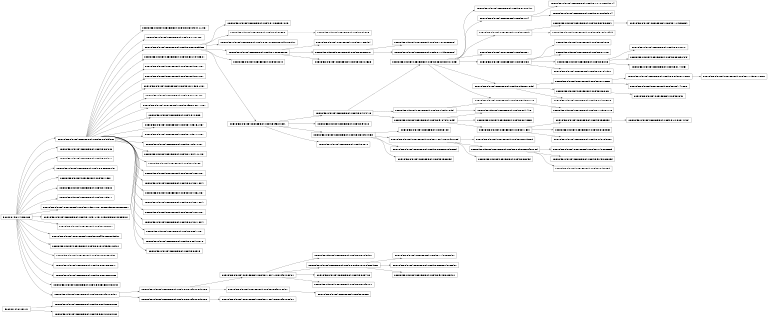
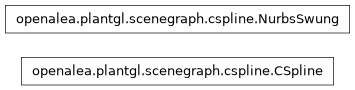
2.1. Class Inheritance diagram

2.2. openalea.plantgl.scenegraph module
- class AmapSymbol
The AmapSymbol describes an object of class of Mesh stored in the SMB file format of the Amap software.This is provided for ascendant compatibility.AmapSymbol
The AmapSymbol describes an object of class of Mesh stored in the SMB file format of the Amap software. This is provided for ascendant compatibility.
- Parameters:
FileName – specifies the name of the SMB file to bind to the symbol. It must contain the full path and .smb extension if needed. The corresponding file must exist.
Solid – specifies whether the symbol represents a closed surface. (default is False)
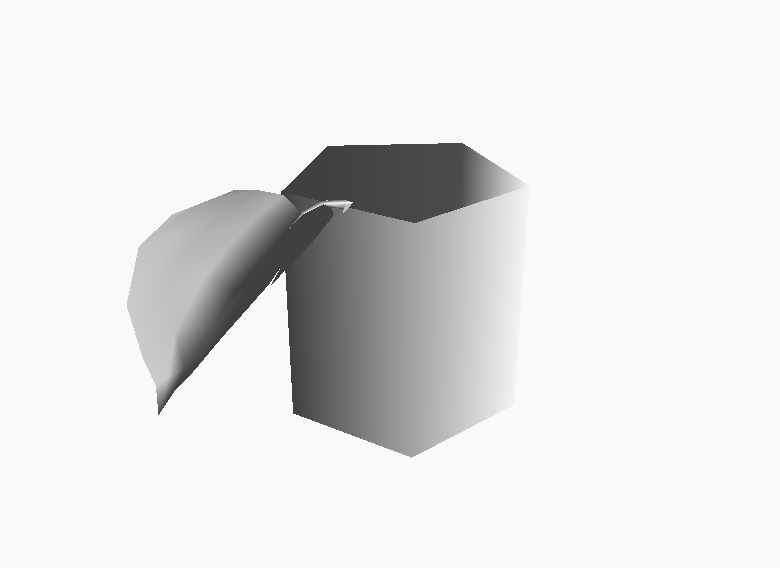
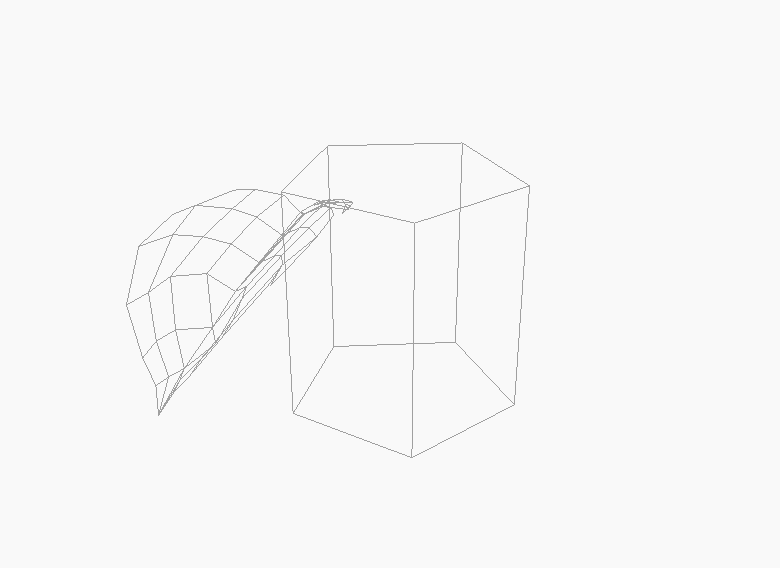
- Example:
- deepcopy((AmapSymbol)arg1) AmapSymbol :
- C++ signature :
PGL::RefCountPtr<PGL::AmapSymbol> deepcopy(PGL::AmapSymbol {lvalue})
deepcopy( (AmapSymbol)arg1, (DeepCopier)copier) -> AmapSymbol :
- C++ signature :
PGL::RefCountPtr<PGL::AmapSymbol> deepcopy(PGL::AmapSymbol {lvalue},PGL::DeepCopier {lvalue})
- property filename
- readFile((AmapSymbol)arg1, (str)arg2) bool :
- C++ signature :
bool readFile(PGL::AmapSymbol {lvalue},std::__cxx11::basic_string<char, std::char_traits<char>, std::allocator<char> >)
- recast((AmapSymbol)arg1) AmapSymbol :
- C++ signature :
PGL::RefCountPtr<PGL::AmapSymbol> recast(PGL::AmapSymbol*)
- class Appearance
Abstract base class for all appearance objects.
- isTexture((Appearance)arg1) bool :
Tell wether self is of type texture
- C++ signature :
bool isTexture(PGL::Appearance {lvalue})
- class AsymmetricHull
An Asymmetric Hull describes an anvelop defined by 6 morphological points. This is an implementation of the asymmetric crowns introduced by [Koop,89] and [Cescatti,97].The two first morphological points are the bottom and top points of the hull.The four other points are used to defined the peripheral line of the hull (P1,P2,P3,P4).The two first points are located along the x -axis (P1,P2) and the two other along the y-axis (P3,P4).As such Pi points are described with only two dimensions, i.e. a radius and a height using corresponding parametersFinally, the shape coefficients are versatile indices which describe the curvature of the hull above and below the peripheral line.
- DEFAULT_BOTTOM = Vector3(0,0,-0.5)
- DEFAULT_BOTTOM_SHAPE = 2.0
- DEFAULT_NEG_X_HEIGHT = 0.0
- DEFAULT_NEG_X_RADIUS = 0.5
- DEFAULT_NEG_Y_HEIGHT = 0.0
- DEFAULT_NEG_Y_RADIUS = 0.5
- DEFAULT_POS_X_HEIGHT = 0.0
- DEFAULT_POS_X_RADIUS = 0.5
- DEFAULT_POS_Y_HEIGHT = 0.0
- DEFAULT_POS_Y_RADIUS = 0.5
- DEFAULT_SLICES = 4
- DEFAULT_STACKS = 4
- DEFAULT_TOP = Vector3(0,0,0.5)
- DEFAULT_TOP_SHAPE = 2.0
- property bottom
- property bottomShape
- deepcopy((AsymmetricHull)arg1) AsymmetricHull :
- C++ signature :
PGL::RefCountPtr<PGL::AsymmetricHull> deepcopy(PGL::AsymmetricHull {lvalue})
deepcopy( (AsymmetricHull)arg1, (DeepCopier)copier) -> AsymmetricHull :
- C++ signature :
PGL::RefCountPtr<PGL::AsymmetricHull> deepcopy(PGL::AsymmetricHull {lvalue},PGL::DeepCopier {lvalue})
- isBottomShapeToDefault((AsymmetricHull)arg1) bool :
- C++ signature :
bool isBottomShapeToDefault(PGL::AsymmetricHull {lvalue})
- isBottomToDefault((AsymmetricHull)arg1) bool :
- C++ signature :
bool isBottomToDefault(PGL::AsymmetricHull {lvalue})
- isNegXHeightToDefault((AsymmetricHull)arg1) bool :
- C++ signature :
bool isNegXHeightToDefault(PGL::AsymmetricHull {lvalue})
- isNegXRadiusToDefault((AsymmetricHull)arg1) bool :
- C++ signature :
bool isNegXRadiusToDefault(PGL::AsymmetricHull {lvalue})
- isNegYHeightToDefault((AsymmetricHull)arg1) bool :
- C++ signature :
bool isNegYHeightToDefault(PGL::AsymmetricHull {lvalue})
- isNegYRadiusToDefault((AsymmetricHull)arg1) bool :
- C++ signature :
bool isNegYRadiusToDefault(PGL::AsymmetricHull {lvalue})
- isPosXHeightToDefault((AsymmetricHull)arg1) bool :
- C++ signature :
bool isPosXHeightToDefault(PGL::AsymmetricHull {lvalue})
- isPosXRadiusToDefault((AsymmetricHull)arg1) bool :
- C++ signature :
bool isPosXRadiusToDefault(PGL::AsymmetricHull {lvalue})
- isPosYHeightToDefault((AsymmetricHull)arg1) bool :
- C++ signature :
bool isPosYHeightToDefault(PGL::AsymmetricHull {lvalue})
- isPosYRadiusToDefault((AsymmetricHull)arg1) bool :
- C++ signature :
bool isPosYRadiusToDefault(PGL::AsymmetricHull {lvalue})
- isSlicesToDefault((AsymmetricHull)arg1) bool :
- C++ signature :
bool isSlicesToDefault(PGL::AsymmetricHull {lvalue})
- isStacksToDefault((AsymmetricHull)arg1) bool :
- C++ signature :
bool isStacksToDefault(PGL::AsymmetricHull {lvalue})
- isTopShapeToDefault((AsymmetricHull)arg1) bool :
- C++ signature :
bool isTopShapeToDefault(PGL::AsymmetricHull {lvalue})
- isTopToDefault((AsymmetricHull)arg1) bool :
- C++ signature :
bool isTopToDefault(PGL::AsymmetricHull {lvalue})
- property negXHeight
- property negXRadius
- property negYHeight
- property negYRadius
- property posXHeight
- property posXRadius
- property posYHeight
- property posYRadius
- recast((AsymmetricHull)arg1) AsymmetricHull :
- C++ signature :
PGL::RefCountPtr<PGL::AsymmetricHull> recast(PGL::AsymmetricHull*)
- property slices
- property stacks
- property top
- property topShape
- class AxisRotated
The AxisRotated describes an object to which it has been applied a rotation of a specified angle about a specified axis. The rotation is given by the matrix: |(1-c)x2 + c (1-c)xy - sz (1-c)xy + sy|
|(1-c)xy + sz (1-c)y2 + c (1-c)yz - sx| |(1-c)xz - sy (1-c)yz + sx (1-c)z2 + c |
where s = sin(angle), c = cos(angle), x,y and z the coordinates of the axis.
- DEFAULT_ANGLE = 0.0
- DEFAULT_AXIS = Vector3(0,0,1)
- property angle
- property axis
- deepcopy((AxisRotated)arg1) AxisRotated :
- C++ signature :
PGL::RefCountPtr<PGL::AxisRotated> deepcopy(PGL::AxisRotated {lvalue})
deepcopy( (AxisRotated)arg1, (DeepCopier)copier) -> AxisRotated :
- C++ signature :
PGL::RefCountPtr<PGL::AxisRotated> deepcopy(PGL::AxisRotated {lvalue},PGL::DeepCopier {lvalue})
- isAngleToDefault((AxisRotated)arg1) bool :
- C++ signature :
bool isAngleToDefault(PGL::AxisRotated {lvalue})
- isAxisToDefault((AxisRotated)arg1) bool :
- C++ signature :
bool isAxisToDefault(PGL::AxisRotated {lvalue})
- recast((AxisRotated)arg1) AxisRotated :
- C++ signature :
PGL::RefCountPtr<PGL::AxisRotated> recast(PGL::AxisRotated*)
- class AxisRotation
- class BaseOrientation
- class BezierCurve
BezierCurve describes rational and non rational Bezier curve. It is defined by a degree n and a list of control Points Pi and using the parametric equation C(u) = Sum(i=0,n)(Bi,n(u)Pi) with u in [0,1] where Bi,n(u) are the classical n-th degree Bernstein polynomials.
- DEFAULT_STRIDE = 30
- static bernstein((object)i, (object)n, (object)u) float :
float bernstein( int i, int n, float u )Computes the value of i-th Bernstein polynomial for a fixed u.See the Nurbs Book p20. usefull for Bezier Curve computation.
- C++ signature :
double bernstein(unsigned int,unsigned int,double)
- static bernstein_factors((object)n, (object)u) object :
[float] bernstein_factors( int n, float u )Computes the n + 1 th degree Bernstein polynomials for a fixed u.See the Nurbs Book p21 . usefull for Bezier Curve computation.
- C++ signature :
boost::python::api::object bernstein_factors(unsigned int,double)
- property ctrlPointList
- deepcopy((BezierCurve)arg1) BezierCurve :
- C++ signature :
PGL::RefCountPtr<PGL::BezierCurve> deepcopy(PGL::BezierCurve {lvalue})
deepcopy( (BezierCurve)arg1, (DeepCopier)copier) -> BezierCurve :
- C++ signature :
PGL::RefCountPtr<PGL::BezierCurve> deepcopy(PGL::BezierCurve {lvalue},PGL::DeepCopier {lvalue})
- isStrideToDefault((BezierCurve)arg1) bool :
- C++ signature :
bool isStrideToDefault(PGL::BezierCurve {lvalue})
- recast((BezierCurve)arg1) BezierCurve :
- C++ signature :
PGL::RefCountPtr<PGL::BezierCurve> recast(PGL::BezierCurve*)
- property stride
- class BezierCurve2D
BezierCurve2D describes rational and non rational 2D Bezier curve. It is represented by a degree and a list of control Points. See BezierCurve.
- property ctrlPointList
- deepcopy((BezierCurve2D)arg1) BezierCurve2D :
- C++ signature :
PGL::RefCountPtr<PGL::BezierCurve2D> deepcopy(PGL::BezierCurve2D {lvalue})
deepcopy( (BezierCurve2D)arg1, (DeepCopier)copier) -> BezierCurve2D :
- C++ signature :
PGL::RefCountPtr<PGL::BezierCurve2D> deepcopy(PGL::BezierCurve2D {lvalue},PGL::DeepCopier {lvalue})
- isStrideToDefault((BezierCurve2D)arg1) bool :
- C++ signature :
bool isStrideToDefault(PGL::BezierCurve2D {lvalue})
- recast((BezierCurve2D)arg1) BezierCurve2D :
- C++ signature :
PGL::RefCountPtr<PGL::BezierCurve2D> recast(PGL::BezierCurve2D*)
- property stride
- class BezierPatch
BezierPatch describes rational and non rational Bezier surface. It is defined by two degrees n and m and a matrix of control Points Pi,j and using the parametric equation S(u,v) = Sum(i=0,n)Sum(j=0,m)(Bi,n(u)Bj,m(v)Pi,j) with u and v in [0,1] where Bi,n(u) and Bi,m(v) are the classical n and m-th degree Bernstein polynomials.
- DEFAULT_STRIDE = 30
- property ctrlPointMatrix
- deepcopy((BezierPatch)arg1) BezierPatch :
- C++ signature :
PGL::RefCountPtr<PGL::BezierPatch> deepcopy(PGL::BezierPatch {lvalue})
deepcopy( (BezierPatch)arg1, (DeepCopier)copier) -> BezierPatch :
- C++ signature :
PGL::RefCountPtr<PGL::BezierPatch> deepcopy(PGL::BezierPatch {lvalue},PGL::DeepCopier {lvalue})
- getIsoUSectionAt((BezierPatch)arg1, (object)u) LineicModel :
Compute a section line of the patch corresponding to a constant u value.
- C++ signature :
PGL::RefCountPtr<PGL::LineicModel> getIsoUSectionAt(PGL::BezierPatch {lvalue},double)
- getIsoVSectionAt((BezierPatch)arg1, (object)v) LineicModel :
Compute a section line of the patch corresponding to a constant v value.
- C++ signature :
PGL::RefCountPtr<PGL::LineicModel> getIsoVSectionAt(PGL::BezierPatch {lvalue},double)
- getPointAt((BezierPatch)arg1, (object)arg2, (object)arg3) Vector3 :
- C++ signature :
PGL::Vector3 getPointAt(PGL::BezierPatch {lvalue},double,double)
- isUStrideToDefault((BezierPatch)arg1) bool :
- C++ signature :
bool isUStrideToDefault(PGL::BezierPatch {lvalue})
- isVStrideToDefault((BezierPatch)arg1) bool :
- C++ signature :
bool isVStrideToDefault(PGL::BezierPatch {lvalue})
- recast((BezierPatch)arg1) BezierPatch :
- C++ signature :
PGL::RefCountPtr<PGL::BezierPatch> recast(PGL::BezierPatch*)
- property udegree
- property ustride
- property vdegree
- property vstride
- class BoundingBox
An axis aligned box represented by 2 opposite corners.
- change((BoundingBox)arg1, (Vector3)arg2, (Vector3)arg3) None :
change(center)
- C++ signature :
void change(PGL::BoundingBox {lvalue},PGL::Vector3,PGL::Vector3)
- contains((BoundingBox)arg1, (BoundingBox)arg2) bool :
- C++ signature :
bool contains(PGL::BoundingBox*,PGL::BoundingBox*)
contains( (BoundingBox)arg1, (Vector3)arg2) -> bool :
- C++ signature :
bool contains(PGL::BoundingBox*,PGL::Vector3)
- corners()
- distance((BoundingBox)arg1, (BoundingBox)arg2) float :
- C++ signature :
double distance(PGL::BoundingBox*,PGL::BoundingBox*)
distance( (BoundingBox)arg1, (Vector3)arg2) -> float :
- C++ signature :
double distance(PGL::BoundingBox*,PGL::Vector3)
- extend((BoundingBox)arg1, (BoundingBox)arg2) None :
- C++ signature :
void extend(PGL::BoundingBox*,PGL::BoundingBox*)
extend( (BoundingBox)arg1, (Vector3)arg2) -> None :
- C++ signature :
void extend(PGL::BoundingBox*,PGL::Vector3)
- getCenter((BoundingBox)arg1) Vector3 :
- C++ signature :
PGL::Vector3 getCenter(PGL::BoundingBox {lvalue})
- getId((BoundingBox)arg1) int :
- C++ signature :
unsigned long getId(PGL::BoundingBox {lvalue})
- getSize((BoundingBox)arg1) Vector3 :
size of the half diagonal of self along the x-axis, y-axis and z-axis.
- C++ signature :
PGL::Vector3 getSize(PGL::BoundingBox {lvalue})
- getXMax((BoundingBox)arg1) float :
- C++ signature :
double getXMax(PGL::BoundingBox {lvalue})
- getXMin((BoundingBox)arg1) float :
- C++ signature :
double getXMin(PGL::BoundingBox {lvalue})
- getXRange((BoundingBox)arg1) float :
- C++ signature :
double getXRange(PGL::BoundingBox {lvalue})
- getYMax((BoundingBox)arg1) float :
- C++ signature :
double getYMax(PGL::BoundingBox {lvalue})
- getYMin((BoundingBox)arg1) float :
- C++ signature :
double getYMin(PGL::BoundingBox {lvalue})
- getYRange((BoundingBox)arg1) float :
- C++ signature :
double getYRange(PGL::BoundingBox {lvalue})
- getZMax((BoundingBox)arg1) float :
- C++ signature :
double getZMax(PGL::BoundingBox {lvalue})
- getZMin((BoundingBox)arg1) float :
- C++ signature :
double getZMin(PGL::BoundingBox {lvalue})
- getZRange((BoundingBox)arg1) float :
- C++ signature :
double getZRange(PGL::BoundingBox {lvalue})
- intersect((BoundingBox)arg1, (BoundingBox)arg2) bool :
- C++ signature :
bool intersect(PGL::BoundingBox*,PGL::BoundingBox*)
- property lowerLeftCorner
- scale((BoundingBox)arg1, (Vector3)arg2) None :
- C++ signature :
void scale(PGL::BoundingBox {lvalue},PGL::Vector3)
- set((BoundingBox)arg1, (Vector3)arg2, (Vector3)arg3) None :
set(lowerLeft,upperRight)
- C++ signature :
void set(PGL::BoundingBox {lvalue},PGL::Vector3,PGL::Vector3)
- transform((BoundingBox)arg1, (Matrix4)arg2) None :
- C++ signature :
void transform(PGL::BoundingBox {lvalue},PGL::Matrix4)
transform( (BoundingBox)arg1, (Matrix3)arg2) -> None :
- C++ signature :
void transform(PGL::BoundingBox {lvalue},PGL::Matrix3)
- translate((BoundingBox)arg1, (Vector3)arg2) None :
- C++ signature :
void translate(PGL::BoundingBox {lvalue},PGL::Vector3)
- property upperRightCorner
- class Box
The Box describes a rectangular axis-aligned box centered at origin and whose extension along the x, y and z-axis is specified with the size vector.
- DEFAULT_SIZE = Vector3(0.5,0.5,0.5)
- deepcopy((Box)arg1) Box :
- C++ signature :
PGL::RefCountPtr<PGL::Box> deepcopy(PGL::Box {lvalue})
deepcopy( (Box)arg1, (DeepCopier)copier) -> Box :
- C++ signature :
PGL::RefCountPtr<PGL::Box> deepcopy(PGL::Box {lvalue},PGL::DeepCopier {lvalue})
- isSizeToDefault((Box)arg1) bool :
- C++ signature :
bool isSizeToDefault(PGL::Box {lvalue})
- recast((Box)arg1) Box :
- C++ signature :
PGL::RefCountPtr<PGL::Box> recast(PGL::Box*)
- property size
- class Color3
A 3 components color expressed in red, green and blue.
- BLACK = Color3(0,0,0)
- BLUE = Color3(0,0,255)
- CYAN = Color3(0,255,255)
- GREEN = Color3(0,255,0)
- RED = Color3(255,0,0)
- WHITE = Color3(255,255,255)
- YELLOW = Color3(255,255,0)
- property blue
- clampedBlue((Color3)arg1) float :
- C++ signature :
double clampedBlue(PGL::Color3*)
- clampedGreen((Color3)arg1) float :
- C++ signature :
double clampedGreen(PGL::Color3*)
- clampedRed((Color3)arg1) float :
- C++ signature :
double clampedRed(PGL::Color3*)
- static fromHSV((object)arg1) Color3 :
Construct a Color3 from a tuple containing HSV values (H should be in [0,255] if int or [0.,360.[ if float, S and V should be in [0,255])
- C++ signature :
PGL::Color3 fromHSV(boost::python::api::object)
- static fromUint((object)value[, (eColor3Format)format=openalea.plantgl.scenegraph._pglsg.eColor3Format.eRGB]) Color3 :
- C++ signature :
PGL::Color3 fromUint(unsigned int [,PGL::Color3::eColor3Format=openalea.plantgl.scenegraph._pglsg.eColor3Format.eRGB])
- getAverage((Color3)arg1) float :
- C++ signature :
double getAverage(PGL::Color3 {lvalue})
- getAverageClamped((Color3)arg1) float :
- C++ signature :
double getAverageClamped(PGL::Color3 {lvalue})
- property green
- interpolate((Color3)arg1, (Color3)c[, (object)alpha=0.5]) Color3 :
- C++ signature :
PGL::Color3 interpolate(PGL::Color3,PGL::Color3 [,double=0.5])
interpolate( (Color3)c0, (object)w0=0.3333333333333333, (Color3)c1, (object)w1=0.3333333333333333, (Color3)c2 [, (object)w2=0.3333333333333333]) -> Color3 :
- C++ signature :
PGL::Color3 interpolate(PGL::Color3,double=0.3333333333333333,PGL::Color3,double=0.3333333333333333,PGL::Color3 [,double=0.3333333333333333])
- property red
- setClampedBlue((Color3)arg1, (object)arg2) None :
- C++ signature :
void setClampedBlue(PGL::Color3*,double)
- setClampedGreen((Color3)arg1, (object)arg2) None :
- C++ signature :
void setClampedGreen(PGL::Color3*,double)
- setClampedRed((Color3)arg1, (object)arg2) None :
- C++ signature :
void setClampedRed(PGL::Color3*,double)
- toHSV((Color3)arg1) object :
- C++ signature :
boost::python::api::object toHSV(PGL::Color3*)
- toHSV8((Color3)arg1) object :
- C++ signature :
boost::python::api::object toHSV8(PGL::Color3*)
- toUint((Color3)arg1[, (eColor3Format)format=openalea.plantgl.scenegraph._pglsg.eColor3Format.eRGB]) int :
- C++ signature :
unsigned int toUint(PGL::Color3 {lvalue} [,PGL::Color3::eColor3Format=openalea.plantgl.scenegraph._pglsg.eColor3Format.eRGB])
- class Color3Array
- append((Color3Array)arg1, (Color3)arg2) None :
- C++ signature :
void append(PGL::Color3Array*,PGL::Color3)
append( (Color3Array)arg1, (Color3Array)arg2) -> None :
- C++ signature :
void append(PGL::Color3Array*,PGL::Color3Array*)
- clear((Color3Array)arg1) None :
- C++ signature :
void clear(PGL::Color3Array {lvalue})
- empty((Color3Array)arg1) bool :
- C++ signature :
bool empty(PGL::Color3Array {lvalue})
- getId((Color3Array)arg1) int :
- C++ signature :
unsigned long getId(PGL::Color3Array*)
- insert((Color3Array)arg1, (object)arg2, (Color3)arg3) None :
- C++ signature :
void insert(PGL::Color3Array*,int,PGL::Color3)
- static load((str)arg1) Color3Array :
- C++ signature :
PGL::RefCountPtr<PGL::Color3Array> load(std::__cxx11::basic_string<char, std::char_traits<char>, std::allocator<char> >)
- opposite_subset((Color3Array)arg1, (object)arg2) Color3Array :
Return a subset of the list. Should gives the indices that you do not want in the resulting subset as arguments.
- C++ signature :
PGL::Color3Array* opposite_subset(PGL::Color3Array*,boost::python::api::object)
- pop((Color3Array)arg1[, (object)arg2]) Color3 :
- C++ signature :
PGL::Color3 pop(PGL::Color3Array* [,int])
- prepend((Color3Array)arg1, (Color3)arg2) None :
- C++ signature :
void prepend(PGL::Color3Array*,PGL::Color3)
prepend( (Color3Array)arg1, (Color3Array)arg2) -> None :
- C++ signature :
void prepend(PGL::Color3Array*,PGL::Color3Array*)
- reverse((Color3Array)arg1) None :
- C++ signature :
void reverse(PGL::Color3Array {lvalue})
- save((Color3Array)arg1, (str)arg2) bool :
- C++ signature :
bool save(PGL::Color3Array*,std::__cxx11::basic_string<char, std::char_traits<char>, std::allocator<char> >)
- split((Color3Array)arg1, (object)arg2) object :
Split the list into 2. Each element is tested with the split method that should return True or False
- C++ signature :
boost::python::api::object split(PGL::Color3Array*,boost::python::api::object)
- split_indices((Color3Array)arg1, (object)arg2) object :
Split the list into 2. Return list of indices of elements of the 2 subsets. Each element is tested with the split method that should return True or False
- C++ signature :
boost::python::api::object split_indices(PGL::Color3Array*,boost::python::api::object)
- split_subset((Color3Array)arg1, (object)arg2) object :
Return a subset of the list and its complementay subset. Arg is the indices of the first subset.
- C++ signature :
boost::python::api::object split_subset(PGL::Color3Array*,boost::python::api::object)
- subset((Color3Array)arg1, (object)arg2) Color3Array :
Return a subset of the list. Should gives the indices of the subset as arguments.
- C++ signature :
PGL::Color3Array* subset(PGL::Color3Array*,boost::python::api::object)
- class Color4
A 4 component color expressed in red, green, blue and alpha.
- BLACK = Color4(0,0,0,0)
- BLUE = Color4(0,0,255,0)
- CYAN = Color4(0,255,255,0)
- GREEN = Color4(0,255,0,0)
- RED = Color4(255,0,0,0)
- WHITE = Color4(255,255,255,0)
- YELLOW = Color4(255,255,0,0)
- property alpha
- property blue
- clampedAlpha((Color4)arg1) float :
- C++ signature :
double clampedAlpha(PGL::Color4*)
- clampedBlue((Color4)arg1) float :
- C++ signature :
double clampedBlue(PGL::Color4*)
- clampedGreen((Color4)arg1) float :
- C++ signature :
double clampedGreen(PGL::Color4*)
- clampedRed((Color4)arg1) float :
- C++ signature :
double clampedRed(PGL::Color4*)
- static fromHSVA((object)arg1) Color4 :
- C++ signature :
PGL::Color4 fromHSVA(boost::python::api::object)
- static fromUint((object)value[, (eColor4Format)format=openalea.plantgl.scenegraph._pglsg.eColor4Format.eARGB]) Color4 :
- C++ signature :
PGL::Color4 fromUint(unsigned int [,PGL::Color4::eColor4Format=openalea.plantgl.scenegraph._pglsg.eColor4Format.eARGB])
- getAverage((Color4)arg1) float :
- C++ signature :
double getAverage(PGL::Color4 {lvalue})
- getAverageClamped((Color4)arg1) float :
- C++ signature :
double getAverageClamped(PGL::Color4 {lvalue})
- getRGBAverage((Color4)arg1) float :
- C++ signature :
double getRGBAverage(PGL::Color4 {lvalue})
- getRGBAverageClamped((Color4)arg1) float :
- C++ signature :
double getRGBAverageClamped(PGL::Color4 {lvalue})
- property green
- interpolate((Color4)arg1, (Color4)c[, (object)alpha=0.5]) Color4 :
- C++ signature :
PGL::Color4 interpolate(PGL::Color4,PGL::Color4 [,double=0.5])
interpolate( (Color4)c0, (object)w0=0.3333333333333333, (Color4)c1, (object)w1=0.3333333333333333, (Color4)c2 [, (object)w2=0.3333333333333333]) -> Color4 :
- C++ signature :
PGL::Color4 interpolate(PGL::Color4,double=0.3333333333333333,PGL::Color4,double=0.3333333333333333,PGL::Color4 [,double=0.3333333333333333])
- property red
- setClampedAlpha((Color4)arg1, (object)arg2) None :
- C++ signature :
void setClampedAlpha(PGL::Color4*,double)
- setClampedBlue((Color4)arg1, (object)arg2) None :
- C++ signature :
void setClampedBlue(PGL::Color4*,double)
- setClampedGreen((Color4)arg1, (object)arg2) None :
- C++ signature :
void setClampedGreen(PGL::Color4*,double)
- setClampedRed((Color4)arg1, (object)arg2) None :
- C++ signature :
void setClampedRed(PGL::Color4*,double)
- toHSVA((Color4)arg1) object :
- C++ signature :
boost::python::api::object toHSVA(PGL::Color4*)
- toHSVA8((Color4)arg1) object :
- C++ signature :
boost::python::api::object toHSVA8(PGL::Color4*)
- toUint((Color4)arg1[, (eColor4Format)format=openalea.plantgl.scenegraph._pglsg.eColor4Format.eARGB]) int :
- C++ signature :
unsigned int toUint(PGL::Color4 {lvalue} [,PGL::Color4::eColor4Format=openalea.plantgl.scenegraph._pglsg.eColor4Format.eARGB])
- class Color4Array
- append((Color4Array)arg1, (Color4)arg2) None :
- C++ signature :
void append(PGL::Color4Array*,PGL::Color4)
append( (Color4Array)arg1, (Color4Array)arg2) -> None :
- C++ signature :
void append(PGL::Color4Array*,PGL::Color4Array*)
- clear((Color4Array)arg1) None :
- C++ signature :
void clear(PGL::Color4Array {lvalue})
- empty((Color4Array)arg1) bool :
- C++ signature :
bool empty(PGL::Color4Array {lvalue})
- getId((Color4Array)arg1) int :
- C++ signature :
unsigned long getId(PGL::Color4Array*)
- insert((Color4Array)arg1, (object)arg2, (Color4)arg3) None :
- C++ signature :
void insert(PGL::Color4Array*,int,PGL::Color4)
- static load((str)arg1) Color4Array :
- C++ signature :
PGL::RefCountPtr<PGL::Color4Array> load(std::__cxx11::basic_string<char, std::char_traits<char>, std::allocator<char> >)
- opposite_subset((Color4Array)arg1, (object)arg2) Color4Array :
Return a subset of the list. Should gives the indices that you do not want in the resulting subset as arguments.
- C++ signature :
PGL::Color4Array* opposite_subset(PGL::Color4Array*,boost::python::api::object)
- pop((Color4Array)arg1[, (object)arg2]) Color4 :
- C++ signature :
PGL::Color4 pop(PGL::Color4Array* [,int])
- prepend((Color4Array)arg1, (Color4)arg2) None :
- C++ signature :
void prepend(PGL::Color4Array*,PGL::Color4)
prepend( (Color4Array)arg1, (Color4Array)arg2) -> None :
- C++ signature :
void prepend(PGL::Color4Array*,PGL::Color4Array*)
- reverse((Color4Array)arg1) None :
- C++ signature :
void reverse(PGL::Color4Array {lvalue})
- save((Color4Array)arg1, (str)arg2) bool :
- C++ signature :
bool save(PGL::Color4Array*,std::__cxx11::basic_string<char, std::char_traits<char>, std::allocator<char> >)
- split((Color4Array)arg1, (object)arg2) object :
Split the list into 2. Each element is tested with the split method that should return True or False
- C++ signature :
boost::python::api::object split(PGL::Color4Array*,boost::python::api::object)
- split_indices((Color4Array)arg1, (object)arg2) object :
Split the list into 2. Return list of indices of elements of the 2 subsets. Each element is tested with the split method that should return True or False
- C++ signature :
boost::python::api::object split_indices(PGL::Color4Array*,boost::python::api::object)
- split_subset((Color4Array)arg1, (object)arg2) object :
Return a subset of the list and its complementay subset. Arg is the indices of the first subset.
- C++ signature :
boost::python::api::object split_subset(PGL::Color4Array*,boost::python::api::object)
- subset((Color4Array)arg1, (object)arg2) Color4Array :
Return a subset of the list. Should gives the indices of the subset as arguments.
- C++ signature :
PGL::Color4Array* subset(PGL::Color4Array*,boost::python::api::object)
- class Cone
A cone structure defined by a radius and a height. Its base is centered at origin.
- DEFAULT_HEIGHT = 1.0
- DEFAULT_RADIUS = 0.5
- DEFAULT_SOLID = True
- deepcopy((Cone)arg1) Cone :
- C++ signature :
PGL::RefCountPtr<PGL::Cone> deepcopy(PGL::Cone {lvalue})
deepcopy( (Cone)arg1, (DeepCopier)copier) -> Cone :
- C++ signature :
PGL::RefCountPtr<PGL::Cone> deepcopy(PGL::Cone {lvalue},PGL::DeepCopier {lvalue})
- property height
- isHeightToDefault((Cone)arg1) bool :
- C++ signature :
bool isHeightToDefault(PGL::Cone {lvalue})
- isRadiusToDefault((Cone)arg1) bool :
- C++ signature :
bool isRadiusToDefault(PGL::Cone {lvalue})
- isSolidToDefault((Cone)arg1) bool :
- C++ signature :
bool isSolidToDefault(PGL::Cone {lvalue})
- property radius
- recast((Cone)arg1) Cone :
- C++ signature :
PGL::RefCountPtr<PGL::Cone> recast(PGL::Cone*)
- property solid
- class Curve2D
Abstract base class for objects of type of 2D parametric curve.
- DEFAULT_WIDTH = 1
- findClosest((Curve2D)arg1, (Vector2)point) object :
findClosest(point) : return closestpoint, u
- C++ signature :
boost::python::api::object findClosest(PGL::Curve2D*,PGL::Vector2)
- property firstKnot
- getArcLengthToUMapping((Curve2D)arg1) QuantisedFunction :
getArcLengthToUMapping() : Return a function that gives for each arc length the u parametrization of the curve.
- C++ signature :
PGL::RefCountPtr<PGL::QuantisedFunction> getArcLengthToUMapping(PGL::Curve2D {lvalue})
- getLength((Curve2D)arg1) float :
- C++ signature :
double getLength(PGL::Curve2D {lvalue})
getLength( (Curve2D)arg1, (object)begin) -> float :
- C++ signature :
double getLength(PGL::Curve2D {lvalue},double)
- getLength( (Curve2D)arg1, (object)begin, (object)end) -> float :
getLength([begin,end]) : Return length of the curve from u = begin to u = end.
- C++ signature :
double getLength(PGL::Curve2D {lvalue},double,double)
- getNormalAt((Curve2D)arg1, (object)u) Vector2 :
- C++ signature :
PGL::Vector2 getNormalAt(PGL::Curve2D const*,double)
- getPointAt((Curve2D)arg1, (object)u) Vector2 :
- C++ signature :
PGL::Vector2 getPointAt(PGL::Curve2D const*,double)
- getTangentAt((Curve2D)arg1, (object)u) Vector2 :
- C++ signature :
PGL::Vector2 getTangentAt(PGL::Curve2D const*,double)
- getUToArcLengthMapping((Curve2D)arg1) QuantisedFunction :
getUToArcLengthMapping() : Return a function that gives for each u the arc length parametrization of the curve.
- C++ signature :
PGL::RefCountPtr<PGL::QuantisedFunction> getUToArcLengthMapping(PGL::Curve2D {lvalue})
- isWidthToDefault((Curve2D)arg1) bool :
- C++ signature :
bool isWidthToDefault(PGL::Curve2D {lvalue})
- property lastKnot
- property stride
- property width
- class Curve2DArray
- append((Curve2DArray)arg1, (Curve2D)arg2) None :
- C++ signature :
void append(PGL::Curve2DArray*,PGL::RefCountPtr<PGL::Curve2D>)
append( (Curve2DArray)arg1, (Curve2DArray)arg2) -> None :
- C++ signature :
void append(PGL::Curve2DArray*,PGL::Curve2DArray*)
- clear((Curve2DArray)arg1) None :
- C++ signature :
void clear(PGL::Curve2DArray {lvalue})
- empty((Curve2DArray)arg1) bool :
- C++ signature :
bool empty(PGL::Curve2DArray {lvalue})
- getId((Curve2DArray)arg1) int :
- C++ signature :
unsigned long getId(PGL::Curve2DArray*)
- insert((Curve2DArray)arg1, (object)arg2, (Curve2D)arg3) None :
- C++ signature :
void insert(PGL::Curve2DArray*,int,PGL::RefCountPtr<PGL::Curve2D>)
- opposite_subset((Curve2DArray)arg1, (object)arg2) Curve2DArray :
Return a subset of the list. Should gives the indices that you do not want in the resulting subset as arguments.
- C++ signature :
PGL::Curve2DArray* opposite_subset(PGL::Curve2DArray*,boost::python::api::object)
- pop((Curve2DArray)arg1[, (object)arg2]) Curve2D :
- C++ signature :
PGL::RefCountPtr<PGL::Curve2D> pop(PGL::Curve2DArray* [,int])
- prepend((Curve2DArray)arg1, (Curve2D)arg2) None :
- C++ signature :
void prepend(PGL::Curve2DArray*,PGL::RefCountPtr<PGL::Curve2D>)
prepend( (Curve2DArray)arg1, (Curve2DArray)arg2) -> None :
- C++ signature :
void prepend(PGL::Curve2DArray*,PGL::Curve2DArray*)
- reverse((Curve2DArray)arg1) None :
- C++ signature :
void reverse(PGL::Curve2DArray {lvalue})
- split((Curve2DArray)arg1, (object)arg2) object :
Split the list into 2. Each element is tested with the split method that should return True or False
- C++ signature :
boost::python::api::object split(PGL::Curve2DArray*,boost::python::api::object)
- split_indices((Curve2DArray)arg1, (object)arg2) object :
Split the list into 2. Return list of indices of elements of the 2 subsets. Each element is tested with the split method that should return True or False
- C++ signature :
boost::python::api::object split_indices(PGL::Curve2DArray*,boost::python::api::object)
- split_subset((Curve2DArray)arg1, (object)arg2) object :
Return a subset of the list and its complementay subset. Arg is the indices of the first subset.
- C++ signature :
boost::python::api::object split_subset(PGL::Curve2DArray*,boost::python::api::object)
- subset((Curve2DArray)arg1, (object)arg2) Curve2DArray :
Return a subset of the list. Should gives the indices of the subset as arguments.
- C++ signature :
PGL::Curve2DArray* subset(PGL::Curve2DArray*,boost::python::api::object)
- class CurveArray
- append((CurveArray)arg1, (LineicModel)arg2) None :
- C++ signature :
void append(PGL::CurveArray*,PGL::RefCountPtr<PGL::LineicModel>)
append( (CurveArray)arg1, (CurveArray)arg2) -> None :
- C++ signature :
void append(PGL::CurveArray*,PGL::CurveArray*)
- clear((CurveArray)arg1) None :
- C++ signature :
void clear(PGL::CurveArray {lvalue})
- empty((CurveArray)arg1) bool :
- C++ signature :
bool empty(PGL::CurveArray {lvalue})
- getId((CurveArray)arg1) int :
- C++ signature :
unsigned long getId(PGL::CurveArray*)
- insert((CurveArray)arg1, (object)arg2, (LineicModel)arg3) None :
- C++ signature :
void insert(PGL::CurveArray*,int,PGL::RefCountPtr<PGL::LineicModel>)
- opposite_subset((CurveArray)arg1, (object)arg2) CurveArray :
Return a subset of the list. Should gives the indices that you do not want in the resulting subset as arguments.
- C++ signature :
PGL::CurveArray* opposite_subset(PGL::CurveArray*,boost::python::api::object)
- pop((CurveArray)arg1[, (object)arg2]) LineicModel :
- C++ signature :
PGL::RefCountPtr<PGL::LineicModel> pop(PGL::CurveArray* [,int])
- prepend((CurveArray)arg1, (LineicModel)arg2) None :
- C++ signature :
void prepend(PGL::CurveArray*,PGL::RefCountPtr<PGL::LineicModel>)
prepend( (CurveArray)arg1, (CurveArray)arg2) -> None :
- C++ signature :
void prepend(PGL::CurveArray*,PGL::CurveArray*)
- reverse((CurveArray)arg1) None :
- C++ signature :
void reverse(PGL::CurveArray {lvalue})
- split((CurveArray)arg1, (object)arg2) object :
Split the list into 2. Each element is tested with the split method that should return True or False
- C++ signature :
boost::python::api::object split(PGL::CurveArray*,boost::python::api::object)
- split_indices((CurveArray)arg1, (object)arg2) object :
Split the list into 2. Return list of indices of elements of the 2 subsets. Each element is tested with the split method that should return True or False
- C++ signature :
boost::python::api::object split_indices(PGL::CurveArray*,boost::python::api::object)
- split_subset((CurveArray)arg1, (object)arg2) object :
Return a subset of the list and its complementay subset. Arg is the indices of the first subset.
- C++ signature :
boost::python::api::object split_subset(PGL::CurveArray*,boost::python::api::object)
- subset((CurveArray)arg1, (object)arg2) CurveArray :
Return a subset of the list. Should gives the indices of the subset as arguments.
- C++ signature :
PGL::CurveArray* subset(PGL::CurveArray*,boost::python::api::object)
- class Cylinder
A cylinder structure defined by a radius and a height. Its base is centered at origin.
- deepcopy((Cylinder)arg1) Cylinder :
- C++ signature :
PGL::RefCountPtr<PGL::Cylinder> deepcopy(PGL::Cylinder {lvalue})
deepcopy( (Cylinder)arg1, (DeepCopier)copier) -> Cylinder :
- C++ signature :
PGL::RefCountPtr<PGL::Cylinder> deepcopy(PGL::Cylinder {lvalue},PGL::DeepCopier {lvalue})
- recast((Cylinder)arg1) Cylinder :
- C++ signature :
PGL::RefCountPtr<PGL::Cylinder> recast(PGL::Cylinder*)
- class DeepCopier
Base class for recursive deep copy of a scene.
- clear((DeepCopier)arg1) None :
- C++ signature :
void clear(PGL::DeepCopier {lvalue})
- class Deformation
- class Disc
A 2D disc structure centered on origin and defined by a radius.
- DEFAULT_RADIUS = 0.5
- deepcopy((Disc)arg1) Disc :
- C++ signature :
PGL::RefCountPtr<PGL::Disc> deepcopy(PGL::Disc {lvalue})
deepcopy( (Disc)arg1, (DeepCopier)copier) -> Disc :
- C++ signature :
PGL::RefCountPtr<PGL::Disc> deepcopy(PGL::Disc {lvalue},PGL::DeepCopier {lvalue})
- isRadiusToDefault((Disc)arg1) bool :
- C++ signature :
bool isRadiusToDefault(PGL::Disc {lvalue})
- property radius
- recast((Disc)arg1) Disc :
- C++ signature :
PGL::RefCountPtr<PGL::Disc> recast(PGL::Disc*)
- class ElevationGrid
A regular grid of elevations.
- DEFAULT_X_SPACING = 1.0
- DEFAULT_Y_SPACING = 1.0
- deepcopy((ElevationGrid)arg1) ElevationGrid :
- C++ signature :
PGL::RefCountPtr<PGL::ElevationGrid> deepcopy(PGL::ElevationGrid {lvalue})
deepcopy( (ElevationGrid)arg1, (DeepCopier)copier) -> ElevationGrid :
- C++ signature :
PGL::RefCountPtr<PGL::ElevationGrid> deepcopy(PGL::ElevationGrid {lvalue},PGL::DeepCopier {lvalue})
- getHeightAt((ElevationGrid)arg1, (object)arg2, (object)arg3) float :
- C++ signature :
double getHeightAt(PGL::ElevationGrid*,unsigned int,unsigned int)
- getPointAt((ElevationGrid)arg1, (object)arg2, (object)arg3) Vector3 :
- C++ signature :
PGL::Vector3 getPointAt(PGL::ElevationGrid {lvalue},unsigned int,unsigned int)
- getXDim((ElevationGrid)arg1) int :
- C++ signature :
unsigned int getXDim(PGL::ElevationGrid {lvalue})
- getXSize((ElevationGrid)arg1) float :
- C++ signature :
double getXSize(PGL::ElevationGrid {lvalue})
- getYDim((ElevationGrid)arg1) int :
- C++ signature :
unsigned int getYDim(PGL::ElevationGrid {lvalue})
- getYSize((ElevationGrid)arg1) float :
- C++ signature :
double getYSize(PGL::ElevationGrid {lvalue})
- property heightList
- isXSpacingToDefault((ElevationGrid)arg1) bool :
- C++ signature :
bool isXSpacingToDefault(PGL::ElevationGrid {lvalue})
- isYSpacingToDefault((ElevationGrid)arg1) bool :
- C++ signature :
bool isYSpacingToDefault(PGL::ElevationGrid {lvalue})
- recast((ElevationGrid)arg1) ElevationGrid :
- C++ signature :
PGL::RefCountPtr<PGL::ElevationGrid> recast(PGL::ElevationGrid*)
- property xspacing
- property yspacing
- class EulerRotated
The EulerRotated describes an object to which it has been applied a composition of 3 rotations. Rotations angles are the roll around the x-axis, the elevation around the rotated y-axis and azimuth around the rotated z -axis. The equivalent rotation is given by the matrix:
ca*ce ca*se*sr - sa*cr ca*se*cr + sa*sr |sa*ce ca*cr + sa*se*sr sa*se*cr - ca*sr |-se ce*sr ce*cr |where cr = cos(roll), sr = sin(roll), ce = cos(elevation), se = sin(elevation), ca = cos(azimuth) and sa = sin(azimuth).
- DEFAULT_AZIMUTH = 0.0
- DEFAULT_ELEVATION = 0.0
- DEFAULT_ROLL = 0.0
- property azimuth
- deepcopy((EulerRotated)arg1) EulerRotated :
- C++ signature :
PGL::RefCountPtr<PGL::EulerRotated> deepcopy(PGL::EulerRotated {lvalue})
deepcopy( (EulerRotated)arg1, (DeepCopier)copier) -> EulerRotated :
- C++ signature :
PGL::RefCountPtr<PGL::EulerRotated> deepcopy(PGL::EulerRotated {lvalue},PGL::DeepCopier {lvalue})
- property elevation
- isAzimuthToDefault((EulerRotated)arg1) bool :
- C++ signature :
bool isAzimuthToDefault(PGL::EulerRotated {lvalue})
- isElevationToDefault((EulerRotated)arg1) bool :
- C++ signature :
bool isElevationToDefault(PGL::EulerRotated {lvalue})
- isRollToDefault((EulerRotated)arg1) bool :
- C++ signature :
bool isRollToDefault(PGL::EulerRotated {lvalue})
- recast((EulerRotated)arg1) EulerRotated :
- C++ signature :
PGL::RefCountPtr<PGL::EulerRotated> recast(PGL::EulerRotated*)
- property roll
- class EulerRotation
- class ExplicitModel
Explicit geometric representation based on a set of 3D points.
- property colorList
- isColorListToDefault((ExplicitModel)arg1) bool :
- C++ signature :
bool isColorListToDefault(PGL::ExplicitModel {lvalue})
- property pointList
- transform((ExplicitModel)arg1, (Transformation3D)arg2) ExplicitModel :
- C++ signature :
PGL::RefCountPtr<PGL::ExplicitModel> transform(PGL::ExplicitModel {lvalue},PGL::RefCountPtr<PGL::Transformation3D>)
- class ExtrudedHull
A hull extruded by a vertical and an horizontal profiles.
- DEFAULT_CCW = True
- property ccw
- deepcopy((ExtrudedHull)arg1) ExtrudedHull :
- C++ signature :
PGL::RefCountPtr<PGL::ExtrudedHull> deepcopy(PGL::ExtrudedHull {lvalue})
deepcopy( (ExtrudedHull)arg1, (DeepCopier)copier) -> ExtrudedHull :
- C++ signature :
PGL::RefCountPtr<PGL::ExtrudedHull> deepcopy(PGL::ExtrudedHull {lvalue},PGL::DeepCopier {lvalue})
- property horizontal
- isCCWToDefault((ExtrudedHull)arg1) bool :
- C++ signature :
bool isCCWToDefault(PGL::ExtrudedHull {lvalue})
- recast((ExtrudedHull)arg1) ExtrudedHull :
- C++ signature :
PGL::RefCountPtr<PGL::ExtrudedHull> recast(PGL::ExtrudedHull*)
- property vertical
- class Extrusion
An Extrusion represented by an axis, a cross section and a tranformation function.
- DEFAULT_CCW = True
- DEFAULT_INITIAL_NORMAL = Vector3(0,0,0)
- DEFAULT_ORIENTATION_LIST = None
- DEFAULT_SCALE_LIST = None
- DEFAULT_SOLID = False
- property axis
- property ccw
- property crossSection
- deepcopy((Extrusion)arg1) Extrusion :
- C++ signature :
PGL::RefCountPtr<PGL::Extrusion> deepcopy(PGL::Extrusion {lvalue})
deepcopy( (Extrusion)arg1, (DeepCopier)copier) -> Extrusion :
- C++ signature :
PGL::RefCountPtr<PGL::Extrusion> deepcopy(PGL::Extrusion {lvalue},PGL::DeepCopier {lvalue})
- getFrameAt((Extrusion)arg1, (object)arg2) Matrix3 :
- C++ signature :
PGL::Matrix3 getFrameAt(PGL::Extrusion {lvalue},double)
- getInitialNormalValue((Extrusion)arg1) Vector3 :
- C++ signature :
PGL::Vector3 getInitialNormalValue(PGL::Extrusion {lvalue})
- getIsoUSectionAt((Extrusion)arg1, (object)arg2) LineicModel :
- C++ signature :
PGL::RefCountPtr<PGL::LineicModel> getIsoUSectionAt(PGL::Extrusion {lvalue},double)
- getIsoVSectionAt((Extrusion)arg1, (object)arg2) LineicModel :
- C++ signature :
PGL::RefCountPtr<PGL::LineicModel> getIsoVSectionAt(PGL::Extrusion {lvalue},double)
- getNextFrameAt((Extrusion)arg1, (object)arg2, (Matrix3)arg3, (object)arg4) Matrix3 :
- C++ signature :
PGL::Matrix3 getNextFrameAt(PGL::Extrusion {lvalue},double,PGL::Matrix3,double)
- getNormalAt((Extrusion)arg1, (object)arg2, (object)arg3) Vector3 :
- C++ signature :
PGL::Vector3 getNormalAt(PGL::Extrusion {lvalue},double,double)
getNormalAt( (Extrusion)arg1, (object)arg2, (object)arg3, (Matrix3)arg4) -> Vector3 :
- C++ signature :
PGL::Vector3 getNormalAt(PGL::Extrusion {lvalue},double,double,PGL::Matrix3)
- getPointAt((Extrusion)arg1, (object)arg2, (object)arg3) Vector3 :
- C++ signature :
PGL::Vector3 getPointAt(PGL::Extrusion {lvalue},double,double)
getPointAt( (Extrusion)arg1, (object)arg2, (object)arg3, (Matrix3)arg4) -> Vector3 :
- C++ signature :
PGL::Vector3 getPointAt(PGL::Extrusion {lvalue},double,double,PGL::Matrix3)
- getSecondDerivativeUUAt((Extrusion)arg1, (object)arg2, (object)arg3) Vector3 :
- C++ signature :
PGL::Vector3 getSecondDerivativeUUAt(PGL::Extrusion {lvalue},double,double)
getSecondDerivativeUUAt( (Extrusion)arg1, (object)arg2, (object)arg3, (Matrix3)arg4) -> Vector3 :
- C++ signature :
PGL::Vector3 getSecondDerivativeUUAt(PGL::Extrusion {lvalue},double,double,PGL::Matrix3)
- getSecondDerivativeUVAt((Extrusion)arg1, (object)arg2, (object)arg3) Vector3 :
- C++ signature :
PGL::Vector3 getSecondDerivativeUVAt(PGL::Extrusion {lvalue},double,double)
getSecondDerivativeUVAt( (Extrusion)arg1, (object)arg2, (object)arg3, (Matrix3)arg4) -> Vector3 :
- C++ signature :
PGL::Vector3 getSecondDerivativeUVAt(PGL::Extrusion {lvalue},double,double,PGL::Matrix3)
- getSecondDerivativeVVAt((Extrusion)arg1, (object)arg2, (object)arg3) Vector3 :
- C++ signature :
PGL::Vector3 getSecondDerivativeVVAt(PGL::Extrusion {lvalue},double,double)
getSecondDerivativeVVAt( (Extrusion)arg1, (object)arg2, (object)arg3, (Matrix3)arg4) -> Vector3 :
- C++ signature :
PGL::Vector3 getSecondDerivativeVVAt(PGL::Extrusion {lvalue},double,double,PGL::Matrix3)
- getUTangentAt((Extrusion)arg1, (object)arg2, (object)arg3) Vector3 :
- C++ signature :
PGL::Vector3 getUTangentAt(PGL::Extrusion {lvalue},double,double)
getUTangentAt( (Extrusion)arg1, (object)arg2, (object)arg3, (Matrix3)arg4) -> Vector3 :
- C++ signature :
PGL::Vector3 getUTangentAt(PGL::Extrusion {lvalue},double,double,PGL::Matrix3)
- getVTangentAt((Extrusion)arg1, (object)arg2, (object)arg3) Vector3 :
- C++ signature :
PGL::Vector3 getVTangentAt(PGL::Extrusion {lvalue},double,double)
getVTangentAt( (Extrusion)arg1, (object)arg2, (object)arg3, (Matrix3)arg4) -> Vector3 :
- C++ signature :
PGL::Vector3 getVTangentAt(PGL::Extrusion {lvalue},double,double,PGL::Matrix3)
- property initialNormal
- isCCWToDefault((Extrusion)arg1) bool :
- C++ signature :
bool isCCWToDefault(PGL::Extrusion {lvalue})
- isInitialNormalToDefault((Extrusion)arg1) bool :
- C++ signature :
bool isInitialNormalToDefault(PGL::Extrusion {lvalue})
- isOrientationToDefault((Extrusion)arg1) bool :
- C++ signature :
bool isOrientationToDefault(PGL::Extrusion {lvalue})
- isScaleToDefault((Extrusion)arg1) bool :
- C++ signature :
bool isScaleToDefault(PGL::Extrusion {lvalue})
- isSolidToDefault((Extrusion)arg1) bool :
- C++ signature :
bool isSolidToDefault(PGL::Extrusion {lvalue})
- property knotList
- property orientation
DEPRECATED
- property orientationList
- recast((Extrusion)arg1) Extrusion :
- C++ signature :
PGL::RefCountPtr<PGL::Extrusion> recast(PGL::Extrusion*)
- property scale
DEPRECATED
- property scaleList
- property solid
- class FaceSet
A FaceSet describes a surface formed by a set of connected faces. Faces are specified using set of tuples of n indices (Index) pointing to a list of points.
- colorAt((FaceSet)arg1, (object)arg2) Color4 :
- C++ signature :
PGL::Color4 colorAt(PGL::FaceSet {lvalue},unsigned int)
- colorIndexAt((FaceSet)arg1, (object)arg2) Index :
- C++ signature :
PGL::PglVector<unsigned int> colorIndexAt(PGL::FaceSet {lvalue},unsigned int)
- property colorIndexList
- deepcopy((FaceSet)arg1) FaceSet :
- C++ signature :
PGL::RefCountPtr<PGL::FaceSet> deepcopy(PGL::FaceSet {lvalue})
deepcopy( (FaceSet)arg1, (DeepCopier)copier) -> FaceSet :
- C++ signature :
PGL::RefCountPtr<PGL::FaceSet> deepcopy(PGL::FaceSet {lvalue},PGL::DeepCopier {lvalue})
- faceColorAt((FaceSet)arg1, (object)arg2, (object)arg3) Color4 :
- C++ signature :
PGL::Color4 faceColorAt(PGL::FaceSet {lvalue},unsigned int,unsigned int)
- faceNormalAt((FaceSet)arg1, (object)arg2, (object)arg3) Vector3 :
- C++ signature :
PGL::Vector3 faceNormalAt(PGL::FaceSet {lvalue},unsigned int,unsigned int)
- faceTexCoordAt((FaceSet)arg1, (object)arg2, (object)arg3) Vector2 :
- C++ signature :
PGL::Vector2 faceTexCoordAt(PGL::FaceSet {lvalue},unsigned int,unsigned int)
- indexAt((FaceSet)arg1, (object)arg2) Index :
- C++ signature :
PGL::PglVector<unsigned int> indexAt(PGL::FaceSet {lvalue},unsigned int)
- property indexList
- isColorIndexListToDefault((FaceSet)arg1) bool :
- C++ signature :
bool isColorIndexListToDefault(PGL::FaceSet {lvalue})
- isNormalIndexListToDefault((FaceSet)arg1) bool :
- C++ signature :
bool isNormalIndexListToDefault(PGL::FaceSet {lvalue})
- isTexCoordIndexListToDefault((FaceSet)arg1) bool :
- C++ signature :
bool isTexCoordIndexListToDefault(PGL::FaceSet {lvalue})
- normalAt((FaceSet)arg1, (object)arg2) Vector3 :
- C++ signature :
PGL::Vector3 normalAt(PGL::FaceSet {lvalue},unsigned int)
- normalIndexAt((FaceSet)arg1, (object)arg2) Index :
- C++ signature :
PGL::PglVector<unsigned int> normalIndexAt(PGL::FaceSet {lvalue},unsigned int)
- property normalIndexList
- recast((FaceSet)arg1) FaceSet :
- C++ signature :
PGL::RefCountPtr<PGL::FaceSet> recast(PGL::FaceSet*)
- texCoordAt((FaceSet)arg1, (object)arg2) Vector2 :
- C++ signature :
PGL::Vector2 texCoordAt(PGL::FaceSet {lvalue},unsigned int)
- texCoordIndexAt((FaceSet)arg1, (object)arg2) Index :
- C++ signature :
PGL::PglVector<unsigned int> texCoordIndexAt(PGL::FaceSet {lvalue},unsigned int)
- property texCoordIndexList
- class Font
Font describes how text is displayed.
- DEFAULT_BOLD = False
- DEFAULT_ITALIC = False
- DEFAULT_SIZE = 10
- property bold
- deepcopy((Font)arg1) Font :
- C++ signature :
PGL::RefCountPtr<PGL::Font> deepcopy(PGL::Font {lvalue})
deepcopy( (Font)arg1, (DeepCopier)copier) -> Font :
- C++ signature :
PGL::RefCountPtr<PGL::Font> deepcopy(PGL::Font {lvalue},PGL::DeepCopier {lvalue})
- property family
- isBoldToDefault((Font)arg1) bool :
- C++ signature :
bool isBoldToDefault(PGL::Font {lvalue})
- isItalicToDefault((Font)arg1) bool :
- C++ signature :
bool isItalicToDefault(PGL::Font {lvalue})
- isSizeToDefault((Font)arg1) bool :
- C++ signature :
bool isSizeToDefault(PGL::Font {lvalue})
- property italic
- recast((Font)arg1) Font :
- C++ signature :
PGL::RefCountPtr<PGL::Font> recast(PGL::Font*)
- property size
- class Frustum
A frustum structure defined by a base radius, a height and a taper factor. Its base is centered at origin.
- DEFAULT_TAPER = 0.5
- deepcopy((Frustum)arg1) Frustum :
- C++ signature :
PGL::RefCountPtr<PGL::Frustum> deepcopy(PGL::Frustum {lvalue})
deepcopy( (Frustum)arg1, (DeepCopier)copier) -> Frustum :
- C++ signature :
PGL::RefCountPtr<PGL::Frustum> deepcopy(PGL::Frustum {lvalue},PGL::DeepCopier {lvalue})
- isTaperToDefault((Frustum)arg1) bool :
- C++ signature :
bool isTaperToDefault(PGL::Frustum {lvalue})
- recast((Frustum)arg1) Frustum :
- C++ signature :
PGL::RefCountPtr<PGL::Frustum> recast(PGL::Frustum*)
- property taper
- class Geometry
Abstract base class for all geometrical structure.
- isACurve((Geometry)arg1) bool :
- C++ signature :
bool isACurve(PGL::Geometry {lvalue})
- isASurface((Geometry)arg1) bool :
- C++ signature :
bool isASurface(PGL::Geometry {lvalue})
- isAVolume((Geometry)arg1) bool :
- C++ signature :
bool isAVolume(PGL::Geometry {lvalue})
- isExplicit((Geometry)arg1) bool :
- C++ signature :
bool isExplicit(PGL::Geometry {lvalue})
- class GeometryArray
- append((GeometryArray)arg1, (Geometry)arg2) None :
- C++ signature :
void append(PGL::GeometryArray*,PGL::RefCountPtr<PGL::Geometry>)
append( (GeometryArray)arg1, (GeometryArray)arg2) -> None :
- C++ signature :
void append(PGL::GeometryArray*,PGL::GeometryArray*)
- clear((GeometryArray)arg1) None :
- C++ signature :
void clear(PGL::GeometryArray {lvalue})
- empty((GeometryArray)arg1) bool :
- C++ signature :
bool empty(PGL::GeometryArray {lvalue})
- getId((GeometryArray)arg1) int :
- C++ signature :
unsigned long getId(PGL::GeometryArray*)
- insert((GeometryArray)arg1, (object)arg2, (Geometry)arg3) None :
- C++ signature :
void insert(PGL::GeometryArray*,int,PGL::RefCountPtr<PGL::Geometry>)
- opposite_subset((GeometryArray)arg1, (object)arg2) GeometryArray :
Return a subset of the list. Should gives the indices that you do not want in the resulting subset as arguments.
- C++ signature :
PGL::GeometryArray* opposite_subset(PGL::GeometryArray*,boost::python::api::object)
- pop((GeometryArray)arg1[, (object)arg2]) Geometry :
- C++ signature :
PGL::RefCountPtr<PGL::Geometry> pop(PGL::GeometryArray* [,int])
- prepend((GeometryArray)arg1, (Geometry)arg2) None :
- C++ signature :
void prepend(PGL::GeometryArray*,PGL::RefCountPtr<PGL::Geometry>)
prepend( (GeometryArray)arg1, (GeometryArray)arg2) -> None :
- C++ signature :
void prepend(PGL::GeometryArray*,PGL::GeometryArray*)
- reverse((GeometryArray)arg1) None :
- C++ signature :
void reverse(PGL::GeometryArray {lvalue})
- split((GeometryArray)arg1, (object)arg2) object :
Split the list into 2. Each element is tested with the split method that should return True or False
- C++ signature :
boost::python::api::object split(PGL::GeometryArray*,boost::python::api::object)
- split_indices((GeometryArray)arg1, (object)arg2) object :
Split the list into 2. Return list of indices of elements of the 2 subsets. Each element is tested with the split method that should return True or False
- C++ signature :
boost::python::api::object split_indices(PGL::GeometryArray*,boost::python::api::object)
- split_subset((GeometryArray)arg1, (object)arg2) object :
Return a subset of the list and its complementay subset. Arg is the indices of the first subset.
- C++ signature :
boost::python::api::object split_subset(PGL::GeometryArray*,boost::python::api::object)
- subset((GeometryArray)arg1, (object)arg2) GeometryArray :
Return a subset of the list. Should gives the indices of the subset as arguments.
- C++ signature :
PGL::GeometryArray* subset(PGL::GeometryArray*,boost::python::api::object)
- class Group
A Group of Geometry
- DEFAULT_SKELETON = None
- deepcopy((Group)arg1) Group :
- C++ signature :
PGL::RefCountPtr<PGL::Group> deepcopy(PGL::Group {lvalue})
deepcopy( (Group)arg1, (DeepCopier)copier) -> Group :
- C++ signature :
PGL::RefCountPtr<PGL::Group> deepcopy(PGL::Group {lvalue},PGL::DeepCopier {lvalue})
- property geometryList
- isSkeletonToDefault((Group)arg1) bool :
- C++ signature :
bool isSkeletonToDefault(PGL::Group {lvalue})
- recast((Group)arg1) Group :
- C++ signature :
PGL::RefCountPtr<PGL::Group> recast(PGL::Group*)
- property skeleton
- class Hull
Abstract base class for objects of type of 3D envelope.
- class IFS
The IFS is a recursive transformation applied to an object. Transformation are specified as a set of affine transformations. It is a method for generating fractals and the complexity is exponential with regard to numbers of iterations.
- DEFAULT_DEPTH = 1
- deepcopy((IFS)arg1) IFS :
- C++ signature :
PGL::RefCountPtr<PGL::IFS> deepcopy(PGL::IFS {lvalue})
deepcopy( (IFS)arg1, (DeepCopier)copier) -> IFS :
- C++ signature :
PGL::RefCountPtr<PGL::IFS> deepcopy(PGL::IFS {lvalue},PGL::DeepCopier {lvalue})
- property depth
- property geometry
- getAllTransformations((IFS)arg1) Matrix4Array :
- C++ signature :
PGL::RefCountPtr<PGL::Array1<PGL::Matrix4> > getAllTransformations(PGL::IFS*)
- isDepthToDefault((IFS)arg1) bool :
- C++ signature :
bool isDepthToDefault(PGL::IFS {lvalue})
- recast((IFS)arg1) IFS :
- C++ signature :
PGL::RefCountPtr<PGL::IFS> recast(PGL::IFS*)
- property transfoList
- class Image
An image represented as a matrix of Color4.
- fill((Image)arg1, (Color4)arg2) None :
- C++ signature :
void fill(PGL::Image {lvalue},PGL::Color4)
- from_array((Image)arg1, (object)arg2) bool :
- C++ signature :
bool from_array(PGL::Image*,boost::python::numpy::ndarray)
- getPixel3At((Image)arg1, (object)arg2, (object)arg3) Color3 :
- C++ signature :
PGL::Color3 getPixel3At(PGL::Image {lvalue},unsigned int,unsigned int)
- getPixel4At((Image)arg1, (object)arg2, (object)arg3) Color4 :
- C++ signature :
PGL::Color4 getPixel4At(PGL::Image {lvalue},unsigned int,unsigned int)
- getPixelAt((Image)arg1, (object)arg2, (object)arg3) object :
- C++ signature :
boost::python::api::object getPixelAt(PGL::Image*,unsigned int,unsigned int)
- height((Image)arg1) int :
- C++ signature :
unsigned int height(PGL::Image {lvalue})
- histogram((Image)arg1) object :
- C++ signature :
boost::python::api::object histogram(PGL::Image*)
- nbChannels((Image)arg1) int :
- C++ signature :
unsigned int nbChannels(PGL::Image {lvalue})
- plot()
plot self using maplotlib
- read((Image)arg1, (str)arg2) bool :
- C++ signature :
bool read(PGL::Image {lvalue},std::__cxx11::basic_string<char, std::char_traits<char>, std::allocator<char> >)
- save((Image)arg1, (str)arg2) None :
- C++ signature :
void save(PGL::Image {lvalue},std::__cxx11::basic_string<char, std::char_traits<char>, std::allocator<char> >)
- setPixelAt((Image)arg1, (object)arg2, (object)arg3, (Color4)arg4) None :
- C++ signature :
void setPixelAt(PGL::Image {lvalue},unsigned int,unsigned int,PGL::Color4)
setPixelAt( (Image)arg1, (object)arg2, (object)arg3, (Color3)arg4, (object)arg5) -> None :
- C++ signature :
void setPixelAt(PGL::Image {lvalue},unsigned int,unsigned int,PGL::Color3,unsigned char)
- toQImage()
Convert self into a QImage
- to_array((Image)arg1) numpy.ndarray :
- C++ signature :
boost::python::numpy::ndarray to_array(PGL::Image*)
- to_interlaced_array((Image)arg1) numpy.ndarray :
- C++ signature :
boost::python::numpy::ndarray to_interlaced_array(PGL::Image*)
- transpose((Image)arg1) Image :
- C++ signature :
PGL::RefCountPtr<PGL::Image> transpose(PGL::Image {lvalue})
- width((Image)arg1) int :
- C++ signature :
unsigned int width(PGL::Image {lvalue})
- class ImageTexture
The image of a textured object.
- DEFAULT_MIPMAPING = True
- DEFAULT_REPEATS = True
- DEFAULT_REPEATT = True
- property filename
- isMipmapingToDefault((ImageTexture)arg1) bool :
- C++ signature :
bool isMipmapingToDefault(PGL::ImageTexture {lvalue})
- isRepeatSToDefault((ImageTexture)arg1) bool :
- C++ signature :
bool isRepeatSToDefault(PGL::ImageTexture {lvalue})
- isRepeatTToDefault((ImageTexture)arg1) bool :
- C++ signature :
bool isRepeatTToDefault(PGL::ImageTexture {lvalue})
- property mipmaping
- property repeatS
- property repeatT
- class Index
A set of indices
- append((Index)arg1, (object)arg2) None :
- C++ signature :
void append(PGL::PglVector<unsigned int>*,unsigned int)
append( (Index)arg1, (Index)arg2) -> None :
- C++ signature :
void append(PGL::PglVector<unsigned int>*,PGL::PglVector<unsigned int>*)
- clear((Index)arg1) None :
- C++ signature :
void clear(PGL::PglVector<unsigned int> {lvalue})
- empty((Index)arg1) bool :
- C++ signature :
bool empty(PGL::PglVector<unsigned int> {lvalue})
- getId((Index)arg1) int :
- C++ signature :
unsigned long getId(PGL::PglVector<unsigned int>*)
- insert((Index)arg1, (object)arg2, (object)arg3) None :
- C++ signature :
void insert(PGL::PglVector<unsigned int>*,int,unsigned int)
- opposite_subset((Index)arg1, (object)arg2) Index :
Return a subset of the list. Should gives the indices that you do not want in the resulting subset as arguments.
- C++ signature :
PGL::PglVector<unsigned int>* opposite_subset(PGL::PglVector<unsigned int>*,boost::python::api::object)
- pop((Index)arg1[, (object)arg2]) int :
- C++ signature :
unsigned int pop(PGL::PglVector<unsigned int>* [,int])
- prepend((Index)arg1, (object)arg2) None :
- C++ signature :
void prepend(PGL::PglVector<unsigned int>*,unsigned int)
prepend( (Index)arg1, (Index)arg2) -> None :
- C++ signature :
void prepend(PGL::PglVector<unsigned int>*,PGL::PglVector<unsigned int>*)
- reverse((Index)arg1) None :
- C++ signature :
void reverse(PGL::PglVector<unsigned int> {lvalue})
- split((Index)arg1, (object)arg2) object :
Split the list into 2. Each element is tested with the split method that should return True or False
- C++ signature :
boost::python::api::object split(PGL::PglVector<unsigned int>*,boost::python::api::object)
- split_indices((Index)arg1, (object)arg2) object :
Split the list into 2. Return list of indices of elements of the 2 subsets. Each element is tested with the split method that should return True or False
- C++ signature :
boost::python::api::object split_indices(PGL::PglVector<unsigned int>*,boost::python::api::object)
- split_subset((Index)arg1, (object)arg2) object :
Return a subset of the list and its complementay subset. Arg is the indices of the first subset.
- C++ signature :
boost::python::api::object split_subset(PGL::PglVector<unsigned int>*,boost::python::api::object)
- subset((Index)arg1, (object)arg2) Index :
Return a subset of the list. Should gives the indices of the subset as arguments.
- C++ signature :
PGL::PglVector<unsigned int>* subset(PGL::PglVector<unsigned int>*,boost::python::api::object)
- class Index3
A set of 3 indices
- class Index3Array
- append((Index3Array)arg1, (Index3)arg2) None :
- C++ signature :
void append(PGL::Index3Array*,PGL::Tuple3<unsigned int>)
append( (Index3Array)arg1, (Index3Array)arg2) -> None :
- C++ signature :
void append(PGL::Index3Array*,PGL::Index3Array*)
- clear((Index3Array)arg1) None :
- C++ signature :
void clear(PGL::Index3Array {lvalue})
- empty((Index3Array)arg1) bool :
- C++ signature :
bool empty(PGL::Index3Array {lvalue})
- getId((Index3Array)arg1) int :
- C++ signature :
unsigned long getId(PGL::Index3Array*)
- insert((Index3Array)arg1, (object)arg2, (Index3)arg3) None :
- C++ signature :
void insert(PGL::Index3Array*,int,PGL::Tuple3<unsigned int>)
- static load((str)arg1) Index3Array :
- C++ signature :
PGL::RefCountPtr<PGL::Index3Array> load(std::__cxx11::basic_string<char, std::char_traits<char>, std::allocator<char> >)
- opposite_subset((Index3Array)arg1, (object)arg2) Index3Array :
Return a subset of the list. Should gives the indices that you do not want in the resulting subset as arguments.
- C++ signature :
PGL::Index3Array* opposite_subset(PGL::Index3Array*,boost::python::api::object)
- pop((Index3Array)arg1[, (object)arg2]) Index3 :
- C++ signature :
PGL::Tuple3<unsigned int> pop(PGL::Index3Array* [,int])
- prepend((Index3Array)arg1, (Index3)arg2) None :
- C++ signature :
void prepend(PGL::Index3Array*,PGL::Tuple3<unsigned int>)
prepend( (Index3Array)arg1, (Index3Array)arg2) -> None :
- C++ signature :
void prepend(PGL::Index3Array*,PGL::Index3Array*)
- reverse((Index3Array)arg1) None :
- C++ signature :
void reverse(PGL::Index3Array {lvalue})
- save((Index3Array)arg1, (str)arg2) bool :
- C++ signature :
bool save(PGL::Index3Array*,std::__cxx11::basic_string<char, std::char_traits<char>, std::allocator<char> >)
- split((Index3Array)arg1, (object)arg2) object :
Split the list into 2. Each element is tested with the split method that should return True or False
- C++ signature :
boost::python::api::object split(PGL::Index3Array*,boost::python::api::object)
- split_indices((Index3Array)arg1, (object)arg2) object :
Split the list into 2. Return list of indices of elements of the 2 subsets. Each element is tested with the split method that should return True or False
- C++ signature :
boost::python::api::object split_indices(PGL::Index3Array*,boost::python::api::object)
- split_subset((Index3Array)arg1, (object)arg2) object :
Return a subset of the list and its complementay subset. Arg is the indices of the first subset.
- C++ signature :
boost::python::api::object split_subset(PGL::Index3Array*,boost::python::api::object)
- subset((Index3Array)arg1, (object)arg2) Index3Array :
Return a subset of the list. Should gives the indices of the subset as arguments.
- C++ signature :
PGL::Index3Array* subset(PGL::Index3Array*,boost::python::api::object)
- class Index4
A set of 4 indices
- class Index4Array
- append((Index4Array)arg1, (Index4)arg2) None :
- C++ signature :
void append(PGL::Index4Array*,PGL::Tuple4<unsigned int>)
append( (Index4Array)arg1, (Index4Array)arg2) -> None :
- C++ signature :
void append(PGL::Index4Array*,PGL::Index4Array*)
- clear((Index4Array)arg1) None :
- C++ signature :
void clear(PGL::Index4Array {lvalue})
- empty((Index4Array)arg1) bool :
- C++ signature :
bool empty(PGL::Index4Array {lvalue})
- getId((Index4Array)arg1) int :
- C++ signature :
unsigned long getId(PGL::Index4Array*)
- insert((Index4Array)arg1, (object)arg2, (Index4)arg3) None :
- C++ signature :
void insert(PGL::Index4Array*,int,PGL::Tuple4<unsigned int>)
- static load((str)arg1) Index4Array :
- C++ signature :
PGL::RefCountPtr<PGL::Index4Array> load(std::__cxx11::basic_string<char, std::char_traits<char>, std::allocator<char> >)
- opposite_subset((Index4Array)arg1, (object)arg2) Index4Array :
Return a subset of the list. Should gives the indices that you do not want in the resulting subset as arguments.
- C++ signature :
PGL::Index4Array* opposite_subset(PGL::Index4Array*,boost::python::api::object)
- pop((Index4Array)arg1[, (object)arg2]) Index4 :
- C++ signature :
PGL::Tuple4<unsigned int> pop(PGL::Index4Array* [,int])
- prepend((Index4Array)arg1, (Index4)arg2) None :
- C++ signature :
void prepend(PGL::Index4Array*,PGL::Tuple4<unsigned int>)
prepend( (Index4Array)arg1, (Index4Array)arg2) -> None :
- C++ signature :
void prepend(PGL::Index4Array*,PGL::Index4Array*)
- reverse((Index4Array)arg1) None :
- C++ signature :
void reverse(PGL::Index4Array {lvalue})
- save((Index4Array)arg1, (str)arg2) bool :
- C++ signature :
bool save(PGL::Index4Array*,std::__cxx11::basic_string<char, std::char_traits<char>, std::allocator<char> >)
- split((Index4Array)arg1, (object)arg2) object :
Split the list into 2. Each element is tested with the split method that should return True or False
- C++ signature :
boost::python::api::object split(PGL::Index4Array*,boost::python::api::object)
- split_indices((Index4Array)arg1, (object)arg2) object :
Split the list into 2. Return list of indices of elements of the 2 subsets. Each element is tested with the split method that should return True or False
- C++ signature :
boost::python::api::object split_indices(PGL::Index4Array*,boost::python::api::object)
- split_subset((Index4Array)arg1, (object)arg2) object :
Return a subset of the list and its complementay subset. Arg is the indices of the first subset.
- C++ signature :
boost::python::api::object split_subset(PGL::Index4Array*,boost::python::api::object)
- subset((Index4Array)arg1, (object)arg2) Index4Array :
Return a subset of the list. Should gives the indices of the subset as arguments.
- C++ signature :
PGL::Index4Array* subset(PGL::Index4Array*,boost::python::api::object)
- triangulate((Index4Array)arg1) Index3Array :
- C++ signature :
PGL::RefCountPtr<PGL::Index3Array> triangulate(PGL::Index4Array {lvalue})
- class IndexArray
- append((IndexArray)arg1, (Index)arg2) None :
- C++ signature :
void append(PGL::IndexArray*,PGL::PglVector<unsigned int>)
append( (IndexArray)arg1, (IndexArray)arg2) -> None :
- C++ signature :
void append(PGL::IndexArray*,PGL::IndexArray*)
- clear((IndexArray)arg1) None :
- C++ signature :
void clear(PGL::IndexArray {lvalue})
- empty((IndexArray)arg1) bool :
- C++ signature :
bool empty(PGL::IndexArray {lvalue})
- getId((IndexArray)arg1) int :
- C++ signature :
unsigned long getId(PGL::IndexArray*)
- insert((IndexArray)arg1, (object)arg2, (Index)arg3) None :
- C++ signature :
void insert(PGL::IndexArray*,int,PGL::PglVector<unsigned int>)
- static load((str)arg1) IndexArray :
- C++ signature :
PGL::RefCountPtr<PGL::IndexArray> load(std::__cxx11::basic_string<char, std::char_traits<char>, std::allocator<char> >)
- opposite_subset((IndexArray)arg1, (object)arg2) IndexArray :
Return a subset of the list. Should gives the indices that you do not want in the resulting subset as arguments.
- C++ signature :
PGL::IndexArray* opposite_subset(PGL::IndexArray*,boost::python::api::object)
- pop((IndexArray)arg1[, (object)arg2]) Index :
- C++ signature :
PGL::PglVector<unsigned int> pop(PGL::IndexArray* [,int])
- prepend((IndexArray)arg1, (Index)arg2) None :
- C++ signature :
void prepend(PGL::IndexArray*,PGL::PglVector<unsigned int>)
prepend( (IndexArray)arg1, (IndexArray)arg2) -> None :
- C++ signature :
void prepend(PGL::IndexArray*,PGL::IndexArray*)
- reverse((IndexArray)arg1) None :
- C++ signature :
void reverse(PGL::IndexArray {lvalue})
- save((IndexArray)arg1, (str)arg2) bool :
- C++ signature :
bool save(PGL::IndexArray*,std::__cxx11::basic_string<char, std::char_traits<char>, std::allocator<char> >)
- split((IndexArray)arg1, (object)arg2) object :
Split the list into 2. Each element is tested with the split method that should return True or False
- C++ signature :
boost::python::api::object split(PGL::IndexArray*,boost::python::api::object)
- split_indices((IndexArray)arg1, (object)arg2) object :
Split the list into 2. Return list of indices of elements of the 2 subsets. Each element is tested with the split method that should return True or False
- C++ signature :
boost::python::api::object split_indices(PGL::IndexArray*,boost::python::api::object)
- split_subset((IndexArray)arg1, (object)arg2) object :
Return a subset of the list and its complementay subset. Arg is the indices of the first subset.
- C++ signature :
boost::python::api::object split_subset(PGL::IndexArray*,boost::python::api::object)
- subset((IndexArray)arg1, (object)arg2) IndexArray :
Return a subset of the list. Should gives the indices of the subset as arguments.
- C++ signature :
PGL::IndexArray* subset(PGL::IndexArray*,boost::python::api::object)
- triangulate((IndexArray)arg1) Index3Array :
- C++ signature :
PGL::RefCountPtr<PGL::Index3Array> triangulate(PGL::IndexArray {lvalue})
- class IndexArrayPostOrderConstIterator
- atEnd((IndexArrayPostOrderConstIterator)arg1) bool :
- C++ signature :
bool atEnd(PGL::PostOrderConstIterator<PGL::IndexArray, PGL::RefCountPtr<PGL::IndexArray> > {lvalue})
- next((IndexArrayPostOrderConstIterator)arg1) int :
- C++ signature :
int next(PGL::PostOrderConstIterator<PGL::IndexArray, PGL::RefCountPtr<PGL::IndexArray> >*)
- class IndexArrayPreOrderConstIterator
- atEnd((IndexArrayPreOrderConstIterator)arg1) bool :
- C++ signature :
bool atEnd(PGL::PreOrderConstIterator<PGL::IndexArray, PGL::RefCountPtr<PGL::IndexArray> > {lvalue})
- next((IndexArrayPreOrderConstIterator)arg1) int :
- C++ signature :
int next(PGL::PreOrderConstIterator<PGL::IndexArray, PGL::RefCountPtr<PGL::IndexArray> >*)
- class Iterator
- next((Iterator)arg1) object :
- C++ signature :
boost::python::api::object next(Array2Iter<PGL::RealArray2> {lvalue})
- class LineicModel
Abstract base class for all lineic model.
- DEFAULT_WIDTH = 1
- findClosest((LineicModel)arg1, (Vector3)point) object :
findClosest(point) : return closestpoint, u
- C++ signature :
boost::python::api::object findClosest(PGL::LineicModel*,PGL::Vector3)
- property firstKnot
- getArcLengthToUMapping((LineicModel)arg1) QuantisedFunction :
getArcLengthToUMapping() : Return a function that gives for each arc length the u parametrization of the curve.
- C++ signature :
PGL::RefCountPtr<PGL::QuantisedFunction> getArcLengthToUMapping(PGL::LineicModel {lvalue})
- getLength((LineicModel)arg1) float :
- C++ signature :
double getLength(PGL::LineicModel {lvalue})
getLength( (LineicModel)arg1, (object)begin) -> float :
- C++ signature :
double getLength(PGL::LineicModel {lvalue},double)
- getLength( (LineicModel)arg1, (object)begin, (object)end) -> float :
getLength([begin,end]) : Return length of the curve from u = begin to u = end.
- C++ signature :
double getLength(PGL::LineicModel {lvalue},double,double)
- getNormalAt((LineicModel)arg1, (object)u) Vector3 :
- C++ signature :
PGL::Vector3 getNormalAt(PGL::LineicModel const*,double)
- getPointAt((LineicModel)arg1, (object)u) Vector3 :
- C++ signature :
PGL::Vector3 getPointAt(PGL::LineicModel const*,double)
- getTangentAt((LineicModel)arg1, (object)u) Vector3 :
- C++ signature :
PGL::Vector3 getTangentAt(PGL::LineicModel const*,double)
- getUToArcLengthMapping((LineicModel)arg1) QuantisedFunction :
getUToArcLengthMapping() : Return a function that gives for each u the arc length parametrization of the curve.
- C++ signature :
PGL::RefCountPtr<PGL::QuantisedFunction> getUToArcLengthMapping(PGL::LineicModel {lvalue})
- isWidthToDefault((LineicModel)arg1) bool :
- C++ signature :
bool isWidthToDefault(PGL::LineicModel {lvalue})
- property lastKnot
- property stride
- property width
- class Material
The material of an object. It determine the way light reflect off an object to create color.
- DEFAULT_AMBIENT = Color3(80,80,80)
- DEFAULT_DIFFUSE = 2.0
- DEFAULT_EMISSION = Color3(0,0,0)
- DEFAULT_MATERIAL = Material(name='DEFAULT_MATERIAL',)
- DEFAULT_SHININESS = 0.2
- DEFAULT_SPECULAR = Color3(0,0,0)
- DEFAULT_TRANSPARENCY = 0.0
- property ambient
- deepcopy((Material)arg1) Material :
- C++ signature :
PGL::RefCountPtr<PGL::Material> deepcopy(PGL::Material {lvalue})
deepcopy( (Material)arg1, (DeepCopier)copier) -> Material :
- C++ signature :
PGL::RefCountPtr<PGL::Material> deepcopy(PGL::Material {lvalue},PGL::DeepCopier {lvalue})
- property diffuse
- diffuseColor((Material)arg1) Color3 :
- C++ signature :
PGL::Color3 diffuseColor(PGL::Material {lvalue})
- property emission
- interpolate((Material)arg1, (Material)m[, (object)alpha=0.5]) Material :
- C++ signature :
PGL::RefCountPtr<PGL::Material> interpolate(PGL::Material*,PGL::Material* [,double=0.5])
- isAmbientToDefault((Material)arg1) bool :
- C++ signature :
bool isAmbientToDefault(PGL::Material {lvalue})
- isDiffuseToDefault((Material)arg1) bool :
- C++ signature :
bool isDiffuseToDefault(PGL::Material {lvalue})
- isEmissionToDefault((Material)arg1) bool :
- C++ signature :
bool isEmissionToDefault(PGL::Material {lvalue})
- isShininessToDefault((Material)arg1) bool :
- C++ signature :
bool isShininessToDefault(PGL::Material {lvalue})
- isSimilar((Material)arg1, (Material)arg2) bool :
- C++ signature :
bool isSimilar(PGL::Material {lvalue},PGL::Material)
- isSpecularToDefault((Material)arg1) bool :
- C++ signature :
bool isSpecularToDefault(PGL::Material {lvalue})
- isTransparencyToDefault((Material)arg1) bool :
- C++ signature :
bool isTransparencyToDefault(PGL::Material {lvalue})
- recast((Material)arg1) Material :
- C++ signature :
PGL::RefCountPtr<PGL::Material> recast(PGL::Material*)
- property shininess
- property specular
- property transparency
- class Matrix3Transformation
- class Matrix4Array
- append((Matrix4Array)arg1, (Matrix4)arg2) None :
- C++ signature :
void append(PGL::Array1<PGL::Matrix4>*,PGL::Matrix4)
append( (Matrix4Array)arg1, (Matrix4Array)arg2) -> None :
- C++ signature :
void append(PGL::Array1<PGL::Matrix4>*,PGL::Array1<PGL::Matrix4>*)
- clear((Matrix4Array)arg1) None :
- C++ signature :
void clear(PGL::Array1<PGL::Matrix4> {lvalue})
- empty((Matrix4Array)arg1) bool :
- C++ signature :
bool empty(PGL::Array1<PGL::Matrix4> {lvalue})
- getId((Matrix4Array)arg1) int :
- C++ signature :
unsigned long getId(PGL::Array1<PGL::Matrix4>*)
- insert((Matrix4Array)arg1, (object)arg2, (Matrix4)arg3) None :
- C++ signature :
void insert(PGL::Array1<PGL::Matrix4>*,int,PGL::Matrix4)
- static load((str)arg1) Matrix4Array :
- C++ signature :
PGL::RefCountPtr<PGL::Array1<PGL::Matrix4> > load(std::__cxx11::basic_string<char, std::char_traits<char>, std::allocator<char> >)
- opposite_subset((Matrix4Array)arg1, (object)arg2) Matrix4Array :
Return a subset of the list. Should gives the indices that you do not want in the resulting subset as arguments.
- C++ signature :
PGL::Array1<PGL::Matrix4>* opposite_subset(PGL::Array1<PGL::Matrix4>*,boost::python::api::object)
- pop((Matrix4Array)arg1[, (object)arg2]) Matrix4 :
- C++ signature :
PGL::Matrix4 pop(PGL::Array1<PGL::Matrix4>* [,int])
- prepend((Matrix4Array)arg1, (Matrix4)arg2) None :
- C++ signature :
void prepend(PGL::Array1<PGL::Matrix4>*,PGL::Matrix4)
prepend( (Matrix4Array)arg1, (Matrix4Array)arg2) -> None :
- C++ signature :
void prepend(PGL::Array1<PGL::Matrix4>*,PGL::Array1<PGL::Matrix4>*)
- reverse((Matrix4Array)arg1) None :
- C++ signature :
void reverse(PGL::Array1<PGL::Matrix4> {lvalue})
- save((Matrix4Array)arg1, (str)arg2) bool :
- C++ signature :
bool save(PGL::Array1<PGL::Matrix4>*,std::__cxx11::basic_string<char, std::char_traits<char>, std::allocator<char> >)
- split((Matrix4Array)arg1, (object)arg2) object :
Split the list into 2. Each element is tested with the split method that should return True or False
- C++ signature :
boost::python::api::object split(PGL::Array1<PGL::Matrix4>*,boost::python::api::object)
- split_indices((Matrix4Array)arg1, (object)arg2) object :
Split the list into 2. Return list of indices of elements of the 2 subsets. Each element is tested with the split method that should return True or False
- C++ signature :
boost::python::api::object split_indices(PGL::Array1<PGL::Matrix4>*,boost::python::api::object)
- split_subset((Matrix4Array)arg1, (object)arg2) object :
Return a subset of the list and its complementay subset. Arg is the indices of the first subset.
- C++ signature :
boost::python::api::object split_subset(PGL::Array1<PGL::Matrix4>*,boost::python::api::object)
- subset((Matrix4Array)arg1, (object)arg2) Matrix4Array :
Return a subset of the list. Should gives the indices of the subset as arguments.
- C++ signature :
PGL::Array1<PGL::Matrix4>* subset(PGL::Array1<PGL::Matrix4>*,boost::python::api::object)
- class Matrix4Transformation
- getMatrix((Matrix4Transformation)arg1) Matrix4 :
- C++ signature :
PGL::Matrix4 getMatrix(PGL::Matrix4Transformation {lvalue})
- class MatrixTransformed
Abstract base class for objects on which a transformation that can be express as a matrix is applied.
- property geometry
- class Mesh
Abstract base class for objects of type of mesh.
- DEFAULT_CCW = True
- DEFAULT_COLORPERVERTEX = True
- DEFAULT_NORMALPERVERTEX = True
- DEFAULT_SKELETON = None
- DEFAULT_SOLID = False
- property ccw
- property colorPerVertex
- computeNormalList((Mesh)arg1) None :
- C++ signature :
void computeNormalList(PGL::Mesh {lvalue})
- estimateNormalPerFace((Mesh)arg1) None :
- C++ signature :
void estimateNormalPerFace(PGL::Mesh {lvalue})
- estimateNormalPerVertex((Mesh)arg1) None :
- C++ signature :
void estimateNormalPerVertex(PGL::Mesh {lvalue})
- faceCenter((Mesh)arg1, (object)arg2) Vector3 :
- C++ signature :
PGL::Vector3 faceCenter(PGL::Mesh {lvalue},unsigned int)
- faceSize((Mesh)arg1, (object)arg2) int :
- C++ signature :
unsigned int faceSize(PGL::Mesh {lvalue},unsigned int)
- indexListSize((Mesh)arg1) int :
- C++ signature :
unsigned int indexListSize(PGL::Mesh {lvalue})
- isCCWToDefault((Mesh)arg1) bool :
- C++ signature :
bool isCCWToDefault(PGL::Mesh {lvalue})
- isColorPerVertexToDefault((Mesh)arg1) bool :
- C++ signature :
bool isColorPerVertexToDefault(PGL::Mesh {lvalue})
- isNormalListToDefault((Mesh)arg1) bool :
- C++ signature :
bool isNormalListToDefault(PGL::Mesh {lvalue})
- isNormalPerVertexToDefault((Mesh)arg1) bool :
- C++ signature :
bool isNormalPerVertexToDefault(PGL::Mesh {lvalue})
- isSkeletonToDefault((Mesh)arg1) bool :
- C++ signature :
bool isSkeletonToDefault(PGL::Mesh {lvalue})
- isSolidToDefault((Mesh)arg1) bool :
- C++ signature :
bool isSolidToDefault(PGL::Mesh {lvalue})
- isTexCoordListToDefault((Mesh)arg1) bool :
- C++ signature :
bool isTexCoordListToDefault(PGL::Mesh {lvalue})
- property normalList
- property normalPerVertex
- pointAt((Mesh)arg1, (object)arg2) Vector3 :
- C++ signature :
PGL::Vector3 pointAt(PGL::Mesh {lvalue},unsigned int)
pointAt( (Mesh)arg1, (object)arg2, (object)arg3) -> Vector3 :
- C++ signature :
PGL::Vector3 pointAt(PGL::Mesh {lvalue},unsigned int,unsigned int)
- property skeleton
- property solid
- property texCoordList
- class MonoSpectral
Mono spectral appearance property of an object.
- deepcopy((MonoSpectral)arg1) MonoSpectral :
- C++ signature :
PGL::RefCountPtr<PGL::MonoSpectral> deepcopy(PGL::MonoSpectral {lvalue})
deepcopy( (MonoSpectral)arg1, (DeepCopier)copier) -> MonoSpectral :
- C++ signature :
PGL::RefCountPtr<PGL::MonoSpectral> deepcopy(PGL::MonoSpectral {lvalue},PGL::DeepCopier {lvalue})
- recast((MonoSpectral)arg1) MonoSpectral :
- C++ signature :
PGL::RefCountPtr<PGL::MonoSpectral> recast(PGL::MonoSpectral*)
- property reflectance
- property transmittance
- class MultiSpectral
Multi spectral appearance property of an object.
- deepcopy((MultiSpectral)arg1) MultiSpectral :
- C++ signature :
PGL::RefCountPtr<PGL::MultiSpectral> deepcopy(PGL::MultiSpectral {lvalue})
deepcopy( (MultiSpectral)arg1, (DeepCopier)copier) -> MultiSpectral :
- C++ signature :
PGL::RefCountPtr<PGL::MultiSpectral> deepcopy(PGL::MultiSpectral {lvalue},PGL::DeepCopier {lvalue})
- recast((MultiSpectral)arg1) MultiSpectral :
- C++ signature :
PGL::RefCountPtr<PGL::MultiSpectral> recast(PGL::MultiSpectral*)
- class NurbsCurve
NURBS Curve describes rational and non rational B-Spline curves. It is defined from a list of control points Pi, a knots vector and a degree p.It uses the parametric equation C(u) = Sum(i=0,n)(Ri,p(u)Pi with u in [a,b]where the Ri,p(u) are p-th degree rational basis functions defined on the knot vector.
- static CBezier(ctrl_points, uniform=False, stride=60)
Construct a nurbs from a set of ctrl_points
ctrl_points are control points in space that define a cubic bezier nurbs as proposed in svg norm http://www.w3.org/TR/SVG/paths.html#PathDataCurveCommands
An arc i of the resulting curve will interpolate points 4 * i, 4 * i +1, 4 * i + 2, 4 * i + 3.
- Parameters:
- ctrl_points (list of Vector) - a list
of control points
- uniform (bool) - if True, the parameterization
of the curve will be chosen such that each segment will be of length 1 in u space, wathever its real geometrical size.
- stride (int) - number of points to discretize
the curve
- Returns Type:
:class:NurbsCurve
- static CSpline(pts, is_closed=False, is_linear=False, distances=None, degree=3)
Build a nurbs curve by interpolate (C1) the points pts. The resulting curve can be closed.
- DEFAULT_NURBS_DEGREE = 3
- static basisFunctions((object)span, (object)u, (object)degree, (RealArray)knotList) RealArray :
[float] basisFunctions(int span, float u, int degree, [float] knotList).Compute the Basis Functions values at a given u for degree and on the knot vector knotList.See Algo 2.2 From The Nurbs Book p70.
- C++ signature :
PGL::RefCountPtr<PGL::RealArray> basisFunctions(unsigned int,double,unsigned int,PGL::RefCountPtr<PGL::RealArray>)
- deepcopy((NurbsCurve)arg1) NurbsCurve :
- C++ signature :
PGL::RefCountPtr<PGL::NurbsCurve> deepcopy(PGL::NurbsCurve {lvalue})
deepcopy( (NurbsCurve)arg1, (DeepCopier)copier) -> NurbsCurve :
- C++ signature :
PGL::RefCountPtr<PGL::NurbsCurve> deepcopy(PGL::NurbsCurve {lvalue},PGL::DeepCopier {lvalue})
- static defaultKnotList((object)nbCtrlPoints, (object)degree) RealArray :
Compute a default knot list for a curve of n control points and a degree d
- C++ signature :
PGL::RefCountPtr<PGL::RealArray> defaultKnotList(unsigned int,unsigned int)
- static defaultKnotListTest((RealArray)knots, (object)nbCtrlPoints, (object)degree) bool :
Test whether knots corresponds to a default knot list for a curve of n control points and a degree d
- C++ signature :
bool defaultKnotListTest(PGL::RefCountPtr<PGL::RealArray>,unsigned int,unsigned int)
- property degree
- static derivatesBasisFunctions((object)n, (object)u, (object)span, (object)degree, (RealArray)knotList) RealArray2 :
[float] derivatesBasisFunctions(int span, float u, int _degree, [float] _knotList).Compute the n-th Derivative Basis Functions values at a given u for degree and on the knot vector knotList.See Algo 2.2 From The Nurbs Book p70.
- C++ signature :
PGL::RefCountPtr<PGL::RealArray2> derivatesBasisFunctions(int,double,int,unsigned int,PGL::RefCountPtr<PGL::RealArray>)
- static findSpan((object)u, (object)degree, (RealArray)knotList) int :
int findSpan(float u, int degree, [float] knotList).Determine the knot Span index at a given u for degree and on the knot vector knotList.See the Nurbs Book : A2.1 p68
- C++ signature :
unsigned int findSpan(double,unsigned int,PGL::RefCountPtr<PGL::RealArray>)
- static fit((Point3Array)points[, (object)degree=3[, (object)nbctrlpoints=4]]) object :
fit(points [, int degree, int nbctrlpoints])
- C++ signature :
boost::python::api::object fit(PGL::RefCountPtr<PGL::Point3Array> [,int=3 [,int=4]])
- getDerivativeAt((NurbsCurve)arg1, (object)u, (object)d) Vector3 :
- C++ signature :
PGL::Vector3 getDerivativeAt(PGL::NurbsCurve {lvalue},double,int)
- getDerivativesAt((NurbsCurve)arg1, (object)u) Point3Array :
- C++ signature :
PGL::RefCountPtr<PGL::Point3Array> getDerivativesAt(PGL::NurbsCurve {lvalue},double)
- static interpol((Point3Array)points, (RealArray)parametrization[, (object)degree=3[, (object)closed=False]]) NurbsCurve :
interpol(points [, parametrization, int degree, bool closed])
- C++ signature :
PGL::RefCountPtr<PGL::NurbsCurve> interpol(PGL::RefCountPtr<PGL::Point3Array>,PGL::RefCountPtr<PGL::RealArray> [,int=3 [,bool=False]])
- isDegreeToDefault((NurbsCurve)arg1) bool :
- C++ signature :
bool isDegreeToDefault(PGL::NurbsCurve {lvalue})
- isKnotListToDefault((NurbsCurve)arg1) bool :
- C++ signature :
bool isKnotListToDefault(PGL::NurbsCurve {lvalue})
- property knotList
- recast((NurbsCurve)arg1) NurbsCurve :
- C++ signature :
PGL::RefCountPtr<PGL::NurbsCurve> recast(PGL::NurbsCurve*)
- setKnotListToDefault((NurbsCurve)arg1) bool :
- C++ signature :
bool setKnotListToDefault(PGL::NurbsCurve {lvalue})
- class NurbsCurve2D
A 2D NURBS Curve represented by an array of control Points, a knots list and a degree. See NurbsCurve.
- static CBezier(ctrl_points, uniform=False, stride=60)
Construct a nurbs from a set of ctrl_points
ctrl_points are control points in space that define a cubic bezier nurbs as proposed in svg norm http://www.w3.org/TR/SVG/paths.html#PathDataCurveCommands
An arc i of the resulting curve will interpolate points 4 * i, 4 * i +1, 4 * i + 2, 4 * i + 3.
- Parameters:
- ctrl_points (list of Vector) - a list
of control points
- uniform (bool) - if True, the parameterization
of the curve will be chosen such that each segment will be of length 1 in u space, wathever its real geometrical size.
- stride (int) - number of points to discretize
the curve
- Returns Type:
:class:NurbsCurve2D
- deepcopy((NurbsCurve2D)arg1) NurbsCurve2D :
- C++ signature :
PGL::RefCountPtr<PGL::NurbsCurve2D> deepcopy(PGL::NurbsCurve2D {lvalue})
deepcopy( (NurbsCurve2D)arg1, (DeepCopier)copier) -> NurbsCurve2D :
- C++ signature :
PGL::RefCountPtr<PGL::NurbsCurve2D> deepcopy(PGL::NurbsCurve2D {lvalue},PGL::DeepCopier {lvalue})
- property degree
- static fit((Point2Array)points) object :
- C++ signature :
boost::python::api::object fit(PGL::RefCountPtr<PGL::Point2Array>)
- fit( (Point2Array)points, (object)degree, (object)nbctrlpoints) -> object :
fit(points [, int degree, int nbctrlpoints])
- C++ signature :
boost::python::api::object fit(PGL::RefCountPtr<PGL::Point2Array>,int,int)
fit( (Polyline2D)points) -> object :
- C++ signature :
boost::python::api::object fit(PGL::Polyline2D*)
fit( (Polyline2D)points, (object)degree, (object)nbctrlpoints) -> object :
- C++ signature :
boost::python::api::object fit(PGL::Polyline2D*,int,int)
- static interpol((Point2Array)points, (RealArray)parametrization[, (object)degree=3[, (object)closed=False]]) NurbsCurve2D :
interpol(points, parametrization [, int degree, bool closed])
- C++ signature :
PGL::RefCountPtr<PGL::NurbsCurve2D> interpol(PGL::RefCountPtr<PGL::Point2Array>,PGL::RefCountPtr<PGL::RealArray> [,int=3 [,bool=False]])
- isDegreeToDefault((NurbsCurve2D)arg1) bool :
- C++ signature :
bool isDegreeToDefault(PGL::NurbsCurve2D {lvalue})
- isKnotListToDefault((NurbsCurve2D)arg1) bool :
- C++ signature :
bool isKnotListToDefault(PGL::NurbsCurve2D {lvalue})
- property knotList
- recast((NurbsCurve2D)arg1) NurbsCurve2D :
- C++ signature :
PGL::RefCountPtr<PGL::NurbsCurve2D> recast(PGL::NurbsCurve2D*)
- setKnotListToDefault((NurbsCurve2D)arg1) bool :
- C++ signature :
bool setKnotListToDefault(PGL::NurbsCurve2D {lvalue})
- class NurbsPatch
NurbsPatch describes rational and non rational Bezier surface. It is defined by two degrees n and m and a matrix of control Points Pi,j and using the parametric equation S(u,v) = Sum(i=0,n)Sum(j=0,m)(Ri,n(u)Rj,m(v)Pi,j) with u and v in [0,1] where Ri,n(u) and Ri,m(v) are classical n and m-th degree rational basis function.
- deepcopy((NurbsPatch)arg1) NurbsPatch :
- C++ signature :
PGL::RefCountPtr<PGL::NurbsPatch> deepcopy(PGL::NurbsPatch {lvalue})
deepcopy( (NurbsPatch)arg1, (DeepCopier)copier) -> NurbsPatch :
- C++ signature :
PGL::RefCountPtr<PGL::NurbsPatch> deepcopy(PGL::NurbsPatch {lvalue},PGL::DeepCopier {lvalue})
- deriveAt((NurbsPatch)arg1, (object)u, (object)v, (object)d, (object)uspan, (object)vspan) Point3Matrix :
- C++ signature :
PGL::RefCountPtr<PGL::Point3Matrix> deriveAt(PGL::NurbsPatch {lvalue},double,double,int,int,int)
- property firstUKnot
- property firstVKnot
- getDerivativeAt((NurbsPatch)arg1, (object)u, (object)v, (object)du, (object)dv) Vector3 :
Return the derivative at u and v. du and dv specify how many time you want to derive with respect to u and v.
- C++ signature :
PGL::Vector3 getDerivativeAt(PGL::NurbsPatch {lvalue},double,double,int,int)
- getDerivativesAt((NurbsPatch)arg1, (object)u, (object)v) Point3Matrix :
- C++ signature :
PGL::RefCountPtr<PGL::Point3Matrix> getDerivativesAt(PGL::NurbsPatch {lvalue},double,double)
- getNormalAt((NurbsPatch)arg1, (object)u, (object)v) Vector3 :
- C++ signature :
PGL::Vector3 getNormalAt(PGL::NurbsPatch {lvalue},double,double)
- getUTangentAt((NurbsPatch)arg1, (object)u, (object)v) Vector3 :
- C++ signature :
PGL::Vector3 getUTangentAt(PGL::NurbsPatch {lvalue},double,double)
- getVTangentAt((NurbsPatch)arg1, (object)u, (object)v) Vector3 :
- C++ signature :
PGL::Vector3 getVTangentAt(PGL::NurbsPatch {lvalue},double,double)
- isUDegreeToDefault((NurbsPatch)arg1) bool :
- C++ signature :
bool isUDegreeToDefault(PGL::NurbsPatch {lvalue})
- isUKnotListToDefault((NurbsPatch)arg1) bool :
- C++ signature :
bool isUKnotListToDefault(PGL::NurbsPatch {lvalue})
- isVDegreeToDefault((NurbsPatch)arg1) int :
- C++ signature :
unsigned int isVDegreeToDefault(PGL::NurbsPatch {lvalue})
- isVKnotListToDefault((NurbsPatch)arg1) bool :
- C++ signature :
bool isVKnotListToDefault(PGL::NurbsPatch {lvalue})
- property lastUKnot
- property lastVKnot
- recast((NurbsPatch)arg1) NurbsPatch :
- C++ signature :
PGL::RefCountPtr<PGL::NurbsPatch> recast(PGL::NurbsPatch*)
- setUKnotListToDefault((NurbsPatch)arg1) bool :
- C++ signature :
bool setUKnotListToDefault(PGL::NurbsPatch {lvalue})
- setVKnotListToDefault((NurbsPatch)arg1) bool :
- C++ signature :
bool setVKnotListToDefault(PGL::NurbsPatch {lvalue})
- property udegree
- property uknotList
- property vdegree
- property vknotList
- class Oriented
Oriented describes an object to a change of coordinate specified by an orthonormal basis has been applied. The basis is expressed by the matrix: |px sx tx| |py sy ty| |pz sz tz| where (px, py, pz) denotes the primary direction, (sx,, sy, sz) the secondary direction and (tx,, ty, tz) the ternary direction, which is given by: t = p ^ s.
- DEFAULT_PRIMARY = Vector3(1,0,0)
- DEFAULT_SECONDARY = Vector3(0,1,0)
- deepcopy((Oriented)arg1) Oriented :
- C++ signature :
PGL::RefCountPtr<PGL::Oriented> deepcopy(PGL::Oriented {lvalue})
deepcopy( (Oriented)arg1, (DeepCopier)copier) -> Oriented :
- C++ signature :
PGL::RefCountPtr<PGL::Oriented> deepcopy(PGL::Oriented {lvalue},PGL::DeepCopier {lvalue})
- isPrimaryToDefault((Oriented)arg1) bool :
- C++ signature :
bool isPrimaryToDefault(PGL::Oriented {lvalue})
- isSecondaryToDefault((Oriented)arg1) bool :
- C++ signature :
bool isSecondaryToDefault(PGL::Oriented {lvalue})
- property primary
- recast((Oriented)arg1) Oriented :
- C++ signature :
PGL::RefCountPtr<PGL::Oriented> recast(PGL::Oriented*)
- property secondary
- class OrthoTransformed
Abstract base class for objects on which a transformation that can be express as an orthonormal matrix is applied.
- class OrthonormalBasis3D
- getMatrix((OrthonormalBasis3D)arg1) Matrix4 :
- C++ signature :
PGL::Matrix4 getMatrix(PGL::OrthonormalBasis3D {lvalue})
- getMatrix3((OrthonormalBasis3D)arg1) Matrix3 :
- C++ signature :
PGL::Matrix3 getMatrix3(PGL::OrthonormalBasis3D {lvalue})
- class Paraboloid
A paraboloid structure defined by a base radius, a height and a shape factor. Its base is centered at origin.
- DEFAULT_SHAPE = 2.0
- DEFAULT_STACKS = 8
- deepcopy((Paraboloid)arg1) Paraboloid :
- C++ signature :
PGL::RefCountPtr<PGL::Paraboloid> deepcopy(PGL::Paraboloid {lvalue})
deepcopy( (Paraboloid)arg1, (DeepCopier)copier) -> Paraboloid :
- C++ signature :
PGL::RefCountPtr<PGL::Paraboloid> deepcopy(PGL::Paraboloid {lvalue},PGL::DeepCopier {lvalue})
- isShapeToDefault((Paraboloid)arg1) bool :
- C++ signature :
bool isShapeToDefault(PGL::Paraboloid {lvalue})
- isStacksToDefault((Paraboloid)arg1) bool :
- C++ signature :
bool isStacksToDefault(PGL::Paraboloid {lvalue})
- recast((Paraboloid)arg1) Paraboloid :
- C++ signature :
PGL::RefCountPtr<PGL::Paraboloid> recast(PGL::Paraboloid*)
- property shape
- property stacks
- class ParametricModel
Abstract base class for all parametric primitives
- class Patch
Abstract base class for patches.
- DEFAULT_CCW = True
- property ccw
- isCCWToDefault((Patch)arg1) bool :
- C++ signature :
bool isCCWToDefault(PGL::Patch {lvalue})
- class PglObject
- getPglId((PglObject)arg1) int :
- C++ signature :
unsigned long getPglId(PGL::RefCountObject {lvalue})
- getPglReferenceCount((PglObject)arg1) int :
- C++ signature :
unsigned long getPglReferenceCount(PGL::RefCountObject {lvalue})
- class PlanarModel
- class Plane3
A 3D plane
- property a
- property b
- base1((Plane3)arg1) Vector3 :
- C++ signature :
PGL::Vector3 base1(PGL::Plane3 {lvalue})
- base2((Plane3)arg1) Vector3 :
- C++ signature :
PGL::Vector3 base2(PGL::Plane3 {lvalue})
- property c
- property d
- getDistance((Plane3)arg1, (Vector3)arg2) float :
- C++ signature :
double getDistance(PGL::Plane3 {lvalue},PGL::Vector3)
- property normal
- class Point2Array
- append((Point2Array)arg1, (Vector2)arg2) None :
- C++ signature :
void append(PGL::Point2Array*,PGL::Vector2)
append( (Point2Array)arg1, (Point2Array)arg2) -> None :
- C++ signature :
void append(PGL::Point2Array*,PGL::Point2Array*)
- clear((Point2Array)arg1) None :
- C++ signature :
void clear(PGL::Point2Array {lvalue})
- directional_sort((Point2Array)arg1, (Vector2)direction) None :
Sort the points according to the given direction. This is done INPLACE.
- C++ signature :
void directional_sort(PGL::Point2Array*,PGL::Vector2)
- empty((Point2Array)arg1) bool :
- C++ signature :
bool empty(PGL::Point2Array {lvalue})
- filterCoordinates((Point2Array)arg1, (object)i, (object)coordmin, (object)coordmax) Point2Array :
Filter array by looking at coordinate i.
- C++ signature :
PGL::RefCountPtr<PGL::Point2Array> filterCoordinates(PGL::Point2Array*,unsigned char,double,double)
- findClosest((Point2Array)arg1, (Vector2)point) object :
Find closest point in the PointArray2 from arg
- C++ signature :
boost::python::api::object findClosest(PGL::Point2Array*,PGL::Vector2)
- getBounds((Point2Array)arg1) object :
- C++ signature :
boost::python::api::object getBounds(PGL::Point2Array const*)
- getCenter((Point2Array)arg1) Vector2 :
- C++ signature :
PGL::Vector2 getCenter(PGL::Point2Array {lvalue})
- getExtent((Point2Array)arg1) Vector2 :
- C++ signature :
PGL::Vector2 getExtent(PGL::Point2Array {lvalue})
- getId((Point2Array)arg1) int :
- C++ signature :
unsigned long getId(PGL::Point2Array*)
- getLength((Point2Array)arg1) float :
- C++ signature :
double getLength(PGL::Point2Array {lvalue})
- getXMaxIndex((Point2Array)arg1) int :
- C++ signature :
int getXMaxIndex(PGL::Point2Array const*)
- getXMinAndMaxIndex((Point2Array)arg1) object :
- C++ signature :
boost::python::api::object getXMinAndMaxIndex(PGL::Point2Array const*)
- getXMinIndex((Point2Array)arg1) int :
- C++ signature :
int getXMinIndex(PGL::Point2Array const*)
- getYMaxIndex((Point2Array)arg1) int :
- C++ signature :
int getYMaxIndex(PGL::Point2Array const*)
- getYMinAndMaxIndex((Point2Array)arg1) object :
- C++ signature :
boost::python::api::object getYMinAndMaxIndex(PGL::Point2Array const*)
- getYMinIndex((Point2Array)arg1) int :
- C++ signature :
int getYMinIndex(PGL::Point2Array const*)
- hausdorff_distance((Point2Array)arg1, (Point2Array)arg2) float :
- C++ signature :
double hausdorff_distance(PGL::RefCountPtr<PGL::Point2Array>,PGL::RefCountPtr<PGL::Point2Array>)
- insert((Point2Array)arg1, (object)arg2, (Vector2)arg3) None :
- C++ signature :
void insert(PGL::Point2Array*,int,PGL::Vector2)
- isValid((Point2Array)arg1) bool :
- C++ signature :
bool isValid(PGL::Point2Array {lvalue})
- static load((str)arg1) Point2Array :
- C++ signature :
PGL::RefCountPtr<PGL::Point2Array> load(std::__cxx11::basic_string<char, std::char_traits<char>, std::allocator<char> >)
- normalize((Point2Array)arg1) None :
- C++ signature :
void normalize(PGL::Point2Array {lvalue})
- opposite_subset((Point2Array)arg1, (object)arg2) Point2Array :
Return a subset of the list. Should gives the indices that you do not want in the resulting subset as arguments.
- C++ signature :
PGL::Point2Array* opposite_subset(PGL::Point2Array*,boost::python::api::object)
- partition((Point2Array)arg1, (object)arg2) list :
- C++ signature :
boost::python::list partition(PGL::Point2Array*,boost::python::api::object)
- pop((Point2Array)arg1[, (object)arg2]) Vector2 :
- C++ signature :
PGL::Vector2 pop(PGL::Point2Array* [,int])
- prepend((Point2Array)arg1, (Vector2)arg2) None :
- C++ signature :
void prepend(PGL::Point2Array*,PGL::Vector2)
prepend( (Point2Array)arg1, (Point2Array)arg2) -> None :
- C++ signature :
void prepend(PGL::Point2Array*,PGL::Point2Array*)
- reverse((Point2Array)arg1) None :
- C++ signature :
void reverse(PGL::Point2Array {lvalue})
- save((Point2Array)arg1, (str)arg2) bool :
- C++ signature :
bool save(PGL::Point2Array*,std::__cxx11::basic_string<char, std::char_traits<char>, std::allocator<char> >)
- scale((Point2Array)arg1, (Vector2)scaling) None :
Scale the PointArray. This is done INPLACE.
- C++ signature :
void scale(PGL::Point2Array*,PGL::Vector2)
- scale( (Point2Array)arg1, (object)scaling) -> None :
Scale the PointArray. This is done INPLACE.
- C++ signature :
void scale(PGL::Point2Array*,double)
- sliceCoordinates((Point2Array)arg1, (object)idx) RealArray :
Construct a RealArray using one of the coordinates.
- C++ signature :
PGL::RefCountPtr<PGL::RealArray> sliceCoordinates(PGL::Point2Array*,unsigned int)
- sort((Point2Array)arg1, (object)arg2) None :
- C++ signature :
void sort(PGL::Point2Array*,boost::python::api::object)
- sortX((Point2Array)arg1) None :
- C++ signature :
void sortX(PGL::Point2Array*)
- sortY((Point2Array)arg1) None :
- C++ signature :
void sortY(PGL::Point2Array*)
- split((Point2Array)arg1, (object)arg2) object :
Split the list into 2. Each element is tested with the split method that should return True or False
- C++ signature :
boost::python::api::object split(PGL::Point2Array*,boost::python::api::object)
- split_indices((Point2Array)arg1, (object)arg2) object :
Split the list into 2. Return list of indices of elements of the 2 subsets. Each element is tested with the split method that should return True or False
- C++ signature :
boost::python::api::object split_indices(PGL::Point2Array*,boost::python::api::object)
- split_subset((Point2Array)arg1, (object)arg2) object :
Return a subset of the list and its complementay subset. Arg is the indices of the first subset.
- C++ signature :
boost::python::api::object split_subset(PGL::Point2Array*,boost::python::api::object)
- subset((Point2Array)arg1, (object)arg2) Point2Array :
Return a subset of the list. Should gives the indices of the subset as arguments.
- C++ signature :
PGL::Point2Array* subset(PGL::Point2Array*,boost::python::api::object)
- swapCoordinates((Point2Array)arg1) None :
Swap the two coordinates of the points. This is done INPLACE.
- C++ signature :
void swapCoordinates(PGL::Point2Array*)
- transform((Point2Array)arg1, (Matrix2)arg2) None :
- C++ signature :
void transform(PGL::Point2Array {lvalue},PGL::Matrix2)
- translate((Point2Array)arg1, (Vector2)translation) None :
Translate the PointArray from translation. This is done INPLACE.
- C++ signature :
void translate(PGL::Point2Array*,PGL::Vector2)
- class Point2Matrix
- clear((Point2Matrix)arg1) None :
- C++ signature :
void clear(PGL::Point2Matrix {lvalue})
- empty((Point2Matrix)arg1) bool :
- C++ signature :
bool empty(PGL::Point2Matrix {lvalue})
- getColumn((Point2Matrix)arg1, (object)arg2) object :
- C++ signature :
boost::python::api::object getColumn(PGL::Point2Matrix*,unsigned long)
- getColumnNb((Point2Matrix)arg1) int :
- C++ signature :
unsigned long getColumnNb(PGL::Point2Matrix*)
- getColumnSize((Point2Matrix)arg1) int :
- C++ signature :
unsigned long getColumnSize(PGL::Point2Matrix*)
- getDiagonal((Point2Matrix)arg1) object :
- C++ signature :
boost::python::api::object getDiagonal(PGL::Point2Matrix*)
- getRow((Point2Matrix)arg1, (object)arg2) object :
- C++ signature :
boost::python::api::object getRow(PGL::Point2Matrix*,unsigned long)
- getRowNb((Point2Matrix)arg1) int :
- C++ signature :
unsigned long getRowNb(PGL::Point2Matrix*)
- getRowSize((Point2Matrix)arg1) int :
- C++ signature :
unsigned long getRowSize(PGL::Point2Matrix*)
- insertColumn((Point2Matrix)arg1, (object)arg2, (object)arg3) None :
- C++ signature :
void insertColumn(PGL::Point2Matrix*,unsigned long,boost::python::api::object)
- insertRow((Point2Matrix)arg1, (object)arg2, (object)arg3) None :
- C++ signature :
void insertRow(PGL::Point2Matrix*,unsigned long,boost::python::api::object)
- isUnique((Point2Matrix)arg1) bool :
- C++ signature :
bool isUnique(PGL::Point2Matrix {lvalue})
- static load((str)arg1) Point2Matrix :
- C++ signature :
PGL::RefCountPtr<PGL::Point2Matrix> load(std::__cxx11::basic_string<char, std::char_traits<char>, std::allocator<char> >)
- pushColumn((Point2Matrix)arg1, (object)arg2) None :
- C++ signature :
void pushColumn(PGL::Point2Matrix*,boost::python::api::object)
- pushRow((Point2Matrix)arg1, (object)arg2) None :
- C++ signature :
void pushRow(PGL::Point2Matrix*,boost::python::api::object)
- reshape((Point2Matrix)arg1, (object)nbrow, (object)nbcolumn) None :
- C++ signature :
void reshape(PGL::Point2Matrix*,unsigned long,unsigned long)
- save((Point2Matrix)arg1, (str)arg2) bool :
- C++ signature :
bool save(PGL::Point2Matrix*,std::__cxx11::basic_string<char, std::char_traits<char>, std::allocator<char> >)
- size((Point2Matrix)arg1) int :
- C++ signature :
unsigned long size(PGL::Point2Matrix*)
- sizes((Point2Matrix)arg1) object :
- C++ signature :
boost::python::api::object sizes(PGL::Point2Matrix*)
- submatrix((Point2Matrix)arg1, (object)row, (object)column, (object)nbrow, (object)nbcolumn) Point2Matrix :
- C++ signature :
PGL::RefCountPtr<PGL::Point2Matrix> submatrix(PGL::Point2Matrix*,unsigned int,unsigned int,unsigned int,unsigned int)
- transpose((Point2Matrix)arg1) Point2Matrix :
- C++ signature :
PGL::RefCountPtr<PGL::Point2Matrix> transpose(PGL::Point2Matrix*)
- class Point3Array
- append((Point3Array)arg1, (Vector3)arg2) None :
- C++ signature :
void append(PGL::Point3Array*,PGL::Vector3)
append( (Point3Array)arg1, (Point3Array)arg2) -> None :
- C++ signature :
void append(PGL::Point3Array*,PGL::Point3Array*)
- clear((Point3Array)arg1) None :
- C++ signature :
void clear(PGL::Point3Array {lvalue})
- directional_sort((Point3Array)arg1, (Vector3)direction) None :
Sort the points according to the given direction. This is done INPLACE.
- C++ signature :
void directional_sort(PGL::Point3Array*,PGL::Vector3)
- empty((Point3Array)arg1) bool :
- C++ signature :
bool empty(PGL::Point3Array {lvalue})
- filterCoordinates((Point3Array)arg1, (object)i, (object)coordmin, (object)coordmax) Point3Array :
Filter array by looking at coordinate i.
- C++ signature :
PGL::RefCountPtr<PGL::Point3Array> filterCoordinates(PGL::Point3Array*,unsigned char,double,double)
- findClosest((Point3Array)arg1, (Vector3)point) object :
Find closest point in the PointArray3 from arg
- C++ signature :
boost::python::api::object findClosest(PGL::Point3Array*,PGL::Vector3)
- getBounds((Point3Array)arg1) object :
- C++ signature :
boost::python::api::object getBounds(PGL::Point3Array const*)
- getCenter((Point3Array)arg1) Vector3 :
- C++ signature :
PGL::Vector3 getCenter(PGL::Point3Array {lvalue})
- getExtent((Point3Array)arg1) Vector3 :
- C++ signature :
PGL::Vector3 getExtent(PGL::Point3Array {lvalue})
- getId((Point3Array)arg1) int :
- C++ signature :
unsigned long getId(PGL::Point3Array*)
- getLength((Point3Array)arg1) float :
- C++ signature :
double getLength(PGL::Point3Array {lvalue})
- getXMaxIndex((Point3Array)arg1) int :
- C++ signature :
int getXMaxIndex(PGL::Point3Array const*)
- getXMinAndMaxIndex((Point3Array)arg1) object :
- C++ signature :
boost::python::api::object getXMinAndMaxIndex(PGL::Point3Array const*)
- getXMinIndex((Point3Array)arg1) int :
- C++ signature :
int getXMinIndex(PGL::Point3Array const*)
- getYMaxIndex((Point3Array)arg1) int :
- C++ signature :
int getYMaxIndex(PGL::Point3Array const*)
- getYMinAndMaxIndex((Point3Array)arg1) object :
- C++ signature :
boost::python::api::object getYMinAndMaxIndex(PGL::Point3Array const*)
- getYMinIndex((Point3Array)arg1) int :
- C++ signature :
int getYMinIndex(PGL::Point3Array const*)
- getZMaxIndex((Point3Array)arg1) int :
- C++ signature :
int getZMaxIndex(PGL::Point3Array const*)
- getZMinAndMaxIndex((Point3Array)arg1) object :
- C++ signature :
boost::python::api::object getZMinAndMaxIndex(PGL::Point3Array const*)
- getZMinIndex((Point3Array)arg1) int :
- C++ signature :
int getZMinIndex(PGL::Point3Array const*)
- hausdorff_distance((Point3Array)arg1, (Point3Array)arg2) float :
- C++ signature :
double hausdorff_distance(PGL::RefCountPtr<PGL::Point3Array>,PGL::RefCountPtr<PGL::Point3Array>)
- insert((Point3Array)arg1, (object)arg2, (Vector3)arg3) None :
- C++ signature :
void insert(PGL::Point3Array*,int,PGL::Vector3)
- isValid((Point3Array)arg1) bool :
- C++ signature :
bool isValid(PGL::Point3Array {lvalue})
- static load((str)arg1) Point3Array :
- C++ signature :
PGL::RefCountPtr<PGL::Point3Array> load(std::__cxx11::basic_string<char, std::char_traits<char>, std::allocator<char> >)
- normalize((Point3Array)arg1) None :
- C++ signature :
void normalize(PGL::Point3Array {lvalue})
- opposite_subset((Point3Array)arg1, (object)arg2) Point3Array :
Return a subset of the list. Should gives the indices that you do not want in the resulting subset as arguments.
- C++ signature :
PGL::Point3Array* opposite_subset(PGL::Point3Array*,boost::python::api::object)
- partition((Point3Array)arg1, (object)arg2) list :
- C++ signature :
boost::python::list partition(PGL::Point3Array*,boost::python::api::object)
- pop((Point3Array)arg1[, (object)arg2]) Vector3 :
- C++ signature :
PGL::Vector3 pop(PGL::Point3Array* [,int])
- prepend((Point3Array)arg1, (Vector3)arg2) None :
- C++ signature :
void prepend(PGL::Point3Array*,PGL::Vector3)
prepend( (Point3Array)arg1, (Point3Array)arg2) -> None :
- C++ signature :
void prepend(PGL::Point3Array*,PGL::Point3Array*)
- project((Point3Array)arg1) Point2Array :
- C++ signature :
PGL::RefCountPtr<PGL::Point2Array> project(PGL::Point3Array {lvalue})
- reverse((Point3Array)arg1) None :
- C++ signature :
void reverse(PGL::Point3Array {lvalue})
- save((Point3Array)arg1, (str)arg2) bool :
- C++ signature :
bool save(PGL::Point3Array*,std::__cxx11::basic_string<char, std::char_traits<char>, std::allocator<char> >)
- scale((Point3Array)arg1, (Vector3)scaling) None :
Scale the PointArray. This is done INPLACE.
- C++ signature :
void scale(PGL::Point3Array*,PGL::Vector3)
- scale( (Point3Array)arg1, (object)scaling) -> None :
Scale the PointArray. This is done INPLACE.
- C++ signature :
void scale(PGL::Point3Array*,double)
- sliceCoordinates((Point3Array)arg1, (object)idx0, (object)idx1) Point2Array :
Construct a Point2Array using 2 of the coordinates.
- C++ signature :
PGL::RefCountPtr<PGL::Point2Array> sliceCoordinates(PGL::Point3Array*,unsigned int,unsigned int)
- sliceCoordinates( (Point3Array)arg1, (object)idx) -> RealArray :
Construct a RealArray using one of the coordinates.
- C++ signature :
PGL::RefCountPtr<PGL::RealArray> sliceCoordinates(PGL::Point3Array*,unsigned int)
- sort((Point3Array)arg1, (object)arg2) None :
- C++ signature :
void sort(PGL::Point3Array*,boost::python::api::object)
- sortX((Point3Array)arg1) None :
- C++ signature :
void sortX(PGL::Point3Array*)
- sortY((Point3Array)arg1) None :
- C++ signature :
void sortY(PGL::Point3Array*)
- sortZ((Point3Array)arg1) None :
- C++ signature :
void sortZ(PGL::Point3Array*)
- split((Point3Array)arg1, (object)arg2) object :
Split the list into 2. Each element is tested with the split method that should return True or False
- C++ signature :
boost::python::api::object split(PGL::Point3Array*,boost::python::api::object)
- split_indices((Point3Array)arg1, (object)arg2) object :
Split the list into 2. Return list of indices of elements of the 2 subsets. Each element is tested with the split method that should return True or False
- C++ signature :
boost::python::api::object split_indices(PGL::Point3Array*,boost::python::api::object)
- split_subset((Point3Array)arg1, (object)arg2) object :
Return a subset of the list and its complementay subset. Arg is the indices of the first subset.
- C++ signature :
boost::python::api::object split_subset(PGL::Point3Array*,boost::python::api::object)
- subset((Point3Array)arg1, (object)arg2) Point3Array :
Return a subset of the list. Should gives the indices of the subset as arguments.
- C++ signature :
PGL::Point3Array* subset(PGL::Point3Array*,boost::python::api::object)
- swapCoordinates((Point3Array)arg1, (object)i, (object)j) None :
Swap the coordinate i with coordinate j of the points. This is done INPLACE.
- C++ signature :
void swapCoordinates(PGL::Point3Array*,int,int)
- transform((Point3Array)arg1, (Matrix3)arg2) None :
- C++ signature :
void transform(PGL::Point3Array {lvalue},PGL::Matrix3)
transform( (Point3Array)arg1, (Matrix4)arg2) -> None :
- C++ signature :
void transform(PGL::Point3Array {lvalue},PGL::Matrix4)
- translate((Point3Array)arg1, (Vector3)translation) None :
Translate the PointArray from translation. This is done INPLACE.
- C++ signature :
void translate(PGL::Point3Array*,PGL::Vector3)
- class Point3Matrix
- clear((Point3Matrix)arg1) None :
- C++ signature :
void clear(PGL::Point3Matrix {lvalue})
- empty((Point3Matrix)arg1) bool :
- C++ signature :
bool empty(PGL::Point3Matrix {lvalue})
- getColumn((Point3Matrix)arg1, (object)arg2) object :
- C++ signature :
boost::python::api::object getColumn(PGL::Point3Matrix*,unsigned long)
- getColumnNb((Point3Matrix)arg1) int :
- C++ signature :
unsigned long getColumnNb(PGL::Point3Matrix*)
- getColumnSize((Point3Matrix)arg1) int :
- C++ signature :
unsigned long getColumnSize(PGL::Point3Matrix*)
- getDiagonal((Point3Matrix)arg1) object :
- C++ signature :
boost::python::api::object getDiagonal(PGL::Point3Matrix*)
- getRow((Point3Matrix)arg1, (object)arg2) object :
- C++ signature :
boost::python::api::object getRow(PGL::Point3Matrix*,unsigned long)
- getRowNb((Point3Matrix)arg1) int :
- C++ signature :
unsigned long getRowNb(PGL::Point3Matrix*)
- getRowSize((Point3Matrix)arg1) int :
- C++ signature :
unsigned long getRowSize(PGL::Point3Matrix*)
- insertColumn((Point3Matrix)arg1, (object)arg2, (object)arg3) None :
- C++ signature :
void insertColumn(PGL::Point3Matrix*,unsigned long,boost::python::api::object)
- insertRow((Point3Matrix)arg1, (object)arg2, (object)arg3) None :
- C++ signature :
void insertRow(PGL::Point3Matrix*,unsigned long,boost::python::api::object)
- isUnique((Point3Matrix)arg1) bool :
- C++ signature :
bool isUnique(PGL::Point3Matrix {lvalue})
- static load((str)arg1) Point3Matrix :
- C++ signature :
PGL::RefCountPtr<PGL::Point3Matrix> load(std::__cxx11::basic_string<char, std::char_traits<char>, std::allocator<char> >)
- pushColumn((Point3Matrix)arg1, (object)arg2) None :
- C++ signature :
void pushColumn(PGL::Point3Matrix*,boost::python::api::object)
- pushRow((Point3Matrix)arg1, (object)arg2) None :
- C++ signature :
void pushRow(PGL::Point3Matrix*,boost::python::api::object)
- reshape((Point3Matrix)arg1, (object)nbrow, (object)nbcolumn) None :
- C++ signature :
void reshape(PGL::Point3Matrix*,unsigned long,unsigned long)
- save((Point3Matrix)arg1, (str)arg2) bool :
- C++ signature :
bool save(PGL::Point3Matrix*,std::__cxx11::basic_string<char, std::char_traits<char>, std::allocator<char> >)
- size((Point3Matrix)arg1) int :
- C++ signature :
unsigned long size(PGL::Point3Matrix*)
- sizes((Point3Matrix)arg1) object :
- C++ signature :
boost::python::api::object sizes(PGL::Point3Matrix*)
- submatrix((Point3Matrix)arg1, (object)row, (object)column, (object)nbrow, (object)nbcolumn) Point3Matrix :
- C++ signature :
PGL::RefCountPtr<PGL::Point3Matrix> submatrix(PGL::Point3Matrix*,unsigned int,unsigned int,unsigned int,unsigned int)
- transpose((Point3Matrix)arg1) Point3Matrix :
- C++ signature :
PGL::RefCountPtr<PGL::Point3Matrix> transpose(PGL::Point3Matrix*)
- class Point4Array
- append((Point4Array)arg1, (Vector4)arg2) None :
- C++ signature :
void append(PGL::Point4Array*,PGL::Vector4)
append( (Point4Array)arg1, (Point4Array)arg2) -> None :
- C++ signature :
void append(PGL::Point4Array*,PGL::Point4Array*)
- clear((Point4Array)arg1) None :
- C++ signature :
void clear(PGL::Point4Array {lvalue})
- directional_sort((Point4Array)arg1, (Vector4)direction) None :
Sort the points according to the given direction. This is done INPLACE.
- C++ signature :
void directional_sort(PGL::Point4Array*,PGL::Vector4)
- empty((Point4Array)arg1) bool :
- C++ signature :
bool empty(PGL::Point4Array {lvalue})
- filterCoordinates((Point4Array)arg1, (object)i, (object)coordmin, (object)coordmax) Point4Array :
Filter array by looking at coordinate i.
- C++ signature :
PGL::RefCountPtr<PGL::Point4Array> filterCoordinates(PGL::Point4Array*,unsigned char,double,double)
- findClosest((Point4Array)arg1, (Vector4)point) object :
Find closest point in the PointArray4 from arg
- C++ signature :
boost::python::api::object findClosest(PGL::Point4Array*,PGL::Vector4)
- getBounds((Point4Array)arg1) object :
- C++ signature :
boost::python::api::object getBounds(PGL::Point4Array const*)
- getCenter((Point4Array)arg1) Vector4 :
- C++ signature :
PGL::Vector4 getCenter(PGL::Point4Array {lvalue})
- getExtent((Point4Array)arg1) Vector4 :
- C++ signature :
PGL::Vector4 getExtent(PGL::Point4Array {lvalue})
- getId((Point4Array)arg1) int :
- C++ signature :
unsigned long getId(PGL::Point4Array*)
- getLength((Point4Array)arg1) float :
- C++ signature :
double getLength(PGL::Point4Array {lvalue})
- getWMaxIndex((Point4Array)arg1) int :
- C++ signature :
int getWMaxIndex(PGL::Point4Array const*)
- getWMinAndMaxIndex((Point4Array)arg1) object :
- C++ signature :
boost::python::api::object getWMinAndMaxIndex(PGL::Point4Array const*)
- getWMinIndex((Point4Array)arg1) int :
- C++ signature :
int getWMinIndex(PGL::Point4Array const*)
- getXMaxIndex((Point4Array)arg1) int :
- C++ signature :
int getXMaxIndex(PGL::Point4Array const*)
- getXMinAndMaxIndex((Point4Array)arg1) object :
- C++ signature :
boost::python::api::object getXMinAndMaxIndex(PGL::Point4Array const*)
- getXMinIndex((Point4Array)arg1) int :
- C++ signature :
int getXMinIndex(PGL::Point4Array const*)
- getYMaxIndex((Point4Array)arg1) int :
- C++ signature :
int getYMaxIndex(PGL::Point4Array const*)
- getYMinAndMaxIndex((Point4Array)arg1) object :
- C++ signature :
boost::python::api::object getYMinAndMaxIndex(PGL::Point4Array const*)
- getYMinIndex((Point4Array)arg1) int :
- C++ signature :
int getYMinIndex(PGL::Point4Array const*)
- getZMaxIndex((Point4Array)arg1) int :
- C++ signature :
int getZMaxIndex(PGL::Point4Array const*)
- getZMinAndMaxIndex((Point4Array)arg1) object :
- C++ signature :
boost::python::api::object getZMinAndMaxIndex(PGL::Point4Array const*)
- getZMinIndex((Point4Array)arg1) int :
- C++ signature :
int getZMinIndex(PGL::Point4Array const*)
- hausdorff_distance((Point4Array)arg1, (Point4Array)arg2) float :
- C++ signature :
double hausdorff_distance(PGL::RefCountPtr<PGL::Point4Array>,PGL::RefCountPtr<PGL::Point4Array>)
- insert((Point4Array)arg1, (object)arg2, (Vector4)arg3) None :
- C++ signature :
void insert(PGL::Point4Array*,int,PGL::Vector4)
- isValid((Point4Array)arg1) bool :
- C++ signature :
bool isValid(PGL::Point4Array {lvalue})
- static load((str)arg1) Point4Array :
- C++ signature :
PGL::RefCountPtr<PGL::Point4Array> load(std::__cxx11::basic_string<char, std::char_traits<char>, std::allocator<char> >)
- normalize((Point4Array)arg1) None :
- C++ signature :
void normalize(PGL::Point4Array {lvalue})
- opposite_subset((Point4Array)arg1, (object)arg2) Point4Array :
Return a subset of the list. Should gives the indices that you do not want in the resulting subset as arguments.
- C++ signature :
PGL::Point4Array* opposite_subset(PGL::Point4Array*,boost::python::api::object)
- partition((Point4Array)arg1, (object)arg2) list :
- C++ signature :
boost::python::list partition(PGL::Point4Array*,boost::python::api::object)
- pop((Point4Array)arg1[, (object)arg2]) Vector4 :
- C++ signature :
PGL::Vector4 pop(PGL::Point4Array* [,int])
- prepend((Point4Array)arg1, (Vector4)arg2) None :
- C++ signature :
void prepend(PGL::Point4Array*,PGL::Vector4)
prepend( (Point4Array)arg1, (Point4Array)arg2) -> None :
- C++ signature :
void prepend(PGL::Point4Array*,PGL::Point4Array*)
- project((Point4Array)arg1) Point3Array :
- C++ signature :
PGL::RefCountPtr<PGL::Point3Array> project(PGL::Point4Array {lvalue})
- reverse((Point4Array)arg1) None :
- C++ signature :
void reverse(PGL::Point4Array {lvalue})
- save((Point4Array)arg1, (str)arg2) bool :
- C++ signature :
bool save(PGL::Point4Array*,std::__cxx11::basic_string<char, std::char_traits<char>, std::allocator<char> >)
- scale((Point4Array)arg1, (Vector4)scaling) None :
Scale the PointArray. This is done INPLACE.
- C++ signature :
void scale(PGL::Point4Array*,PGL::Vector4)
- scale( (Point4Array)arg1, (object)scaling) -> None :
Scale the PointArray. This is done INPLACE.
- C++ signature :
void scale(PGL::Point4Array*,double)
- sliceCoordinates((Point4Array)arg1, (object)idx0, (object)idx1) Point2Array :
Construct a Point2Array using 2 of the coordinates.
- C++ signature :
PGL::RefCountPtr<PGL::Point2Array> sliceCoordinates(PGL::Point4Array*,unsigned int,unsigned int)
- sliceCoordinates( (Point4Array)arg1, (object)idx0, (object)idx1, (object)idx2) -> Point3Array :
Construct a Point3Array using 3 of the coordinates.
- C++ signature :
PGL::RefCountPtr<PGL::Point3Array> sliceCoordinates(PGL::Point4Array*,unsigned int,unsigned int,unsigned int)
- sliceCoordinates( (Point4Array)arg1, (object)idx) -> RealArray :
Construct a RealArray using one of the coordinates.
- C++ signature :
PGL::RefCountPtr<PGL::RealArray> sliceCoordinates(PGL::Point4Array*,unsigned int)
- sort((Point4Array)arg1, (object)arg2) None :
- C++ signature :
void sort(PGL::Point4Array*,boost::python::api::object)
- sortW((Point4Array)arg1) None :
- C++ signature :
void sortW(PGL::Point4Array*)
- sortX((Point4Array)arg1) None :
- C++ signature :
void sortX(PGL::Point4Array*)
- sortY((Point4Array)arg1) None :
- C++ signature :
void sortY(PGL::Point4Array*)
- sortZ((Point4Array)arg1) None :
- C++ signature :
void sortZ(PGL::Point4Array*)
- split((Point4Array)arg1, (object)arg2) object :
Split the list into 2. Each element is tested with the split method that should return True or False
- C++ signature :
boost::python::api::object split(PGL::Point4Array*,boost::python::api::object)
- split_indices((Point4Array)arg1, (object)arg2) object :
Split the list into 2. Return list of indices of elements of the 2 subsets. Each element is tested with the split method that should return True or False
- C++ signature :
boost::python::api::object split_indices(PGL::Point4Array*,boost::python::api::object)
- split_subset((Point4Array)arg1, (object)arg2) object :
Return a subset of the list and its complementay subset. Arg is the indices of the first subset.
- C++ signature :
boost::python::api::object split_subset(PGL::Point4Array*,boost::python::api::object)
- subset((Point4Array)arg1, (object)arg2) Point4Array :
Return a subset of the list. Should gives the indices of the subset as arguments.
- C++ signature :
PGL::Point4Array* subset(PGL::Point4Array*,boost::python::api::object)
- swapCoordinates((Point4Array)arg1, (object)i, (object)j) None :
Swap the coordinate i with coordinate j of the points. This is done INPLACE.
- C++ signature :
void swapCoordinates(PGL::Point4Array*,int,int)
- transform((Point4Array)arg1, (Matrix4)arg2) None :
- C++ signature :
void transform(PGL::Point4Array {lvalue},PGL::Matrix4)
- translate((Point4Array)arg1, (Vector4)translation) None :
Translate the PointArray from translation. This is done INPLACE.
- C++ signature :
void translate(PGL::Point4Array*,PGL::Vector4)
- class Point4Matrix
- clear((Point4Matrix)arg1) None :
- C++ signature :
void clear(PGL::Point4Matrix {lvalue})
- empty((Point4Matrix)arg1) bool :
- C++ signature :
bool empty(PGL::Point4Matrix {lvalue})
- getColumn((Point4Matrix)arg1, (object)arg2) object :
- C++ signature :
boost::python::api::object getColumn(PGL::Point4Matrix*,unsigned long)
- getColumnNb((Point4Matrix)arg1) int :
- C++ signature :
unsigned long getColumnNb(PGL::Point4Matrix*)
- getColumnSize((Point4Matrix)arg1) int :
- C++ signature :
unsigned long getColumnSize(PGL::Point4Matrix*)
- getDiagonal((Point4Matrix)arg1) object :
- C++ signature :
boost::python::api::object getDiagonal(PGL::Point4Matrix*)
- getRow((Point4Matrix)arg1, (object)arg2) object :
- C++ signature :
boost::python::api::object getRow(PGL::Point4Matrix*,unsigned long)
- getRowNb((Point4Matrix)arg1) int :
- C++ signature :
unsigned long getRowNb(PGL::Point4Matrix*)
- getRowSize((Point4Matrix)arg1) int :
- C++ signature :
unsigned long getRowSize(PGL::Point4Matrix*)
- insertColumn((Point4Matrix)arg1, (object)arg2, (object)arg3) None :
- C++ signature :
void insertColumn(PGL::Point4Matrix*,unsigned long,boost::python::api::object)
- insertRow((Point4Matrix)arg1, (object)arg2, (object)arg3) None :
- C++ signature :
void insertRow(PGL::Point4Matrix*,unsigned long,boost::python::api::object)
- isUnique((Point4Matrix)arg1) bool :
- C++ signature :
bool isUnique(PGL::Point4Matrix {lvalue})
- static load((str)arg1) Point4Matrix :
- C++ signature :
PGL::RefCountPtr<PGL::Point4Matrix> load(std::__cxx11::basic_string<char, std::char_traits<char>, std::allocator<char> >)
- pushColumn((Point4Matrix)arg1, (object)arg2) None :
- C++ signature :
void pushColumn(PGL::Point4Matrix*,boost::python::api::object)
- pushRow((Point4Matrix)arg1, (object)arg2) None :
- C++ signature :
void pushRow(PGL::Point4Matrix*,boost::python::api::object)
- reshape((Point4Matrix)arg1, (object)nbrow, (object)nbcolumn) None :
- C++ signature :
void reshape(PGL::Point4Matrix*,unsigned long,unsigned long)
- save((Point4Matrix)arg1, (str)arg2) bool :
- C++ signature :
bool save(PGL::Point4Matrix*,std::__cxx11::basic_string<char, std::char_traits<char>, std::allocator<char> >)
- size((Point4Matrix)arg1) int :
- C++ signature :
unsigned long size(PGL::Point4Matrix*)
- sizes((Point4Matrix)arg1) object :
- C++ signature :
boost::python::api::object sizes(PGL::Point4Matrix*)
- submatrix((Point4Matrix)arg1, (object)row, (object)column, (object)nbrow, (object)nbcolumn) Point4Matrix :
- C++ signature :
PGL::RefCountPtr<PGL::Point4Matrix> submatrix(PGL::Point4Matrix*,unsigned int,unsigned int,unsigned int,unsigned int)
- transpose((Point4Matrix)arg1) Point4Matrix :
- C++ signature :
PGL::RefCountPtr<PGL::Point4Matrix> transpose(PGL::Point4Matrix*)
- class PointSet
PointSet describes an explicit set of points
- DEFAULT_WIDTH = 1
- convertToShapes((PointSet)arg1[, (Vector3)translation=Vector3(0, 0, 0)]) Scene :
- C++ signature :
PGL::RefCountPtr<PGL::Scene> convertToShapes(PGL::PointSet* [,PGL::Vector3=Vector3(0,0,0)])
- deepcopy((PointSet)arg1) PointSet :
- C++ signature :
PGL::RefCountPtr<PGL::PointSet> deepcopy(PGL::PointSet {lvalue})
deepcopy( (PointSet)arg1, (DeepCopier)copier) -> PointSet :
- C++ signature :
PGL::RefCountPtr<PGL::PointSet> deepcopy(PGL::PointSet {lvalue},PGL::DeepCopier {lvalue})
- findClosest((PointSet)arg1, (Vector3)point) object :
Find closest point in the PointSet from arg
- C++ signature :
boost::python::api::object findClosest(PGL::PointSet*,PGL::Vector3)
- isWidthToDefault((PointSet)arg1) bool :
- C++ signature :
bool isWidthToDefault(PGL::PointSet {lvalue})
- recast((PointSet)arg1) PointSet :
- C++ signature :
PGL::RefCountPtr<PGL::PointSet> recast(PGL::PointSet*)
- transform((PointSet)arg1, (Transformation3D)arg2) ExplicitModel :
- C++ signature :
PGL::RefCountPtr<PGL::ExplicitModel> transform(PGL::PointSet {lvalue},PGL::RefCountPtr<PGL::Transformation3D>)
- property width
- class PointSet2D
PointSet2D describes an explicit set of 2D points. See PointSet.
- deepcopy((PointSet2D)arg1) PointSet2D :
- C++ signature :
PGL::RefCountPtr<PGL::PointSet2D> deepcopy(PGL::PointSet2D {lvalue})
deepcopy( (PointSet2D)arg1, (DeepCopier)copier) -> PointSet2D :
- C++ signature :
PGL::RefCountPtr<PGL::PointSet2D> deepcopy(PGL::PointSet2D {lvalue},PGL::DeepCopier {lvalue})
- findClosest((PointSet2D)arg1, (Vector2)point) object :
Find closest point in the PointSet from arg
- C++ signature :
boost::python::api::object findClosest(PGL::PointSet2D*,PGL::Vector2)
- isWidthToDefault((PointSet2D)arg1) bool :
- C++ signature :
bool isWidthToDefault(PGL::PointSet2D {lvalue})
- property pointList
- recast((PointSet2D)arg1) PointSet2D :
- C++ signature :
PGL::RefCountPtr<PGL::PointSet2D> recast(PGL::PointSet2D*)
- property width
- class Polyline
A Polyline describes a curve formed by connected segments. It is defined by a set of points. A color can be associated to each point for visualisation.
- deepcopy((Polyline)arg1) Polyline :
- C++ signature :
PGL::RefCountPtr<PGL::Polyline> deepcopy(PGL::Polyline {lvalue})
deepcopy( (Polyline)arg1, (DeepCopier)copier) -> Polyline :
- C++ signature :
PGL::RefCountPtr<PGL::Polyline> deepcopy(PGL::Polyline {lvalue},PGL::DeepCopier {lvalue})
- recast((Polyline)arg1) Polyline :
- C++ signature :
PGL::RefCountPtr<PGL::Polyline> recast(PGL::Polyline*)
- split((Polyline)arg1, (object)u) object :
- C++ signature :
boost::python::api::object split(PGL::Polyline*,double)
- class Polyline2D
A Polyline2D describes a curve formed by connected 2D segments. It is defined by a set of 2D points. See Polyline.
- static ArcOfCircle([(object)radius=0.5[, (object)starting_angle=0[, (object)angle_range=3.141592653589793[, (object)slices=8]]]]) Polyline2D :
- C++ signature :
PGL::RefCountPtr<PGL::Polyline2D> ArcOfCircle([ double=0.5 [,double=0 [,double=3.141592653589793 [,unsigned char=8]]]])
- static Circle([(object)radius=0.5[, (object)slices=8]]) Polyline2D :
- C++ signature :
PGL::RefCountPtr<PGL::Polyline2D> Circle([ double=0.5 [,unsigned char=8]])
- static SuperEllipsis([(object)radius=0.5[, (object)height=0.5[, (object)degree=2[, (object)starting_angle=0[, (object)angle_range=6.2831853072[, (object)slices=8]]]]]]) Polyline2D :
- C++ signature :
PGL::RefCountPtr<PGL::Polyline2D> SuperEllipsis([ double=0.5 [,double=0.5 [,double=2 [,double=0 [,double=6.2831853072 [,unsigned char=8]]]]]])
- deepcopy((Polyline2D)arg1) Polyline2D :
- C++ signature :
PGL::RefCountPtr<PGL::Polyline2D> deepcopy(PGL::Polyline2D {lvalue})
deepcopy( (Polyline2D)arg1, (DeepCopier)copier) -> Polyline2D :
- C++ signature :
PGL::RefCountPtr<PGL::Polyline2D> deepcopy(PGL::Polyline2D {lvalue},PGL::DeepCopier {lvalue})
- getNormalAt((Polyline2D)arg1, (object)u) Vector2 :
- C++ signature :
PGL::Vector2 getNormalAt(PGL::Polyline2D {lvalue},double)
- getTangentAt((Polyline2D)arg1, (object)u) Vector2 :
- C++ signature :
PGL::Vector2 getTangentAt(PGL::Polyline2D {lvalue},double)
- property pointList
- recast((Polyline2D)arg1) Polyline2D :
- C++ signature :
PGL::RefCountPtr<PGL::Polyline2D> recast(PGL::Polyline2D*)
- split((Polyline2D)arg1, (object)u) object :
- C++ signature :
boost::python::api::object split(PGL::Polyline2D*,double)
- class Primitive
Abstract base class for all predefined primitives.
- class ProfileInterpolation
- DEFAULT_DEGREE = 3
- DEFAULT_STRIDE = 0
- property degree
- getSectionAt((ProfileInterpolation)arg1, (object)arg2) object :
- C++ signature :
boost::python::api::object getSectionAt(PGL::ProfileInterpolation*,double)
- interpol((ProfileInterpolation)arg1) bool :
- C++ signature :
bool interpol(PGL::ProfileInterpolation {lvalue})
- isDegreeToDefault((ProfileInterpolation)arg1) bool :
- C++ signature :
bool isDegreeToDefault(PGL::ProfileInterpolation {lvalue})
- isStrideToDefault((ProfileInterpolation)arg1) bool :
- C++ signature :
bool isStrideToDefault(PGL::ProfileInterpolation {lvalue})
- property knotList
- property profileList
- property stride
- property umax
- property umin
- class QuadSet
A QuadSet describes a surface formed by a set of connected quadrilaterals, i.e. four sided polygons. Quads are specified using set of tuples of 4 indices (Index4) pointing to a list of points.
- colorAt((QuadSet)arg1, (object)arg2) Color4 :
- C++ signature :
PGL::Color4 colorAt(PGL::QuadSet {lvalue},unsigned int)
- colorIndexAt((QuadSet)arg1, (object)arg2) Index4 :
- C++ signature :
PGL::Tuple4<unsigned int> colorIndexAt(PGL::QuadSet {lvalue},unsigned int)
- property colorIndexList
- deepcopy((QuadSet)arg1) QuadSet :
- C++ signature :
PGL::RefCountPtr<PGL::QuadSet> deepcopy(PGL::QuadSet {lvalue})
deepcopy( (QuadSet)arg1, (DeepCopier)copier) -> QuadSet :
- C++ signature :
PGL::RefCountPtr<PGL::QuadSet> deepcopy(PGL::QuadSet {lvalue},PGL::DeepCopier {lvalue})
- faceColorAt((QuadSet)arg1, (object)arg2, (object)arg3) Color4 :
- C++ signature :
PGL::Color4 faceColorAt(PGL::QuadSet {lvalue},unsigned int,unsigned int)
- faceNormalAt((QuadSet)arg1, (object)arg2, (object)arg3) Vector3 :
- C++ signature :
PGL::Vector3 faceNormalAt(PGL::QuadSet {lvalue},unsigned int,unsigned int)
- faceTexCoordAt((QuadSet)arg1, (object)arg2, (object)arg3) Vector2 :
- C++ signature :
PGL::Vector2 faceTexCoordAt(PGL::QuadSet {lvalue},unsigned int,unsigned int)
- indexAt((QuadSet)arg1, (object)arg2) Index4 :
- C++ signature :
PGL::Tuple4<unsigned int> indexAt(PGL::QuadSet {lvalue},unsigned int)
- property indexList
- isColorIndexListToDefault((QuadSet)arg1) bool :
- C++ signature :
bool isColorIndexListToDefault(PGL::QuadSet {lvalue})
- isNormalIndexListToDefault((QuadSet)arg1) bool :
- C++ signature :
bool isNormalIndexListToDefault(PGL::QuadSet {lvalue})
- isTexCoordIndexListToDefault((QuadSet)arg1) bool :
- C++ signature :
bool isTexCoordIndexListToDefault(PGL::QuadSet {lvalue})
- normalAt((QuadSet)arg1, (object)arg2) Vector3 :
- C++ signature :
PGL::Vector3 normalAt(PGL::QuadSet {lvalue},unsigned int)
- normalIndexAt((QuadSet)arg1, (object)arg2) Index4 :
- C++ signature :
PGL::Tuple4<unsigned int> normalIndexAt(PGL::QuadSet {lvalue},unsigned int)
- property normalIndexList
- recast((QuadSet)arg1) QuadSet :
- C++ signature :
PGL::RefCountPtr<PGL::QuadSet> recast(PGL::QuadSet*)
- texCoordAt((QuadSet)arg1, (object)arg2) Vector2 :
- C++ signature :
PGL::Vector2 texCoordAt(PGL::QuadSet {lvalue},unsigned int)
- texCoordIndexAt((QuadSet)arg1, (object)arg2) Index4 :
- C++ signature :
PGL::Tuple4<unsigned int> texCoordIndexAt(PGL::QuadSet {lvalue},unsigned int)
- property texCoordIndexList
- class QuantisedFunction
A 2D quantised injective function (homomorphism) defined on the range [firstx,lastx].
- DEFAULT_CLAMPED = True
- DEFAULT_SAMPLING = 100
- build((QuantisedFunction)arg1, (Curve2D)curve, (object)sampling) bool :
- C++ signature :
bool build(PGL::QuantisedFunction {lvalue},PGL::RefCountPtr<PGL::Curve2D>,unsigned int)
build( (QuantisedFunction)arg1, (Curve2D)arg2) -> bool :
- C++ signature :
bool build(PGL::QuantisedFunction {lvalue},PGL::RefCountPtr<PGL::Curve2D>)
- static checkQuantisableFunction((Curve2D)arg1) bool :
- C++ signature :
bool checkQuantisableFunction(PGL::RefCountPtr<PGL::Curve2D>)
- property clamped
- findX((QuantisedFunction)arg1, (object)y) object :
- C++ signature :
boost::python::api::object findX(PGL::QuantisedFunction*,double)
- findX( (QuantisedFunction)arg1, (object)y, (object)startingX) -> object :
findX(y[,startingX]) : find the first x value such as f(x) = y.
- C++ signature :
boost::python::api::object findX(PGL::QuantisedFunction*,double,double)
- property firstx
- getValue((QuantisedFunction)arg1, (object)x) float :
- C++ signature :
double getValue(PGL::QuantisedFunction*,double)
- inverse((QuantisedFunction)arg1) QuantisedFunction :
- C++ signature :
PGL::RefCountPtr<PGL::QuantisedFunction> inverse(PGL::QuantisedFunction {lvalue})
- isClampedToDefault((QuantisedFunction)arg1) bool :
- C++ signature :
bool isClampedToDefault(PGL::QuantisedFunction {lvalue})
- isDecreasing((QuantisedFunction)arg1[, (object)arg2]) bool :
- C++ signature :
bool isDecreasing(PGL::QuantisedFunction {lvalue} [,bool])
- isIncreasing((QuantisedFunction)arg1[, (object)arg2]) bool :
- C++ signature :
bool isIncreasing(PGL::QuantisedFunction {lvalue} [,bool])
- isMonotonous((QuantisedFunction)arg1[, (object)arg2]) bool :
- C++ signature :
bool isMonotonous(PGL::QuantisedFunction {lvalue} [,bool])
- isValid((QuantisedFunction)arg1) bool :
- C++ signature :
bool isValid(PGL::QuantisedFunction {lvalue})
- property lastx
- property sampling
- class RealArray
- append((RealArray)arg1, (object)arg2) None :
- C++ signature :
void append(PGL::RealArray*,double)
append( (RealArray)arg1, (RealArray)arg2) -> None :
- C++ signature :
void append(PGL::RealArray*,PGL::RealArray*)
- clear((RealArray)arg1) None :
- C++ signature :
void clear(PGL::RealArray {lvalue})
- cut((RealArray)arg1, (RealArray)bins[, (object)filteremptygroups=True]) IndexArray :
- C++ signature :
PGL::RefCountPtr<PGL::IndexArray> cut(PGL::RealArray*,PGL::RefCountPtr<PGL::RealArray> [,bool=True])
- empty((RealArray)arg1) bool :
- C++ signature :
bool empty(PGL::RealArray {lvalue})
- exp((RealArray)arg1) RealArray :
- C++ signature :
PGL::RefCountPtr<PGL::RealArray> exp(PGL::RealArray {lvalue})
- getId((RealArray)arg1) int :
- C++ signature :
unsigned long getId(PGL::RealArray*)
- getMax((RealArray)arg1) float :
- C++ signature :
double getMax(PGL::RealArray*)
- getMaxIndex((RealArray)arg1) int :
- C++ signature :
unsigned long getMaxIndex(PGL::RealArray*)
- getMean((RealArray)arg1) float :
- C++ signature :
double getMean(PGL::RealArray {lvalue})
- getMin((RealArray)arg1) float :
- C++ signature :
double getMin(PGL::RealArray*)
- getMinAndMax((RealArray)arg1[, (object)filterinf=False]) object :
- C++ signature :
boost::python::api::object getMinAndMax(PGL::RealArray* [,bool=False])
- getMinAndMaxIndex((RealArray)arg1[, (object)filterinf=False]) object :
- C++ signature :
boost::python::api::object getMinAndMaxIndex(PGL::RealArray* [,bool=False])
- getMinIndex((RealArray)arg1) int :
- C++ signature :
unsigned long getMinIndex(PGL::RealArray*)
- getSum((RealArray)arg1) float :
- C++ signature :
double getSum(PGL::RealArray {lvalue})
- insert((RealArray)arg1, (object)arg2, (object)arg3) None :
- C++ signature :
void insert(PGL::RealArray*,int,double)
- isValid((RealArray)arg1) bool :
- C++ signature :
bool isValid(PGL::RealArray*)
- static load((str)arg1) RealArray :
- C++ signature :
PGL::RefCountPtr<PGL::RealArray> load(std::__cxx11::basic_string<char, std::char_traits<char>, std::allocator<char> >)
- log((RealArray)arg1) RealArray :
- C++ signature :
PGL::RefCountPtr<PGL::RealArray> log(PGL::RealArray {lvalue})
log( (RealArray)arg1, (object)base) -> RealArray :
- C++ signature :
PGL::RefCountPtr<PGL::RealArray> log(PGL::RealArray {lvalue},double)
- opposite_subset((RealArray)arg1, (object)arg2) RealArray :
Return a subset of the list. Should gives the indices that you do not want in the resulting subset as arguments.
- C++ signature :
PGL::RealArray* opposite_subset(PGL::RealArray*,boost::python::api::object)
- pop((RealArray)arg1[, (object)arg2]) float :
- C++ signature :
double pop(PGL::RealArray* [,int])
- pow((RealArray)arg1, (object)exponent) RealArray :
- C++ signature :
PGL::RefCountPtr<PGL::RealArray> pow(PGL::RealArray {lvalue},double)
- prepend((RealArray)arg1, (object)arg2) None :
- C++ signature :
void prepend(PGL::RealArray*,double)
prepend( (RealArray)arg1, (RealArray)arg2) -> None :
- C++ signature :
void prepend(PGL::RealArray*,PGL::RealArray*)
- reverse((RealArray)arg1) None :
- C++ signature :
void reverse(PGL::RealArray {lvalue})
- save((RealArray)arg1, (str)arg2) bool :
- C++ signature :
bool save(PGL::RealArray*,std::__cxx11::basic_string<char, std::char_traits<char>, std::allocator<char> >)
- split((RealArray)arg1, (object)arg2) object :
Split the list into 2. Each element is tested with the split method that should return True or False
- C++ signature :
boost::python::api::object split(PGL::RealArray*,boost::python::api::object)
- split_indices((RealArray)arg1, (object)arg2) object :
Split the list into 2. Return list of indices of elements of the 2 subsets. Each element is tested with the split method that should return True or False
- C++ signature :
boost::python::api::object split_indices(PGL::RealArray*,boost::python::api::object)
- split_subset((RealArray)arg1, (object)arg2) object :
Return a subset of the list and its complementay subset. Arg is the indices of the first subset.
- C++ signature :
boost::python::api::object split_subset(PGL::RealArray*,boost::python::api::object)
- sqrt((RealArray)arg1) RealArray :
- C++ signature :
PGL::RefCountPtr<PGL::RealArray> sqrt(PGL::RealArray {lvalue})
- subset((RealArray)arg1, (object)arg2) RealArray :
Return a subset of the list. Should gives the indices of the subset as arguments.
- C++ signature :
PGL::RealArray* subset(PGL::RealArray*,boost::python::api::object)
- class RealArray2
- clear((RealArray2)arg1) None :
- C++ signature :
void clear(PGL::RealArray2 {lvalue})
- empty((RealArray2)arg1) bool :
- C++ signature :
bool empty(PGL::RealArray2 {lvalue})
- getColumn((RealArray2)arg1, (object)arg2) object :
- C++ signature :
boost::python::api::object getColumn(PGL::RealArray2*,unsigned long)
- getColumnNb((RealArray2)arg1) int :
- C++ signature :
unsigned long getColumnNb(PGL::RealArray2*)
- getColumnSize((RealArray2)arg1) int :
- C++ signature :
unsigned long getColumnSize(PGL::RealArray2*)
- getDiagonal((RealArray2)arg1) object :
- C++ signature :
boost::python::api::object getDiagonal(PGL::RealArray2*)
- getRow((RealArray2)arg1, (object)arg2) object :
- C++ signature :
boost::python::api::object getRow(PGL::RealArray2*,unsigned long)
- getRowNb((RealArray2)arg1) int :
- C++ signature :
unsigned long getRowNb(PGL::RealArray2*)
- getRowSize((RealArray2)arg1) int :
- C++ signature :
unsigned long getRowSize(PGL::RealArray2*)
- insertColumn((RealArray2)arg1, (object)arg2, (object)arg3) None :
- C++ signature :
void insertColumn(PGL::RealArray2*,unsigned long,boost::python::api::object)
- insertRow((RealArray2)arg1, (object)arg2, (object)arg3) None :
- C++ signature :
void insertRow(PGL::RealArray2*,unsigned long,boost::python::api::object)
- inverse((RealArray2)arg1) RealArray2 :
- C++ signature :
PGL::RefCountPtr<PGL::RealArray2> inverse(PGL::RealArray2*)
- isUnique((RealArray2)arg1) bool :
- C++ signature :
bool isUnique(PGL::RealArray2 {lvalue})
- static load((str)arg1) RealArray2 :
- C++ signature :
PGL::RefCountPtr<PGL::RealArray2> load(std::__cxx11::basic_string<char, std::char_traits<char>, std::allocator<char> >)
- pushColumn((RealArray2)arg1, (object)arg2) None :
- C++ signature :
void pushColumn(PGL::RealArray2*,boost::python::api::object)
- pushRow((RealArray2)arg1, (object)arg2) None :
- C++ signature :
void pushRow(PGL::RealArray2*,boost::python::api::object)
- reshape((RealArray2)arg1, (object)nbrow, (object)nbcolumn) None :
- C++ signature :
void reshape(PGL::RealArray2*,unsigned long,unsigned long)
- save((RealArray2)arg1, (str)arg2) bool :
- C++ signature :
bool save(PGL::RealArray2*,std::__cxx11::basic_string<char, std::char_traits<char>, std::allocator<char> >)
- size((RealArray2)arg1) int :
- C++ signature :
unsigned long size(PGL::RealArray2*)
- sizes((RealArray2)arg1) object :
- C++ signature :
boost::python::api::object sizes(PGL::RealArray2*)
- submatrix((RealArray2)arg1, (object)row, (object)column, (object)nbrow, (object)nbcolumn) RealArray2 :
- C++ signature :
PGL::RefCountPtr<PGL::RealArray2> submatrix(PGL::RealArray2*,unsigned int,unsigned int,unsigned int,unsigned int)
- svd((RealArray2)arg1) object :
- C++ signature :
boost::python::api::object svd(PGL::RealArray2*)
- threshold_max_values((RealArray2)arg1, (object)arg2) None :
- C++ signature :
void threshold_max_values(PGL::RealArray2*,double)
- threshold_min_values((RealArray2)arg1, (object)arg2) None :
- C++ signature :
void threshold_min_values(PGL::RealArray2*,double)
- to_array((RealArray2)arg1) numpy.ndarray :
- C++ signature :
boost::python::numpy::ndarray to_array(PGL::RealArray2*)
- transpose((RealArray2)arg1) RealArray2 :
- C++ signature :
PGL::RefCountPtr<PGL::RealArray2> transpose(PGL::RealArray2*)
- class Revolution
Revolution describes a general surface of revolution generated by the rotation of a planar curve about the z -axis. The number of points within the generatrice curve determines the number of subdivisions along the z -axis when discretizing the object. slice determine the number of evaluated vertical sections.
- deepcopy((Revolution)arg1) Revolution :
- C++ signature :
PGL::RefCountPtr<PGL::Revolution> deepcopy(PGL::Revolution {lvalue})
deepcopy( (Revolution)arg1, (DeepCopier)copier) -> Revolution :
- C++ signature :
PGL::RefCountPtr<PGL::Revolution> deepcopy(PGL::Revolution {lvalue},PGL::DeepCopier {lvalue})
- property profile
- recast((Revolution)arg1) Revolution :
- C++ signature :
PGL::RefCountPtr<PGL::Revolution> recast(PGL::Revolution*)
- class SOR
Abstract base class for 3D objects of type of surface of revolution.
- DEFAULT_SLICES = 8
- isSlicesToDefault((SOR)arg1) bool :
- C++ signature :
bool isSlicesToDefault(PGL::SOR {lvalue})
- property slices
- class SOR2D
Abstract base class for 2D objects of type of surface of revolution.
- isSlicesToDefault((SOR2D)arg1) bool :
- C++ signature :
bool isSlicesToDefault(PGL::SOR2D {lvalue})
- property slices
- class Scaled
The Scaled describes an object to which an anisotropic scaling has been applied. The scaling transformation is given by the matrix: |sx 0 0| |0 sy 0| |0 0 sz| where (sx, sy, sz) denotes the scaling factors along the x, y and z-axis.
- DEFAULT_SCALE = Vector3(1,1,1)
- deepcopy((Scaled)arg1) Scaled :
- C++ signature :
PGL::RefCountPtr<PGL::Scaled> deepcopy(PGL::Scaled {lvalue})
deepcopy( (Scaled)arg1, (DeepCopier)copier) -> Scaled :
- C++ signature :
PGL::RefCountPtr<PGL::Scaled> deepcopy(PGL::Scaled {lvalue},PGL::DeepCopier {lvalue})
- isScaleToDefault((Scaled)arg1) bool :
- C++ signature :
bool isScaleToDefault(PGL::Scaled {lvalue})
- recast((Scaled)arg1) Scaled :
- C++ signature :
PGL::RefCountPtr<PGL::Scaled> recast(PGL::Scaled*)
- property scale
- class Scaling
- class Scene
A 3D Scene defined as a list of objects of type of Shape.
- class Pool
The scene pool. Allow you to access all scene in memory using their id.
- get((Pool)arg1, (object)arg2) Scene :
get scene from id.
- C++ signature :
PGL::RefCountPtr<PGL::Scene> get(PGL::Scene::Pool {lvalue},unsigned long)
- getScenes((Pool)arg1) object :
get all scene.
- C++ signature :
boost::python::api::object getScenes(PGL::Scene::Pool*)
- add((Scene)arg1, (Shape)arg2) None :
- C++ signature :
void add(PGL::Scene {lvalue},PGL::RefCountPtr<PGL::Shape>)
add( (Scene)arg1, (Shape3D)arg2) -> None :
- C++ signature :
void add(PGL::Scene {lvalue},PGL::RefCountPtr<PGL::Shape3D>)
add( (Scene)arg1, (Geometry)arg2) -> None :
- C++ signature :
void add(PGL::Scene*,PGL::RefCountPtr<PGL::Geometry>)
add( (Scene)arg1, (Scene)arg2) -> None :
- C++ signature :
void add(PGL::Scene {lvalue},PGL::RefCountPtr<PGL::Scene>)
- apply((Scene)arg1, (Action)arg2) bool :
- C++ signature :
bool apply(PGL::Scene {lvalue},PGL::Action {lvalue})
- applyAppearanceFirst((Scene)arg1, (Action)arg2) bool :
- C++ signature :
bool applyAppearanceFirst(PGL::Scene {lvalue},PGL::Action {lvalue})
- applyAppearanceOnly((Scene)arg1, (Action)arg2) bool :
- C++ signature :
bool applyAppearanceOnly(PGL::Scene {lvalue},PGL::Action {lvalue})
- applyGeometryFirst((Scene)arg1, (Action)arg2) bool :
- C++ signature :
bool applyGeometryFirst(PGL::Scene {lvalue},PGL::Action {lvalue})
- applyGeometryOnly((Scene)arg1, (Action)arg2) bool :
- C++ signature :
bool applyGeometryOnly(PGL::Scene {lvalue},PGL::Action {lvalue})
- clear((Scene)arg1) None :
- C++ signature :
void clear(PGL::Scene {lvalue})
- deepcopy((Scene)arg1) Scene :
- C++ signature :
PGL::RefCountPtr<PGL::Scene> deepcopy(PGL::Scene {lvalue})
deepcopy( (Scene)arg1, (DeepCopier)copier) -> Scene :
- C++ signature :
PGL::RefCountPtr<PGL::Scene> deepcopy(PGL::Scene {lvalue},PGL::DeepCopier {lvalue})
- find((Scene)arg1, (object)arg2) Shape :
- C++ signature :
PGL::RefCountPtr<PGL::Shape> find(PGL::Scene*,unsigned long)
- findSceneObject((Scene)arg1, (object)arg2) Shape3D :
- C++ signature :
PGL::RefCountPtr<PGL::Shape3D> findSceneObject(PGL::Scene*,unsigned long)
- getId((Scene)arg1) int :
- C++ signature :
unsigned long getId(PGL::Scene {lvalue})
- getPglReferenceCount((Scene)arg1) int :
- C++ signature :
unsigned long getPglReferenceCount(PGL::Scene {lvalue})
- index((Scene)arg1, (Shape3D)arg2) int :
- C++ signature :
unsigned int index(PGL::Scene*,PGL::RefCountPtr<PGL::Shape3D>)
- isValid((Scene)arg1) bool :
- C++ signature :
bool isValid(PGL::Scene {lvalue})
- merge((Scene)arg1, (Scene)arg2) None :
- C++ signature :
void merge(PGL::Scene {lvalue},PGL::RefCountPtr<PGL::Scene>)
merge( (Scene)arg1, (Scene)arg2) -> None :
- C++ signature :
void merge(PGL::Scene {lvalue},PGL::RefCountPtr<PGL::Scene>)
- static pool() Pool :
Scene pool singleton access
- C++ signature :
PGL::Scene::Pool {lvalue} pool()
- read((Scene)arg1, (str)arg2) None :
- C++ signature :
void read(PGL::Scene*,std::__cxx11::basic_string<char, std::char_traits<char>, std::allocator<char> >)
read( (Scene)arg1, (str)arg2, (str)arg3) -> None :
- C++ signature :
void read(PGL::Scene*,std::__cxx11::basic_string<char, std::char_traits<char>, std::allocator<char> >,std::__cxx11::basic_string<char, std::char_traits<char>, std::allocator<char> >)
- remove((Scene)arg1, (Shape3D)arg2) None :
- C++ signature :
void remove(PGL::Scene*,PGL::RefCountPtr<PGL::Shape3D>)
- save((Scene)arg1, (str)arg2) None :
- C++ signature :
void save(PGL::Scene*,std::__cxx11::basic_string<char, std::char_traits<char>, std::allocator<char> >)
save( (Scene)arg1, (str)arg2, (str)arg3) -> None :
- C++ signature :
void save(PGL::Scene*,std::__cxx11::basic_string<char, std::char_traits<char>, std::allocator<char> >,std::__cxx11::basic_string<char, std::char_traits<char>, std::allocator<char> >)
- sort((Scene)arg1) None :
- C++ signature :
void sort(PGL::Scene {lvalue})
- todict((Scene)arg1) dict :
- C++ signature :
boost::python::dict todict(PGL::Scene*)
- class SceneCodec
Coder/Decoder of a scene description.
- class Mode
Enum representing coding and decoding capabilities of a codec.
- No = openalea.plantgl.scenegraph._pglsg.Mode.No
- Read = openalea.plantgl.scenegraph._pglsg.Mode.Read
- ReadWrite = openalea.plantgl.scenegraph._pglsg.Mode.ReadWrite
- Write = openalea.plantgl.scenegraph._pglsg.Mode.Write
- names = {'No': openalea.plantgl.scenegraph._pglsg.Mode.No, 'Read': openalea.plantgl.scenegraph._pglsg.Mode.Read, 'ReadWrite': openalea.plantgl.scenegraph._pglsg.Mode.ReadWrite, 'Write': openalea.plantgl.scenegraph._pglsg.Mode.Write}
- values = {0: openalea.plantgl.scenegraph._pglsg.Mode.No, 1: openalea.plantgl.scenegraph._pglsg.Mode.Read, 2: openalea.plantgl.scenegraph._pglsg.Mode.Write, 3: openalea.plantgl.scenegraph._pglsg.Mode.ReadWrite}
- No = openalea.plantgl.scenegraph._pglsg.Mode.No
- Read = openalea.plantgl.scenegraph._pglsg.Mode.Read
- ReadWrite = openalea.plantgl.scenegraph._pglsg.Mode.ReadWrite
- Write = openalea.plantgl.scenegraph._pglsg.Mode.Write
- formats((SceneCodec)arg1) SceneFormatList :
- C++ signature :
std::vector<PGL::SceneFormat, std::allocator<PGL::SceneFormat> > formats(PGL::SceneCodec {lvalue})
formats( (SceneCodec)arg1) -> None :
- C++ signature :
void formats(PGL::RefCountPtr<PySceneCodec> {lvalue})
- property mode
- property name
- read((SceneCodec)arg1, (str)arg2) Scene :
- C++ signature :
PGL::RefCountPtr<PGL::Scene> read(PGL::SceneCodec {lvalue},std::__cxx11::basic_string<char, std::char_traits<char>, std::allocator<char> >)
read( (SceneCodec)arg1, (str)arg2) -> Scene :
- C++ signature :
PGL::RefCountPtr<PGL::Scene> read(PySceneCodec {lvalue},std::__cxx11::basic_string<char, std::char_traits<char>, std::allocator<char> >)
- test((SceneCodec)arg1, (str)arg2, (Mode)arg3) bool :
- C++ signature :
bool test(PGL::SceneCodec {lvalue},std::__cxx11::basic_string<char, std::char_traits<char>, std::allocator<char> >,PGL::SceneCodec::Mode)
test( (SceneCodec)arg1, (str)arg2, (Mode)arg3) -> bool :
- C++ signature :
bool test(PySceneCodec {lvalue},std::__cxx11::basic_string<char, std::char_traits<char>, std::allocator<char> >,PGL::SceneCodec::Mode)
- write((SceneCodec)arg1, (str)arg2, (Scene)arg3) bool :
- C++ signature :
bool write(PGL::SceneCodec {lvalue},std::__cxx11::basic_string<char, std::char_traits<char>, std::allocator<char> >,PGL::RefCountPtr<PGL::Scene>)
write( (SceneCodec)arg1, (str)arg2, (Scene)arg3) -> bool :
- C++ signature :
bool write(PySceneCodec {lvalue},std::__cxx11::basic_string<char, std::char_traits<char>, std::allocator<char> >,PGL::RefCountPtr<PGL::Scene>)
- class SceneFactory
A factory of Scene that register and use SceneCodec to read scene from files.
- codecs((SceneFactory)arg1) list :
- C++ signature :
boost::python::list codecs(PGL::SceneFactory*)
- formats((SceneFactory)arg1, (Mode)arg2) SceneFormatList :
- C++ signature :
std::vector<PGL::SceneFormat, std::allocator<PGL::SceneFormat> > formats(PGL::SceneFactory {lvalue},PGL::SceneCodec::Mode)
formats( (SceneFactory)arg1) -> SceneFormatList :
- C++ signature :
std::vector<PGL::SceneFormat, std::allocator<PGL::SceneFormat> > formats(PGL::SceneFactory*)
- static get() SceneFactory :
- C++ signature :
PGL::SceneFactory {lvalue} get()
- isReadable((SceneFactory)arg1, (str)arg2) bool :
- C++ signature :
bool isReadable(PGL::SceneFactory {lvalue},std::__cxx11::basic_string<char, std::char_traits<char>, std::allocator<char> >)
- isWritable((SceneFactory)arg1, (str)arg2) bool :
- C++ signature :
bool isWritable(PGL::SceneFactory {lvalue},std::__cxx11::basic_string<char, std::char_traits<char>, std::allocator<char> >)
- read((SceneFactory)arg1, (str)arg2) Scene :
- C++ signature :
PGL::RefCountPtr<PGL::Scene> read(PGL::SceneFactory {lvalue},std::__cxx11::basic_string<char, std::char_traits<char>, std::allocator<char> >)
read( (SceneFactory)arg1, (str)arg2, (str)arg3) -> Scene :
- C++ signature :
PGL::RefCountPtr<PGL::Scene> read(PGL::SceneFactory {lvalue},std::__cxx11::basic_string<char, std::char_traits<char>, std::allocator<char> >,std::__cxx11::basic_string<char, std::char_traits<char>, std::allocator<char> >)
- registerCodec((SceneFactory)arg1, (SceneCodec)arg2) None :
- C++ signature :
void registerCodec(PGL::SceneFactory {lvalue},PGL::RefCountPtr<PGL::SceneCodec>)
- unregisterCodec((SceneFactory)arg1, (SceneCodec)arg2) None :
- C++ signature :
void unregisterCodec(PGL::SceneFactory {lvalue},PGL::RefCountPtr<PGL::SceneCodec>)
- write((SceneFactory)arg1, (str)arg2, (Scene)arg3) bool :
- C++ signature :
bool write(PGL::SceneFactory {lvalue},std::__cxx11::basic_string<char, std::char_traits<char>, std::allocator<char> >,PGL::RefCountPtr<PGL::Scene>)
write( (SceneFactory)arg1, (str)arg2, (Scene)arg3, (str)arg4) -> bool :
- C++ signature :
bool write(PGL::SceneFactory {lvalue},std::__cxx11::basic_string<char, std::char_traits<char>, std::allocator<char> >,PGL::RefCountPtr<PGL::Scene>,std::__cxx11::basic_string<char, std::char_traits<char>, std::allocator<char> >)
- class SceneFormatList
A list of scene description format.
- append((SceneFormatList)arg1, (object)arg2) None :
- C++ signature :
void append(std::vector<PGL::SceneFormat, std::allocator<PGL::SceneFormat> > {lvalue},boost::python::api::object)
- extend((SceneFormatList)arg1, (object)arg2) None :
- C++ signature :
void extend(std::vector<PGL::SceneFormat, std::allocator<PGL::SceneFormat> > {lvalue},boost::python::api::object)
- class SceneObject
Abstract base class for all objects of the scenegraph. It is named, has unique id and support reference counting. It can support Action application.
- apply((SceneObject)arg1, (Action)arg2) bool :
- C++ signature :
bool apply(PGL::SceneObject {lvalue},PGL::Action {lvalue})
- getName((SceneObject)arg1) str :
- C++ signature :
std::__cxx11::basic_string<char, std::char_traits<char>, std::allocator<char> > getName(PGL::SceneObject {lvalue})
- getObjectId((SceneObject)arg1) int :
- C++ signature :
unsigned long getObjectId(PGL::SceneObject {lvalue})
- isNamed((SceneObject)arg1) bool :
- C++ signature :
bool isNamed(PGL::SceneObject {lvalue})
- isValid((SceneObject)arg1) bool :
- C++ signature :
bool isValid(PGL::SceneObject {lvalue})
- property name
- setName((SceneObject)arg1, (str)arg2) None :
- C++ signature :
void setName(PGL::SceneObject {lvalue},std::__cxx11::basic_string<char, std::char_traits<char>, std::allocator<char> >)
- class ScreenProjected
The ScreenProjected describes an object that is defined in the camera coordinates system.
- deepcopy((ScreenProjected)arg1) ScreenProjected :
- C++ signature :
PGL::RefCountPtr<PGL::ScreenProjected> deepcopy(PGL::ScreenProjected {lvalue})
deepcopy( (ScreenProjected)arg1, (DeepCopier)copier) -> ScreenProjected :
- C++ signature :
PGL::RefCountPtr<PGL::ScreenProjected> deepcopy(PGL::ScreenProjected {lvalue},PGL::DeepCopier {lvalue})
- property geometry
- property keepAspectRatio
- recast((ScreenProjected)arg1) ScreenProjected :
- C++ signature :
PGL::RefCountPtr<PGL::ScreenProjected> recast(PGL::ScreenProjected*)
- class Shape
A Shape is composed of a Geometry object and an Appearance object. There is an optional id to identy the shape and parent id to store shape relationship.
- NOID = 4294967295
- property appearance
- deepcopy((Shape)arg1) Shape :
- C++ signature :
PGL::RefCountPtr<PGL::Shape> deepcopy(PGL::Shape {lvalue})
deepcopy( (Shape)arg1, (DeepCopier)copier) -> Shape :
- C++ signature :
PGL::RefCountPtr<PGL::Shape> deepcopy(PGL::Shape {lvalue},PGL::DeepCopier {lvalue})
- property geometry
- property id
- property parentId
- recast((Shape)arg1) Shape :
- C++ signature :
PGL::RefCountPtr<PGL::Shape> recast(PGL::Shape*)
- setComputedName((Shape)arg1) None :
- C++ signature :
void setComputedName(PGL::Shape {lvalue})
- class Shape3D
Abstract base class for shape that can be stored into a scene.
- class Spectrum
Abstract base class for all spectrum objects.
- class Sphere
- DEFAULT_RADIUS = 0.5
- DEFAULT_STACKS = 8
- deepcopy((Sphere)arg1) Sphere :
- C++ signature :
PGL::RefCountPtr<PGL::Sphere> deepcopy(PGL::Sphere {lvalue})
deepcopy( (Sphere)arg1, (DeepCopier)copier) -> Sphere :
- C++ signature :
PGL::RefCountPtr<PGL::Sphere> deepcopy(PGL::Sphere {lvalue},PGL::DeepCopier {lvalue})
- isRadiusToDefault((Sphere)arg1) bool :
- C++ signature :
bool isRadiusToDefault(PGL::Sphere {lvalue})
- isStacksToDefault((Sphere)arg1) bool :
- C++ signature :
bool isStacksToDefault(PGL::Sphere {lvalue})
- property radius
- recast((Sphere)arg1) Sphere :
- C++ signature :
PGL::RefCountPtr<PGL::Sphere> recast(PGL::Sphere*)
- property stacks
- class Swung
A surface defined by the revolution and interpolation of several 2D profiles along Z axis.
- DEFAULT_CCW = True
- DEFAULT_DEGREE = 3
- DEFAULT_STRIDE = 0
- property angleList
- property ccw
- deepcopy((Swung)arg1) Swung :
- C++ signature :
PGL::RefCountPtr<PGL::Swung> deepcopy(PGL::Swung {lvalue})
deepcopy( (Swung)arg1, (DeepCopier)copier) -> Swung :
- C++ signature :
PGL::RefCountPtr<PGL::Swung> deepcopy(PGL::Swung {lvalue},PGL::DeepCopier {lvalue})
- property degree
- property interpolator
- isCCWToDefault((Swung)arg1) bool :
- C++ signature :
bool isCCWToDefault(PGL::Swung {lvalue})
- isDegreeToDefault((Swung)arg1) bool :
- C++ signature :
bool isDegreeToDefault(PGL::Swung {lvalue})
- isStrideToDefault((Swung)arg1) bool :
- C++ signature :
bool isStrideToDefault(PGL::Swung {lvalue})
- property profileList
- recast((Swung)arg1) Swung :
- C++ signature :
PGL::RefCountPtr<PGL::Swung> recast(PGL::Swung*)
- property stride
- class Taper
- getBaseRadius((Taper)arg1) float :
- C++ signature :
double getBaseRadius(PGL::Taper {lvalue})
- getTopRadius((Taper)arg1) float :
- C++ signature :
double getTopRadius(PGL::Taper {lvalue})
- class Tapered
Tapered describes an object to which it has been applied a Taper deformation. A Taper deforms an object in order to be able to bound the object within a cone frustum of a specified base radius and top radius. For each point composing an object, a Taper scale the polar coordinates according the zcoordinate. The amplitude of the scale is given by the radii.
- DEFAULT_BASE_RADIUS = 0.5
- DEFAULT_TOP_RADIUS = 0.5
- property baseRadius
- deepcopy((Tapered)arg1) Tapered :
- C++ signature :
PGL::RefCountPtr<PGL::Tapered> deepcopy(PGL::Tapered {lvalue})
deepcopy( (Tapered)arg1, (DeepCopier)copier) -> Tapered :
- C++ signature :
PGL::RefCountPtr<PGL::Tapered> deepcopy(PGL::Tapered {lvalue},PGL::DeepCopier {lvalue})
- isBaseRadiusToDefault((Tapered)arg1) bool :
- C++ signature :
bool isBaseRadiusToDefault(PGL::Tapered {lvalue})
- isTopRadiusToDefault((Tapered)arg1) bool :
- C++ signature :
bool isTopRadiusToDefault(PGL::Tapered {lvalue})
- property primitive
- recast((Tapered)arg1) Tapered :
- C++ signature :
PGL::RefCountPtr<PGL::Tapered> recast(PGL::Tapered*)
- property topRadius
- class Text
Text with font. It support display in screen or world coordinates.
- DEFAULT_FONT = None
- DEFAULT_POSITION = Vector3(0,0,0)
- DEFAULT_SCREEN_COORDINATES = False
- deepcopy((Text)arg1) Text :
- C++ signature :
PGL::RefCountPtr<PGL::Text> deepcopy(PGL::Text {lvalue})
deepcopy( (Text)arg1, (DeepCopier)copier) -> Text :
- C++ signature :
PGL::RefCountPtr<PGL::Text> deepcopy(PGL::Text {lvalue},PGL::DeepCopier {lvalue})
- property fontstyle
- isFontStyleToDefault((Text)arg1) bool :
- C++ signature :
bool isFontStyleToDefault(PGL::Text {lvalue})
- isPositionToDefault((Text)arg1) bool :
- C++ signature :
bool isPositionToDefault(PGL::Text {lvalue})
- isScreenCoordinatesToDefault((Text)arg1) bool :
- C++ signature :
bool isScreenCoordinatesToDefault(PGL::Text {lvalue})
- property position
- recast((Text)arg1) Text :
- C++ signature :
PGL::RefCountPtr<PGL::Text> recast(PGL::Text*)
- property screencoordinates
- property string
- class Texture2D
The material of a textured object.
- DEFAULT_BASECOLOR = Color4(255,255,255,0)
- DEFAULT_TRANSFORMATION = None
- property baseColor
- property image
- isBaseColorToDefault((Texture2D)arg1) bool :
- C++ signature :
bool isBaseColorToDefault(PGL::Texture2D {lvalue})
- isTransformationToDefault((Texture2D)arg1) bool :
- C++ signature :
bool isTransformationToDefault(PGL::Texture2D {lvalue})
- property transformation
- class Texture2DTransformation
The transformation of a texture 2D.
- DEFAULT_ROTATIONANGLE = 0.0
- DEFAULT_ROTATIONCENTER = Vector2(0.5,0.5)
- DEFAULT_SCALE = Vector2(1,1)
- DEFAULT_TRANSLATION = Vector2(0,0)
- isRotationAngleToDefault((Texture2DTransformation)arg1) bool :
- C++ signature :
bool isRotationAngleToDefault(PGL::Texture2DTransformation {lvalue})
- isRotationCenterToDefault((Texture2DTransformation)arg1) bool :
- C++ signature :
bool isRotationCenterToDefault(PGL::Texture2DTransformation {lvalue})
- isScaleToDefault((Texture2DTransformation)arg1) bool :
- C++ signature :
bool isScaleToDefault(PGL::Texture2DTransformation {lvalue})
- isTranslationToDefault((Texture2DTransformation)arg1) bool :
- C++ signature :
bool isTranslationToDefault(PGL::Texture2DTransformation {lvalue})
- property rotationAngle
- property rotationCenter
- property scale
- transform((Texture2DTransformation)arg1, (Point3Array)points3) Point3Array :
- C++ signature :
PGL::RefCountPtr<PGL::Point3Array> transform(PGL::Texture2DTransformation {lvalue},PGL::RefCountPtr<PGL::Point3Array>)
transform( (Texture2DTransformation)arg1, (Point2Array)points2) -> Point2Array :
- C++ signature :
PGL::RefCountPtr<PGL::Point2Array> transform(PGL::Texture2DTransformation {lvalue},PGL::RefCountPtr<PGL::Point2Array>)
transform( (Texture2DTransformation)arg1, (Vector2)point) -> Vector2 :
- C++ signature :
PGL::Vector2 transform(PGL::Texture2DTransformation {lvalue},PGL::Vector2)
- property translation
- class Transform4
- getTransformation((Transform4)arg1) tuple :
Return scale, rotate and translate corresponding values.
- C++ signature :
boost::python::tuple getTransformation(PGL::Transform4*)
- getVolume((Transform4)arg1) float :
compute the Matrix3 determinant of the transformation
- C++ signature :
double getVolume(PGL::Transform4 {lvalue})
- isValid((Transform4)arg1) bool :
- C++ signature :
bool isValid(PGL::Transform4 {lvalue})
- rotate((Transform4)arg1, (Matrix3)arg2) None :
Add a rotation at the transformation
- C++ signature :
void rotate(PGL::Transform4 {lvalue},PGL::Matrix3)
- scale((Transform4)arg1, (Vector3)arg2) None :
Add a scaling at the transformation
- C++ signature :
void scale(PGL::Transform4 {lvalue},PGL::Vector3)
- transform((Transform4)arg1, (Point3Array)arg2) Point3Array :
transform a set of points
- C++ signature :
PGL::RefCountPtr<PGL::Point3Array> transform(PGL::Transform4*,PGL::RefCountPtr<PGL::Point3Array>)
- translate((Transform4)arg1, (Vector3)arg2) None :
Add a translation at the transformation
- C++ signature :
void translate(PGL::Transform4 {lvalue},PGL::Vector3)
- class Transform4Array
- append((Transform4Array)arg1, (Transform4)arg2) None :
- C++ signature :
void append(PGL::ObjectArray<PGL::RefCountPtr<PGL::Transform4> >*,PGL::RefCountPtr<PGL::Transform4>)
append( (Transform4Array)arg1, (Transform4Array)arg2) -> None :
- C++ signature :
void append(PGL::ObjectArray<PGL::RefCountPtr<PGL::Transform4> >*,PGL::ObjectArray<PGL::RefCountPtr<PGL::Transform4> >*)
- clear((Transform4Array)arg1) None :
- C++ signature :
void clear(PGL::ObjectArray<PGL::RefCountPtr<PGL::Transform4> > {lvalue})
- empty((Transform4Array)arg1) bool :
- C++ signature :
bool empty(PGL::ObjectArray<PGL::RefCountPtr<PGL::Transform4> > {lvalue})
- getId((Transform4Array)arg1) int :
- C++ signature :
unsigned long getId(PGL::ObjectArray<PGL::RefCountPtr<PGL::Transform4> >*)
- insert((Transform4Array)arg1, (object)arg2, (Transform4)arg3) None :
- C++ signature :
void insert(PGL::ObjectArray<PGL::RefCountPtr<PGL::Transform4> >*,int,PGL::RefCountPtr<PGL::Transform4>)
- opposite_subset((Transform4Array)arg1, (object)arg2) Transform4Array :
Return a subset of the list. Should gives the indices that you do not want in the resulting subset as arguments.
- C++ signature :
PGL::ObjectArray<PGL::RefCountPtr<PGL::Transform4> >* opposite_subset(PGL::ObjectArray<PGL::RefCountPtr<PGL::Transform4> >*,boost::python::api::object)
- pop((Transform4Array)arg1[, (object)arg2]) Transform4 :
- C++ signature :
PGL::RefCountPtr<PGL::Transform4> pop(PGL::ObjectArray<PGL::RefCountPtr<PGL::Transform4> >* [,int])
- prepend((Transform4Array)arg1, (Transform4)arg2) None :
- C++ signature :
void prepend(PGL::ObjectArray<PGL::RefCountPtr<PGL::Transform4> >*,PGL::RefCountPtr<PGL::Transform4>)
prepend( (Transform4Array)arg1, (Transform4Array)arg2) -> None :
- C++ signature :
void prepend(PGL::ObjectArray<PGL::RefCountPtr<PGL::Transform4> >*,PGL::ObjectArray<PGL::RefCountPtr<PGL::Transform4> >*)
- reverse((Transform4Array)arg1) None :
- C++ signature :
void reverse(PGL::ObjectArray<PGL::RefCountPtr<PGL::Transform4> > {lvalue})
- split((Transform4Array)arg1, (object)arg2) object :
Split the list into 2. Each element is tested with the split method that should return True or False
- C++ signature :
boost::python::api::object split(PGL::ObjectArray<PGL::RefCountPtr<PGL::Transform4> >*,boost::python::api::object)
- split_indices((Transform4Array)arg1, (object)arg2) object :
Split the list into 2. Return list of indices of elements of the 2 subsets. Each element is tested with the split method that should return True or False
- C++ signature :
boost::python::api::object split_indices(PGL::ObjectArray<PGL::RefCountPtr<PGL::Transform4> >*,boost::python::api::object)
- split_subset((Transform4Array)arg1, (object)arg2) object :
Return a subset of the list and its complementay subset. Arg is the indices of the first subset.
- C++ signature :
boost::python::api::object split_subset(PGL::ObjectArray<PGL::RefCountPtr<PGL::Transform4> >*,boost::python::api::object)
- subset((Transform4Array)arg1, (object)arg2) Transform4Array :
Return a subset of the list. Should gives the indices of the subset as arguments.
- C++ signature :
PGL::ObjectArray<PGL::RefCountPtr<PGL::Transform4> >* subset(PGL::ObjectArray<PGL::RefCountPtr<PGL::Transform4> >*,boost::python::api::object)
- class Transformation
- class Transformation2D
- transform((Transformation2D)arg1, (Point2Array)arg2) Point2Array :
- C++ signature :
PGL::RefCountPtr<PGL::Point2Array> transform(PGL::Transformation2D {lvalue},PGL::RefCountPtr<PGL::Point2Array>)
- transformP2Matrix((Transformation2D)arg1, (Point2Matrix)arg2) Point2Matrix :
- C++ signature :
PGL::RefCountPtr<PGL::Point2Matrix> transformP2Matrix(PGL::Transformation2D {lvalue},PGL::RefCountPtr<PGL::Point2Matrix>)
- transformP3List((Transformation2D)arg1, (Point3Array)arg2) Point3Array :
- C++ signature :
PGL::RefCountPtr<PGL::Point3Array> transformP3List(PGL::Transformation2D {lvalue},PGL::RefCountPtr<PGL::Point3Array>)
- transformP3Matrix((Transformation2D)arg1, (Point3Matrix)arg2) Point3Matrix :
- C++ signature :
PGL::RefCountPtr<PGL::Point3Matrix> transformP3Matrix(PGL::Transformation2D {lvalue},PGL::RefCountPtr<PGL::Point3Matrix>)
- class Transformation3D
- transform((Transformation3D)arg1, (Point3Array)arg2) Point3Array :
- C++ signature :
PGL::RefCountPtr<PGL::Point3Array> transform(PGL::Transformation3D {lvalue},PGL::RefCountPtr<PGL::Point3Array>)
- transformP3Matrix((Transformation3D)arg1, (Point3Matrix)arg2) Point3Matrix :
- C++ signature :
PGL::RefCountPtr<PGL::Point3Matrix> transformP3Matrix(PGL::Transformation3D {lvalue},PGL::RefCountPtr<PGL::Point3Matrix>)
- transformP4List((Transformation3D)arg1, (Point4Array)arg2) Point4Array :
- C++ signature :
PGL::RefCountPtr<PGL::Point4Array> transformP4List(PGL::Transformation3D {lvalue},PGL::RefCountPtr<PGL::Point4Array>)
- transformP4Matrix((Transformation3D)arg1, (Point4Matrix)arg2) Point4Matrix :
- C++ signature :
PGL::RefCountPtr<PGL::Point4Matrix> transformP4Matrix(PGL::Transformation3D {lvalue},PGL::RefCountPtr<PGL::Point4Matrix>)
- class Transformed
Abstract base class for trasnformed node. It suppose to contain object on which the transformation is applied.
- transformation((Transformed)arg1) Transformation3D :
- C++ signature :
PGL::RefCountPtr<PGL::Transformation3D> transformation(PGL::Transformed {lvalue})
- class Translated
A Translated describes an object to which a translation of a specified vector is applied. The translation is given by the homogeneous matrix: |1 0 0 tx| |0 1 0 ty| |0 0 1 tz| |0 0 0 1 | where (tx, ty, tz) denotes the translation vector.
- DEFAULT_TRANSLATION = Vector3(0,0,0)
- deepcopy((Translated)arg1) Translated :
- C++ signature :
PGL::RefCountPtr<PGL::Translated> deepcopy(PGL::Translated {lvalue})
deepcopy( (Translated)arg1, (DeepCopier)copier) -> Translated :
- C++ signature :
PGL::RefCountPtr<PGL::Translated> deepcopy(PGL::Translated {lvalue},PGL::DeepCopier {lvalue})
- isTranslationToDefault((Translated)arg1) bool :
- C++ signature :
bool isTranslationToDefault(PGL::Translated {lvalue})
- recast((Translated)arg1) Translated :
- C++ signature :
PGL::RefCountPtr<PGL::Translated> recast(PGL::Translated*)
- property translation
- class Translation
- class TriangleSet
A TriangleSet describes a surface formed by a set of connected triangles, i.e. three sided polygons. Triangles are specified using set of tuples of 3 indices (Index3) pointing to a list of points.
- colorAt((TriangleSet)arg1, (object)arg2) Color4 :
- C++ signature :
PGL::Color4 colorAt(PGL::TriangleSet {lvalue},unsigned int)
- colorIndexAt((TriangleSet)arg1, (object)arg2) Index3 :
- C++ signature :
PGL::Tuple3<unsigned int> colorIndexAt(PGL::TriangleSet {lvalue},unsigned int)
- property colorIndexList
- deepcopy((TriangleSet)arg1) TriangleSet :
- C++ signature :
PGL::RefCountPtr<PGL::TriangleSet> deepcopy(PGL::TriangleSet {lvalue})
deepcopy( (TriangleSet)arg1, (DeepCopier)copier) -> TriangleSet :
- C++ signature :
PGL::RefCountPtr<PGL::TriangleSet> deepcopy(PGL::TriangleSet {lvalue},PGL::DeepCopier {lvalue})
- faceColorAt((TriangleSet)arg1, (object)arg2, (object)arg3) Color4 :
- C++ signature :
PGL::Color4 faceColorAt(PGL::TriangleSet {lvalue},unsigned int,unsigned int)
- faceNormalAt((TriangleSet)arg1, (object)arg2, (object)arg3) Vector3 :
- C++ signature :
PGL::Vector3 faceNormalAt(PGL::TriangleSet {lvalue},unsigned int,unsigned int)
- faceTexCoordAt((TriangleSet)arg1, (object)arg2, (object)arg3) Vector2 :
- C++ signature :
PGL::Vector2 faceTexCoordAt(PGL::TriangleSet {lvalue},unsigned int,unsigned int)
- indexAt((TriangleSet)arg1, (object)arg2) Index3 :
- C++ signature :
PGL::Tuple3<unsigned int> indexAt(PGL::TriangleSet {lvalue},unsigned int)
- property indexList
- isColorIndexListToDefault((TriangleSet)arg1) bool :
- C++ signature :
bool isColorIndexListToDefault(PGL::TriangleSet {lvalue})
- isNormalIndexListToDefault((TriangleSet)arg1) bool :
- C++ signature :
bool isNormalIndexListToDefault(PGL::TriangleSet {lvalue})
- isTexCoordIndexListToDefault((TriangleSet)arg1) bool :
- C++ signature :
bool isTexCoordIndexListToDefault(PGL::TriangleSet {lvalue})
- normalAt((TriangleSet)arg1, (object)arg2) Vector3 :
- C++ signature :
PGL::Vector3 normalAt(PGL::TriangleSet {lvalue},unsigned int)
- normalIndexAt((TriangleSet)arg1, (object)arg2) Index3 :
- C++ signature :
PGL::Tuple3<unsigned int> normalIndexAt(PGL::TriangleSet {lvalue},unsigned int)
- property normalIndexList
- recast((TriangleSet)arg1) TriangleSet :
- C++ signature :
PGL::RefCountPtr<PGL::TriangleSet> recast(PGL::TriangleSet*)
- texCoordAt((TriangleSet)arg1, (object)arg2) Vector2 :
- C++ signature :
PGL::Vector2 texCoordAt(PGL::TriangleSet {lvalue},unsigned int)
- texCoordIndexAt((TriangleSet)arg1, (object)arg2) Index3 :
- C++ signature :
PGL::Tuple3<unsigned int> texCoordIndexAt(PGL::TriangleSet {lvalue},unsigned int)
- property texCoordIndexList
- class UIntArray
- append((UIntArray)arg1, (object)arg2) None :
- C++ signature :
void append(PGL::NumericArray1<unsigned int>*,unsigned int)
append( (UIntArray)arg1, (UIntArray)arg2) -> None :
- C++ signature :
void append(PGL::NumericArray1<unsigned int>*,PGL::NumericArray1<unsigned int>*)
- clear((UIntArray)arg1) None :
- C++ signature :
void clear(PGL::NumericArray1<unsigned int> {lvalue})
- empty((UIntArray)arg1) bool :
- C++ signature :
bool empty(PGL::NumericArray1<unsigned int> {lvalue})
- getId((UIntArray)arg1) int :
- C++ signature :
unsigned long getId(PGL::NumericArray1<unsigned int>*)
- insert((UIntArray)arg1, (object)arg2, (object)arg3) None :
- C++ signature :
void insert(PGL::NumericArray1<unsigned int>*,int,unsigned int)
- opposite_subset((UIntArray)arg1, (object)arg2) UIntArray :
Return a subset of the list. Should gives the indices that you do not want in the resulting subset as arguments.
- C++ signature :
PGL::NumericArray1<unsigned int>* opposite_subset(PGL::NumericArray1<unsigned int>*,boost::python::api::object)
- pop((UIntArray)arg1[, (object)arg2]) int :
- C++ signature :
unsigned int pop(PGL::NumericArray1<unsigned int>* [,int])
- prepend((UIntArray)arg1, (object)arg2) None :
- C++ signature :
void prepend(PGL::NumericArray1<unsigned int>*,unsigned int)
prepend( (UIntArray)arg1, (UIntArray)arg2) -> None :
- C++ signature :
void prepend(PGL::NumericArray1<unsigned int>*,PGL::NumericArray1<unsigned int>*)
- reverse((UIntArray)arg1) None :
- C++ signature :
void reverse(PGL::NumericArray1<unsigned int> {lvalue})
- split((UIntArray)arg1, (object)arg2) object :
Split the list into 2. Each element is tested with the split method that should return True or False
- C++ signature :
boost::python::api::object split(PGL::NumericArray1<unsigned int>*,boost::python::api::object)
- split_indices((UIntArray)arg1, (object)arg2) object :
Split the list into 2. Return list of indices of elements of the 2 subsets. Each element is tested with the split method that should return True or False
- C++ signature :
boost::python::api::object split_indices(PGL::NumericArray1<unsigned int>*,boost::python::api::object)
- split_subset((UIntArray)arg1, (object)arg2) object :
Return a subset of the list and its complementay subset. Arg is the indices of the first subset.
- C++ signature :
boost::python::api::object split_subset(PGL::NumericArray1<unsigned int>*,boost::python::api::object)
- subset((UIntArray)arg1, (object)arg2) UIntArray :
Return a subset of the list. Should gives the indices of the subset as arguments.
- C++ signature :
PGL::NumericArray1<unsigned int>* subset(PGL::NumericArray1<unsigned int>*,boost::python::api::object)
- apply_colormap((Color3Array)colormap, (RealArray)values) Color3Array :
- C++ signature :
PGL::RefCountPtr<PGL::Color3Array> apply_colormap(PGL::RefCountPtr<PGL::Color3Array>,PGL::RefCountPtr<PGL::RealArray>)
apply_colormap( (Color3Array)colormap, (RealArray)values, (object)minvalue, (object)maxvalue) -> Color3Array :
- C++ signature :
PGL::RefCountPtr<PGL::Color3Array> apply_colormap(PGL::RefCountPtr<PGL::Color3Array>,PGL::RefCountPtr<PGL::RealArray>,double,double)
apply_colormap( (Color4Array)colormap, (RealArray)values) -> Color4Array :
- C++ signature :
PGL::RefCountPtr<PGL::Color4Array> apply_colormap(PGL::RefCountPtr<PGL::Color4Array>,PGL::RefCountPtr<PGL::RealArray>)
apply_colormap( (Color4Array)colormap, (RealArray)values, (object)minvalue, (object)maxvalue) -> Color4Array :
- C++ signature :
PGL::RefCountPtr<PGL::Color4Array> apply_colormap(PGL::RefCountPtr<PGL::Color4Array>,PGL::RefCountPtr<PGL::RealArray>,double,double)
- circumsphere((Vector3)arg1, (Vector3)arg2, (Vector3)arg3) object :
- C++ signature :
boost::python::api::object circumsphere(PGL::Vector3,PGL::Vector3,PGL::Vector3)
- closestPointToSegment((Vector3)point, (Vector3)segA, (Vector3)segB) object :
- C++ signature :
boost::python::api::object closestPointToSegment(PGL::Vector3,PGL::Vector3,PGL::Vector3)
- closestPointToSegment( (Vector2)point, (Vector2)segA, (Vector2)segB) -> object :
Find the closest point from segment to a given point. Return closest point, distance, and u value of closest point on the segment
- C++ signature :
boost::python::api::object closestPointToSegment(PGL::Vector2,PGL::Vector2,PGL::Vector2)
- class eColor3Format
- eBGR = openalea.plantgl.scenegraph._pglsg.eColor3Format.eBGR
- eBRG = openalea.plantgl.scenegraph._pglsg.eColor3Format.eBRG
- eGBR = openalea.plantgl.scenegraph._pglsg.eColor3Format.eGBR
- eGRB = openalea.plantgl.scenegraph._pglsg.eColor3Format.eGRB
- eRBG = openalea.plantgl.scenegraph._pglsg.eColor3Format.eRBG
- eRGB = openalea.plantgl.scenegraph._pglsg.eColor3Format.eRGB
- names = {'eBGR': openalea.plantgl.scenegraph._pglsg.eColor3Format.eBGR, 'eBRG': openalea.plantgl.scenegraph._pglsg.eColor3Format.eBRG, 'eGBR': openalea.plantgl.scenegraph._pglsg.eColor3Format.eGBR, 'eGRB': openalea.plantgl.scenegraph._pglsg.eColor3Format.eGRB, 'eRBG': openalea.plantgl.scenegraph._pglsg.eColor3Format.eRBG, 'eRGB': openalea.plantgl.scenegraph._pglsg.eColor3Format.eRGB}
- values = {258: openalea.plantgl.scenegraph._pglsg.eColor3Format.eBGR, 513: openalea.plantgl.scenegraph._pglsg.eColor3Format.eBRG, 65538: openalea.plantgl.scenegraph._pglsg.eColor3Format.eGBR, 66048: openalea.plantgl.scenegraph._pglsg.eColor3Format.eRBG, 131073: openalea.plantgl.scenegraph._pglsg.eColor3Format.eGRB, 131328: openalea.plantgl.scenegraph._pglsg.eColor3Format.eRGB}
- class eColor4Format
- eABGR = openalea.plantgl.scenegraph._pglsg.eColor4Format.eABGR
- eABRG = openalea.plantgl.scenegraph._pglsg.eColor4Format.eABRG
- eAGBR = openalea.plantgl.scenegraph._pglsg.eColor4Format.eAGBR
- eAGRB = openalea.plantgl.scenegraph._pglsg.eColor4Format.eAGRB
- eARBG = openalea.plantgl.scenegraph._pglsg.eColor4Format.eARBG
- eARGB = openalea.plantgl.scenegraph._pglsg.eColor4Format.eARGB
- eBGRA = openalea.plantgl.scenegraph._pglsg.eColor4Format.eBGRA
- eBRGA = openalea.plantgl.scenegraph._pglsg.eColor4Format.eBRGA
- eGBRA = openalea.plantgl.scenegraph._pglsg.eColor4Format.eGBRA
- eGRBA = openalea.plantgl.scenegraph._pglsg.eColor4Format.eGRBA
- eRBGA = openalea.plantgl.scenegraph._pglsg.eColor4Format.eRBGA
- eRGBA = openalea.plantgl.scenegraph._pglsg.eColor4Format.eRGBA
- names = {'eABGR': openalea.plantgl.scenegraph._pglsg.eColor4Format.eABGR, 'eABRG': openalea.plantgl.scenegraph._pglsg.eColor4Format.eABRG, 'eAGBR': openalea.plantgl.scenegraph._pglsg.eColor4Format.eAGBR, 'eAGRB': openalea.plantgl.scenegraph._pglsg.eColor4Format.eAGRB, 'eARBG': openalea.plantgl.scenegraph._pglsg.eColor4Format.eARBG, 'eARGB': openalea.plantgl.scenegraph._pglsg.eColor4Format.eARGB, 'eBGRA': openalea.plantgl.scenegraph._pglsg.eColor4Format.eBGRA, 'eBRGA': openalea.plantgl.scenegraph._pglsg.eColor4Format.eBRGA, 'eGBRA': openalea.plantgl.scenegraph._pglsg.eColor4Format.eGBRA, 'eGRBA': openalea.plantgl.scenegraph._pglsg.eColor4Format.eGRBA, 'eRBGA': openalea.plantgl.scenegraph._pglsg.eColor4Format.eRBGA, 'eRGBA': openalea.plantgl.scenegraph._pglsg.eColor4Format.eRGBA}
- values = {66051: openalea.plantgl.scenegraph._pglsg.eColor4Format.eABGR, 66306: openalea.plantgl.scenegraph._pglsg.eColor4Format.eABRG, 131331: openalea.plantgl.scenegraph._pglsg.eColor4Format.eAGBR, 131841: openalea.plantgl.scenegraph._pglsg.eColor4Format.eARBG, 196866: openalea.plantgl.scenegraph._pglsg.eColor4Format.eAGRB, 197121: openalea.plantgl.scenegraph._pglsg.eColor4Format.eARGB, 50331906: openalea.plantgl.scenegraph._pglsg.eColor4Format.eBGRA, 50332161: openalea.plantgl.scenegraph._pglsg.eColor4Format.eBRGA, 50397186: openalea.plantgl.scenegraph._pglsg.eColor4Format.eGBRA, 50397696: openalea.plantgl.scenegraph._pglsg.eColor4Format.eRBGA, 50462721: openalea.plantgl.scenegraph._pglsg.eColor4Format.eGRBA, 50462976: openalea.plantgl.scenegraph._pglsg.eColor4Format.eRGBA}
- get_pgl_python_error_style() bool :
- C++ signature :
bool get_pgl_python_error_style()
- get_pgl_qt_version() int :
Get the Qt version to which PlantGL is compiled with
- C++ signature :
int get_pgl_qt_version()
- get_pgl_qt_version_string() str :
Get the Qt version to which PlantGL is compiled with
- C++ signature :
std::__cxx11::basic_string<char, std::char_traits<char>, std::allocator<char> > get_pgl_qt_version_string()
- get_pgl_supported_extensions() object :
Gives all extensions supported by current version of PlantGL.
- C++ signature :
boost::python::api::object get_pgl_supported_extensions()
- get_pgl_version() float :
- C++ signature :
float get_pgl_version()
- get_pgl_version_string() str :
- C++ signature :
std::__cxx11::basic_string<char, std::char_traits<char>, std::allocator<char> > get_pgl_version_string()
- histogram((RealArray)arg1, (object)arg2) object :
- C++ signature :
boost::python::api::object histogram(PGL::RefCountPtr<PGL::RealArray>,unsigned int)
- pgl_load_data((str)arg1) object :
- C++ signature :
boost::python::api::object pgl_load_data(std::__cxx11::basic_string<char, std::char_traits<char>, std::allocator<char> >)
- pgl_register_progressstatus_func((object)func) None :
- C++ signature :
void pgl_register_progressstatus_func(boost::python::api::object)
- pgl_save_data((object)arg1, (str)arg2) bool :
- C++ signature :
bool pgl_save_data(boost::python::api::object,std::__cxx11::basic_string<char, std::char_traits<char>, std::allocator<char> >)
- pgl_support_extension((str)ext) bool :
Tell wether PlantGL support a given extension
- C++ signature :
bool pgl_support_extension(std::__cxx11::basic_string<char, std::char_traits<char>, std::allocator<char> >)
- pgl_unregister_progressstatus_func() None :
- C++ signature :
void pgl_unregister_progressstatus_func()
- set_pgl_python_error_style((object)arg1) None :
- C++ signature :
void set_pgl_python_error_style(bool)
- to_polarangle((Point3Array)pointarray, (Vector3)center, (object)lateralcoord, (object)depthcoord) RealArray :
- C++ signature :
PGL::RefCountPtr<PGL::RealArray> to_polarangle(PGL::Point3Array*,PGL::Vector3,int,int)
2.3. openalea.plantgl.scenegraph.cspline module
Class Cardinal Spline. A cardinal spline is a spline passing through a set of points.
- class CSpline(points, is_closed=False)
A CSpline interpolate a set of points.
- add_point(pt)
- bezier_cp(degree=3)
Compute bezier control points from the input points.
- bezier_kv(is_linear=False, degree=3)
Compute a nurbs knot vector from Bezier control points. bezier_kv(linear=False) -> knot_vector
- Param:
is_linear indicate if the parametrization is linear or
pseudo curvilinear abscisse.
- curve(is_linear=False, degree=3, stride_factor=10, distances=None)
Return the equivalent PlantGL nurbs curve which interpol the points. :param: stride_factor is the number of points to draw an arc of the curve.
- derivatives()
Compute the derivatives based on the knots and the distance. At Pi, the derivative is:
D_i = P_(i-1)P_i / 4||.|| + P_iP_(i+1) / 4||.||
- distances()
Compute the distance between the input points.
- move_point(i, pt)
- class NurbsSwung(profileList, angleList, degree=3, ccw=True, slices=30, stride=30)
- build_interpolator()
- discretize()
- getPointAt(u, v)
- cspline(pts, is_closed=False, is_linear=False, distances=None, degree=3)
Build a nurbs curve by interpolate (C1) the points pts. The resulting curve can be closed.
2.4. openalea.plantgl.scenegraph.nurbspatch_nd module
- class NurbsPatch3D(ctrlPointMatrix, udegree=3, vdegree=3, wdegree=3, uknotList=None, vknotList=None, wknotList=None, ustride=30, vstride=30, wstride=30)
- property ctrlPointMatrix
- static default(xsize=4, ysize=4, zsize=4)
return a default nurbs patch
- property firstUKnot
- property firstVKnot
- property firstWKnot
- getBoundingBox()
- getCtrlPointMatrix()
- getIsoUVSectionAt(u, v)
- getIsoUWSectionAt(u, w)
- getIsoVWSectionAt(v, w)
- getPointAt(u, v, w)
Compute point at (u,v,w)
- getUPatch(u)
- getVPatch(v)
- getWDerivativeAt(u, v, w)
Compute point at (u,v,w)
- getWPatch(w)
- isUDegreeToDefault()
- isUKnotListToDefault()
- isUStrideToDefault()
- isVDegreeToDefault()
- isVKnotListToDefault()
- isVStrideToDefault()
- isValid()
Test whether self is valid or not
- isWDegreeToDefault()
- isWKnotListToDefault()
- isWStrideToDefault()
- property lastUKnot
- property lastVKnot
- property lastWKnot
- setCtrlPointMatrix(points)